
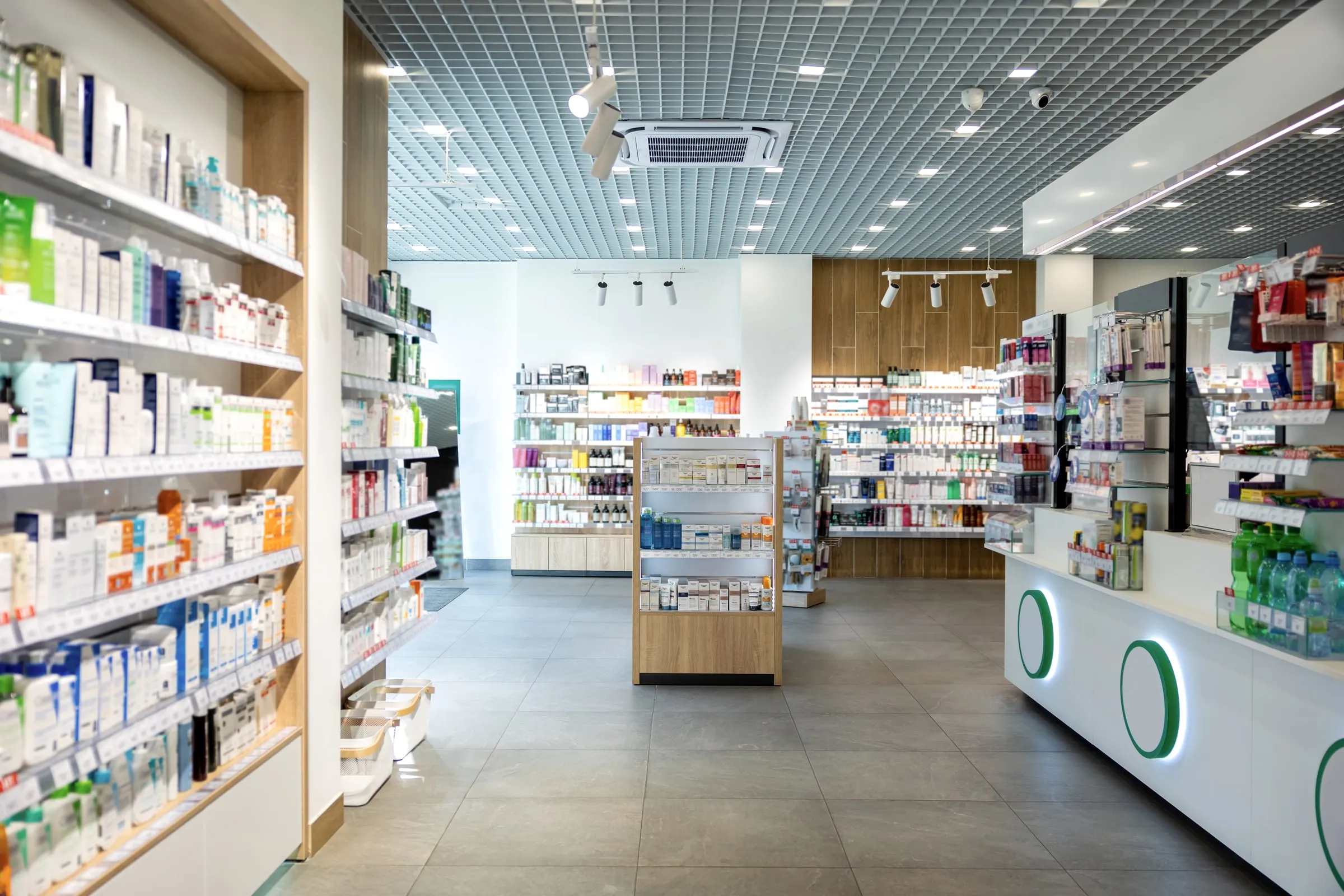
Security Guards for Pharmacies
The pharmacy counter carries the real risk. We post an officer who knows the difference between a slow line and a problem forming at the window.
Request a proposalThe situation
What a pharmacy deals with
The counter in back holds the real target
The front of a pharmacy is the same as any drugstore: shampoo, snacks, a card aisle. The pharmacy counter at the back is where controlled substances are stored and dispensed, and it is the part of the store a robbery is aimed at, not the register up front.
The drive-thru window is unattended by design
A drive-thru pharmacy window puts a single technician facing a car with the engine running, often with no other staff member close enough to see the exchange. It is convenient for customers and it is the least supervised transaction in the store.
Closing and opening carry the most exposure
The moments the pharmacy counter is being stocked before opening or counted down after closing are when the most product is out of the safe or the vault at once, and when the fewest staff are on the floor to notice a problem.
Walk-ins in crisis need a calm response, not a confrontation
A pharmacy sees people who are in pain, in withdrawal, or in a mental health crisis more often than most retail counters do. The right response is usually de-escalation and a call for help, not a hard stance at the door.
The counter in back is the real target
A pharmacy looks like any other drugstore from the front doors: aisles of over-the-counter medicine, cosmetics, snacks and greeting cards. The reason the store carries a different risk is the counter at the back, where controlled substances are stored and dispensed under federal and state rules the front of the store never touches. A robbery aimed at a pharmacy is aimed at that counter, not the register up front, and the officer’s post orders are written around keeping a sightline to it rather than treating the whole floor the same way.
The drive-thru window runs on its own
A drive-thru pharmacy window is convenient for customers picking up a prescription without leaving the car, and it is also the least supervised exchange in the building. A single technician faces a car with the window between them, often out of easy sight of the rest of the staff. Price Protection writes the drive-thru into the route as a specific checkpoint, especially during the hours it draws the most traffic, rather than folding it into a general walk of the store.
Opening, closing and the counter’s exposed hours
The riskiest minutes of a pharmacy’s day are not the middle of a busy afternoon. They are the moments the pharmacy counter is being opened and stocked before the doors unlock, and the moments it is being counted down and secured after closing, when the most product is out of the safe and the fewest staff are on the floor. An officer present for both ends of the day, watching the lot and the entrance while the counter is worked, closes the gap that a fully staffed afternoon does not have.
A calm presence for a difficult moment
Pharmacies see people in genuine distress more often than most retail counters: pain, withdrawal, a mental health crisis playing out at the register or the drive-thru. The right response from an officer is rarely a hard stance or a raised voice. It is space, a calm tone, and a call for help when the situation needs more than presence can provide. Staff are trained in de-escalation for exactly this reason, and post orders set out when to step in and when to call police or emergency medical services instead.
Starting coverage
To begin a pharmacy post, dispatch needs the store’s hours, whether the pharmacy runs a drive-thru window, the layout of the counter relative to the front doors, and any history of attempted robbery or incidents at the location. Unarmed coverage can typically start within hours for a pharmacy that needs it right away; an armed post is scheduled as quickly as a commissioned officer can be assigned, and the route is adjusted through the first week as the officer learns the counter’s own rhythm.
How we cover it
Every service, applied to this post.
- Unarmed security guards
A Level II officer in uniform holds a position that keeps both the front register and the pharmacy counter in view, greeting customers at the door and giving staff a visible presence to point to when a conversation gets tense.
- Armed security guards
Pharmacies with a history of attempted robbery, or those in a standalone location without other stores nearby, sometimes choose a commissioned officer for the hours around opening and closing, when the counter is most exposed.
- Camera monitoring
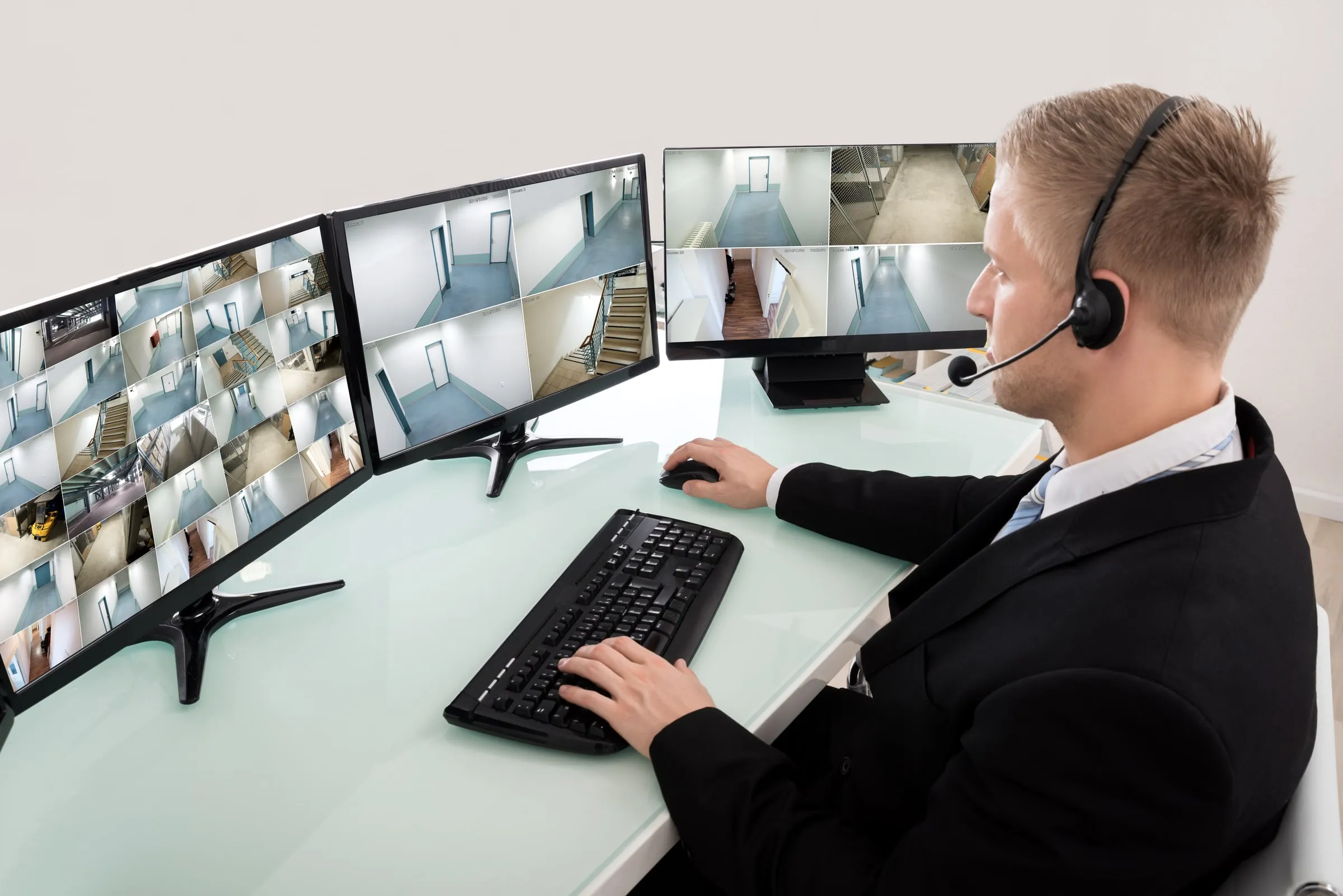
The officer checks the drive-thru camera along with the sales floor feed, since the window is the one point of the store that runs without a second staff member nearby.
- Access control
Where the pharmacy has a separate staff entrance or a delivery door for wholesaler drop-offs, the officer manages who is let in and logs each delivery against the store's own receiving schedule.
- Incident reporting
The daily report notes anything observed at the drive-thru window, any walk-in the officer helped de-escalate, and the opening and closing times with who was present when the pharmacy counter was unlocked and secured.
A typical post
What a shift looks like here.
The officer is at the door before the pharmacy counter opens, watching the lot and the entrance while the pharmacist and technicians unlock the counter and bring the register up. The first hour draws customers who timed their visit to the store's opening, along with any delivery from the wholesaler that arrives early.
During the day the officer's position covers both the front of the store and a sightline to the pharmacy counter, moving toward the counter if a conversation there is taking longer or getting louder than usual, and staying visible at the drive-thru side of the building during its busiest hours.
At closing, the officer is present while the pharmacy counter is counted down and locked, checks the drive-thru window and any delivery door, and walks staff to their cars where the post orders call for it. The report is finished before the officer leaves the lot.
Reporting
What the daily report covers here
Every client receives a written report each day, and officer performance is reviewed and documented daily. This is what the report records on this kind of post.
- Opening and closing times, with pharmacy staff present at each
- Drive-thru window activity and anything unusual observed there
- Walk-ins requiring de-escalation, with the outcome
- Wholesaler and delivery drop-offs at any side or staff door
- Loitering or vehicles observed near the drive-thru or the lot
- Any police contact, with the time and the reason
Do you post an officer at the pharmacy counter itself, or the front of the store?
Both are covered from one position where the layout allows it: close enough to the front to greet customers and watch the register, with a clear sightline to the pharmacy counter at the back. Larger stores or those with a history of counter incidents sometimes add a second position closer to the counter.
Should pharmacy security be armed or unarmed?
Most pharmacies run unarmed, uniformed coverage, since presence and a fast call to police cover most of what happens at a drugstore counter. Standalone pharmacies with a history of attempted robbery, or those open very late, more often choose an armed officer, particularly around closing.
How does the officer handle someone in a mental health crisis at the counter?
With de-escalation first: a calm voice, space, and a call to police or emergency medical services if the situation needs them. Officers are trained in de-escalation and basic first aid, and post orders set out when to step back and let trained responders take over.
Can you cover the drive-thru window specifically?
Yes. The drive-thru is written into the post orders as its own checkpoint, since it is the one transaction point in the store where a single technician faces a car with no one else immediately nearby.
Do you coordinate with corporate loss prevention for a chain pharmacy?
Where a chain has its own loss prevention or asset protection team, the officer's daily report and any camera notes are written so they can be forwarded directly, and post orders are set jointly with the store manager and that team.
Related pages
Industries we serve
Service areas
Insights
Answers
Glossary
Request a proposal
Request a proposal for pharmacies.
Two short steps. Dispatch reviews every request and calls you back about coverage. For urgent unarmed coverage we can typically staff most sites within hours.
24-hour dispatch
(281) 326-9189