
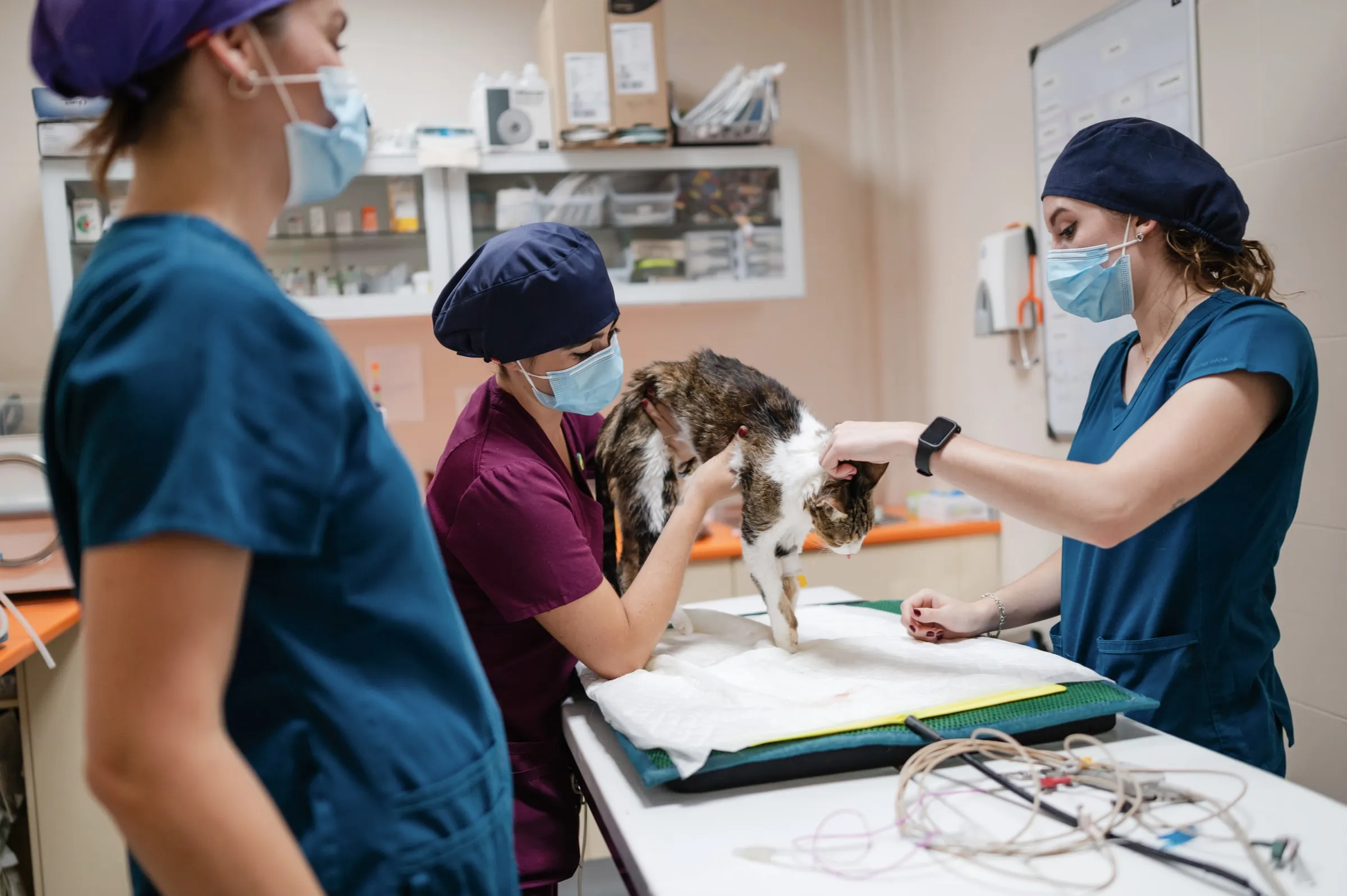
Security Guards for Veterinary Hospitals
A steady presence for the curbside drop-off and the overnight shift, at a hospital where one or two staff often work alone after dark.
Request a proposalThe situation
What a veterinary hospital deals with overnight and at the curb
Curbside drop-off at any hour
A 24-hour or emergency animal hospital takes arrivals through the night, often with an owner carrying an animal in from the parking lot in the dark. A watched curb and entrance is as much a safety measure for arriving owners as it is for the building.
An owner in distress
Owners arriving with an injured or seriously ill animal are often frightened and upset, and a hospital's front desk staff are focused on the animal's care, not on managing a distressed person in the lobby at the same time.
One or two staff, alone, overnight
Many veterinary hospitals run overnight with a skeleton crew, sometimes a single technician, handling both patients and the front door. That is a lot for one person to manage if a difficult visitor or a break-in happens on their shift.
Medication storage is a theft target
Veterinary hospitals keep controlled medications on-site for patient care, which makes the building a target for theft in a way a general retail business is not. A secured, monitored building overnight is a direct answer to that risk.
A hospital that never fully closes
A 24-hour or emergency veterinary hospital takes arrivals through the night, which puts it in a different category from most healthcare settings covered elsewhere on this site: the population at the door is owners, not patients, and the arrivals are unscheduled by definition. Price Protection’s post for a veterinary hospital is built around the curb and the entrance, since that is where an owner carrying an injured animal in from a dark parking lot needs the most help and where a hospital’s night staff has the least spare attention.
An owner in distress needs a calm presence too
Front-desk and clinical staff at a veterinary hospital are focused on the animal the moment it comes through the door, which leaves the owner, often frightened and emotional, without much direct support in the lobby. An officer present at the entrance gives that owner a calm point of contact separate from the clinical team, and steps in directly only if a lobby with more than one distressed owner starts to need active management.
One technician can only watch so much
Many veterinary hospitals run overnight with a single technician or a very small crew, managing patients and the front door at once. An officer covering the entrance, the curb and a periodic walk of the parking lot takes on exactly the part of the night a lone technician cannot also handle, without needing to be involved in any animal’s care.
Medication storage and the building’s exterior
Veterinary hospitals keep controlled medications on-site for patient treatment, which makes the building a theft target in a way a typical retail business is not. The officer’s role is exterior checks and access control at the hospital’s own direction, not handling or inventory of the medications themselves, which stays entirely with hospital staff.
Starting coverage
To begin, dispatch needs the hospital’s address, whether coverage is wanted overnight, for closing, or during specific busy hours, the manager’s contact, and any access restrictions around medication storage the officer should be aware of. A supervisor walks the building with the manager, post orders are written together to reflect exactly how the overnight shift is staffed and where owners are directed to park for a fast drop-off, and an unarmed officer can generally start within hours once the hospital is ready to begin coverage.
How we cover it
Every service, applied to this post.
- Unarmed security guards
An unarmed officer covers overnight hours, present at the entrance and the curbside drop-off, watching for a distressed owner who needs help getting an animal inside and for anyone at the door who is not there for care.
- Vehicle patrol
A patrol pass through the lot during the overnight hours checks vehicles at the curb and the building exterior, useful for hospitals that run a smaller overnight staff and want the lot checked without a full standing post there.
- Camera monitoring
Where the hospital has its own camera system, the officer watches the entrance, curb and medication storage area, and reviews footage if staff report a specific concern from the overnight shift.
- Access control
After-hours entrances and any area where medications are stored are worked to the hospital's own policy on who can access them and when, keeping that separate from the general entrance the officer staffs.
- Incident reporting
A report after each covered shift goes to the hospital manager: entrance and curb activity, any distressed owner assisted, and anything about the building's exterior the day shift should know.
A typical post
What a shift looks like here.
The overnight officer starts as the day staff leaves, checking in with the technician on duty about what the night typically looks like: whether emergency arrivals are expected, where owners should park for a fast drop-off, and what the hospital wants done if the lobby gets more than one distressed owner at once.
Through the night the officer stays near the entrance and the curb, ready to help an owner carrying an animal in from the parking lot and to keep the lobby calm if more than one arrival is waiting at the same time. Between arrivals, a walk of the lot and the building exterior checks that nothing at the curb or the back entrance needs attention.
Before the day shift arrives, the officer confirms the building's exterior doors and the medication storage area are secure, and writes the report noting the night's arrivals, any owner who needed extra support, and anything unusual at the curb or in the lot.

Reporting
What the daily report covers here
Every client receives a written report each day, and officer performance is reviewed and documented daily. This is what the report records on this kind of post.
- Overnight arrivals and curbside activity, with the time
- Owners assisted getting an animal from a vehicle into the building
- Lobby contacts with a distressed or upset owner, and the outcome
- Exterior doors and medication storage area confirmed secure
- Parking lot rounds through the overnight shift
Do you help owners carry an animal into the building?
The officer can hold a door, assist with a leash or a carrier, and help an owner who is struggling to manage the walk from the car, but does not provide any veterinary care. That stays entirely with the hospital's clinical staff.
How does an officer help with a distressed owner in the lobby?
By staying calm and present, giving the owner space, and letting the front desk focus on the animal rather than also managing the person. The officer steps in directly only if the situation becomes disruptive to other clients.
Is overnight coverage common for a hospital that already has a technician on duty?
Yes. A single overnight technician is focused on patient care, and an officer covering the entrance and curb takes on the part of the night that technician cannot also watch: who is at the door and what is happening in the parking lot.
Do you secure the area where medications are stored?
The officer works to the hospital's own access policy for that area and includes exterior checks of the building in overnight rounds. Handling or inventory of medications themselves stays entirely with hospital staff.
Can a smaller daytime practice add coverage instead of a 24-hour hospital?
Yes. A daytime veterinary practice can add coverage for its busiest hours or for closing, similar to a medical clinic, without needing the overnight post a 24-hour emergency hospital typically requests.
Related pages
Industries we serve
Service areas
Glossary
Request a proposal
Request a proposal for veterinary hospitals.
Two short steps. Dispatch reviews every request and calls you back about coverage. For urgent unarmed coverage we can typically staff most sites within hours.
24-hour dispatch
(281) 326-9189