
Security Guards for Research Labs and Pharmaceutical Facilities
An officer who holds the badge zone boundary, logs every visitor the way a reviewer wants to read it, and never crosses a gowning line.
Request a proposalThe situation
What a laboratory or pharmaceutical facility needs that an office post does not provide
Controlled substances and controlled materials
Scheduled drugs in a vault, select agents in a freezer, radioactive sources, precursor chemicals and unreleased compounds all sit behind badge zones that the facility's registrations require it to control. The log of who crossed each boundary is what an inspector asks to see.
Researchers work at two in the morning
A time course, an animal check or a production batch does not keep office hours. Legitimate staff badge in at night and on weekends, and the post has to admit them under the facility's rules while noticing the person who should not be there.
Animal facilities draw attention
A vivarium brings activist interest, from a protest at the drive to attempts to enter under a vendor's name. The facility wants it handled calmly, lawfully and without a confrontation that becomes a video.
The boundary the officer must not cross
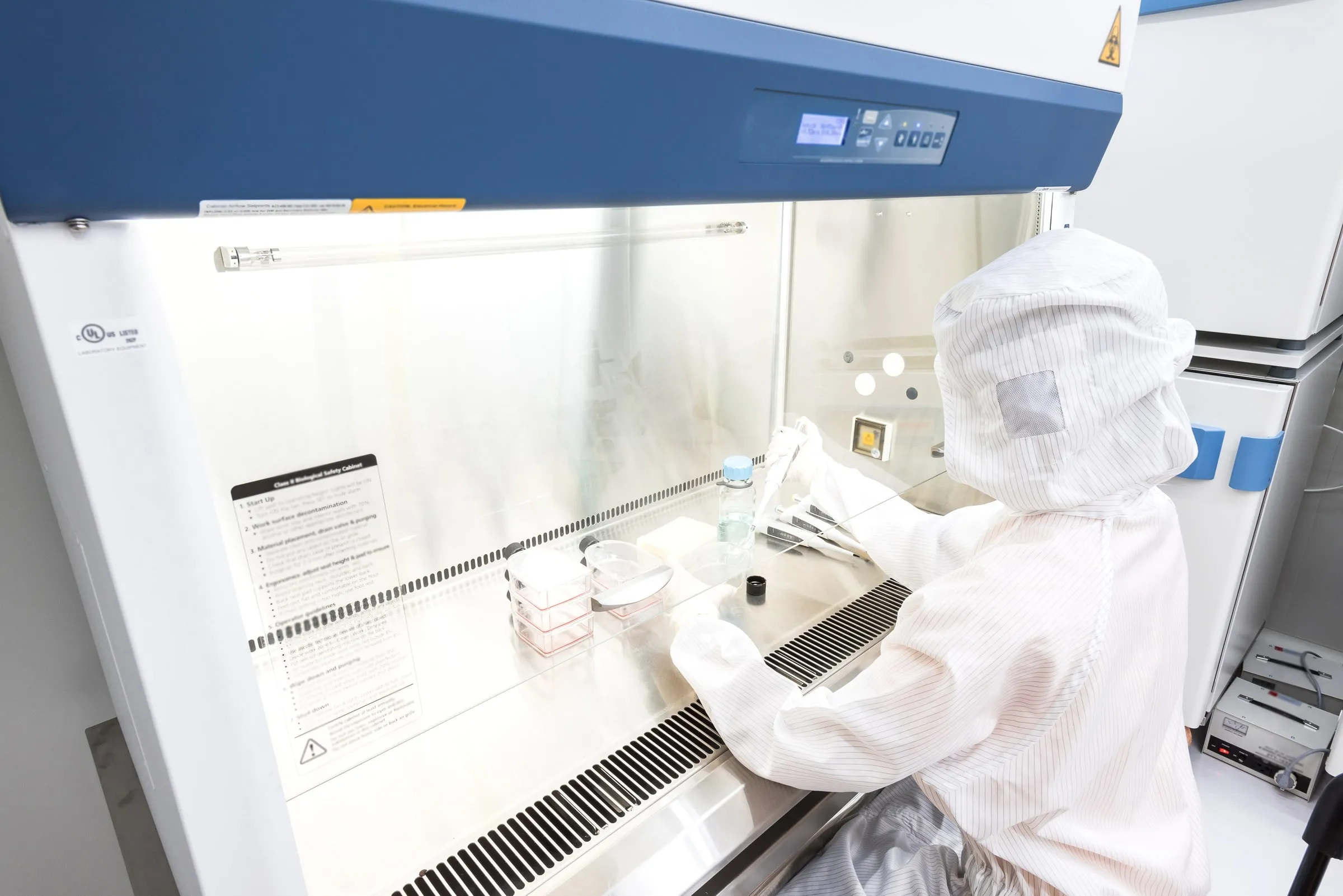
Cleanrooms, gowning areas, biosafety suites and GMP production floors are closed to anyone not trained and gowned for them. A security officer responding to an alarm inside one has to know exactly where to stop and who to call.
Badge zones and what sits behind them
A laboratory building is a set of nested zones: the public lobby, the badge-only corridors, the labs, and inside them the vault, the freezer farm, the vivarium and the cleanroom or GMP floor. Each zone has its own authorized list, and the facility’s registrations for controlled substances, select agents, radioactive sources and precursor chemicals require it to show who crossed each boundary and when. The officer’s post is built around those lists: the lobby officer admits to the first zone, the facility’s badge system controls the rest, and the officer watches the exceptions, a door held, a badge that fails, a visitor badge seen in a corridor it does not cover. The access control logs article explains what a log needs to contain to be useful later.
After hours in a research building
Research keeps its own hours. A graduate student runs a time course overnight, a production batch finishes at four, an animal care technician checks the vivarium on Sunday. The after-hours list is the facility’s, and the officer’s work is to confirm that the person at the door is the person the badge system names, by camera or in person, and to log the entry. The night officer also walks the floors the facility asks for, checks that lab doors that should be locked are locked, notes a fume hood sash left open or a chemical cabinet unlatched for the EHS manager’s morning report, and does not touch anything inside a lab.
Visitors, vendors and the log a reviewer reads
Equipment vendors, calibration technicians, auditors and collaborators arrive against a host’s pre-authorization. The officer issues a badge limited to the zones the host approved, calls the host, records the hand-off, and records the return. A vendor working inside a biosafety suite or a cleanroom is walked in by gowned staff, never by the officer, and the officer’s log shows the time the vendor left the controlled area. When the facility’s compliance team or an inspector asks for the visitor record for a date range, the extract is already in the format they expect because it was written that way every day. The NDA answer explains how officers are bound by the facility’s confidentiality rules on what they see in those logs.
Animal facilities and protest activity
A vivarium brings attention: a demonstration at the drive, a camera at the fence, a person asking to deliver a package to a named scientist. The post orders are specific about each. Officers watch and record from the property line, keep the drive and the doors clear, do not argue with anyone, call the police at the point the facility sets, and photograph and report everything. Attempts to enter under a vendor’s or a courier’s name are caught by the same pre-authorization check that applies to every visitor. Officers deter, observe and report, and the hand-off to police is written into the orders. This is a summary, not legal advice.
Where the officer stops
Cleanrooms, gowning areas, biosafety suites and GMP floors are closed to anyone not trained and gowned for them, and the officer is not. The post orders carry a floor plan with the line drawn: the officer goes to the suite door, reads the alarm panel, calls the on-call scientist or the facility engineer, and waits. For a fire alarm, the facility’s evacuation plan governs and the officer meets the fire department at the entrance the plan names. An officer who respects the gowning line protects the research as much as one who checks badges.
Starting at a lab or a plant
Dispatch needs the facility’s badge zone map and authorized lists, the visitor pre-authorization process, the after-hours policy, the alarm response matrix with the stop lines, the EHS orientation requirement and the on-call roster. Labs in and around the Texas Medical Center research corridor, biotech space in the suburbs and pharmaceutical plants on the industrial side of the region each get a post written for the building, and the first shift starts on the date the lab director sets.
How we cover it
Every service, applied to this post.
- Unarmed security guards
Unarmed officers staff the main lobby and, on larger campuses, a loading dock or a vivarium entrance through all three shifts, working from the facility's badge system and its authorized lists, with the facility's EHS orientation completed before the first shift.
- Access control
Visitors and vendors are matched to a host and a pre-authorization, issued a badge that limits them to the zones their host approved, escorted where the facility's policy requires it, and logged with name, company, host, zone and time in the format the compliance team reviews.
- Camera monitoring
The officer watches the facility's own cameras on the dock, the vault corridor, the vivarium entrance and the parking areas between rounds, and uses them to check that an after-hours badge-in matches the person the system says it is.
- Vehicle patrol
On a research campus with several buildings, greenhouses, a central plant and surface lots, a marked vehicle covers the exterior on varied routes, checking dock doors, chemical storage enclosures, bulk gas cages and lighting, and watching the public frontage during a protest.
- Incident reporting
The daily report lists visitor and vendor entries by zone, after-hours badge-ins by building, escorts, alarms and the response, exterior findings and any protest activity, in a form the lab director and the EHS manager can file with their own compliance records.
A typical post
What a shift looks like here.
The night officer at the lobby desk sees a badge-in at the research tower at one in the morning, checks the camera at that door against the name the access system shows, confirms the person is on the after-hours list for that floor, and logs the entry. A badge-in that does not match the picture, or a name that is not on the list, is a call to the facility's on-call contact, not a shrug.
A vendor arrives for a freezer repair in a biosafety suite. The officer matches the vendor to the pre-authorization, issues a visitor badge limited to the corridor, calls the host, and logs the hand-off. The officer does not walk the vendor into the suite; the host does, gowned, and the officer records the time the vendor came back out.
A freezer alarm reaches the desk from the facility's monitoring system. The post orders say which alarms the officer responds to in person and where the officer stops: at the suite door, where the officer confirms the alarm panel reading, calls the on-call scientist and waits. The officer never opens a cleanroom or a biosafety door, and the report records who was called and when they arrived.

Reporting
What the daily report covers here
Every client receives a written report each day, and officer performance is reviewed and documented daily. This is what the report records on this kind of post.
- Visitor and vendor entries by zone, with host, badge number and time in and out
- After-hours badge-ins by building and floor, with camera verification noted
- Escorts handed to a host at a gowning or suite boundary, with return time
- Alarms received and the response, with the on-call contact and arrival time
- Dock, chemical storage and gas cage checks on exterior rounds
- Protest or unusual activity on the public frontage, with photos and police contact
- Badge, door and camera faults reported to facilities
Questions
About research labs & pharmaceutical facilities coverage.
Anything else? Call dispatch at (281) 326-9189.
Do your officers go into the labs themselves?
No. Officers work the lobby, the dock, the corridors and the exterior, and stop at any gowning line, cleanroom, biosafety suite or GMP floor. An alarm inside a controlled area brings the officer to the door to confirm the panel and call the on-call scientist, who enters. The boundary is drawn on a map in the post orders.
How do you handle a researcher who badges in at two in the morning?
The facility's after-hours list and badge system decide who is allowed in, and the officer confirms the badge-in against the door camera and that list. A valid entry is logged and left alone. A badge that works for someone who is not on the list, or a face that does not match, is a call to the facility's on-call contact before anything else.
Can the post support a controlled-substance or select-agent inspection?
The post's logs can. Visitor and vendor entries by zone, escorts with times, after-hours badge-ins and alarm responses are kept in the format the facility's compliance team asks for, and an extract for any date range is available on request. The registrations and their requirements remain the facility's own. This is a summary, not legal or compliance advice.
How do officers respond to a protest at the entrance?
Calmly and from the post orders: watch and record from the property line, keep the drive and doors clear, do not engage with protesters, call the police at the threshold the facility sets, and report everything with photos. Officers deter, observe and report; enforcement on a public street is for the police.
What happens when a freezer or lab alarm sounds at night?
The post orders list each alarm type, whether the officer responds in person, where the officer stops and who is called. For a freezer or incubator alarm the officer confirms the panel reading at the suite door and calls the on-call scientist; for a fire alarm the officer follows the facility's evacuation plan and meets the fire department.
Related pages
Industries we serve
Service areas
Insights
Answers
Glossary
Request a proposal
Request a proposal for research labs & pharmaceutical facilities.
Two short steps. Dispatch reviews every request and calls you back about coverage. For urgent unarmed coverage we can typically staff most sites within hours.
24-hour dispatch
(281) 326-9189