
Security Guards for Airports and Aviation Facilities
Officers who hold the line between landside and airside at your FBO, hangar or cargo building, inside the airport operator's badge rules, every hour you run.
Request a proposalThe situation
What an airport tenant is responsible for that the airport operator and TSA are not
Your doors are part of the airport's security boundary
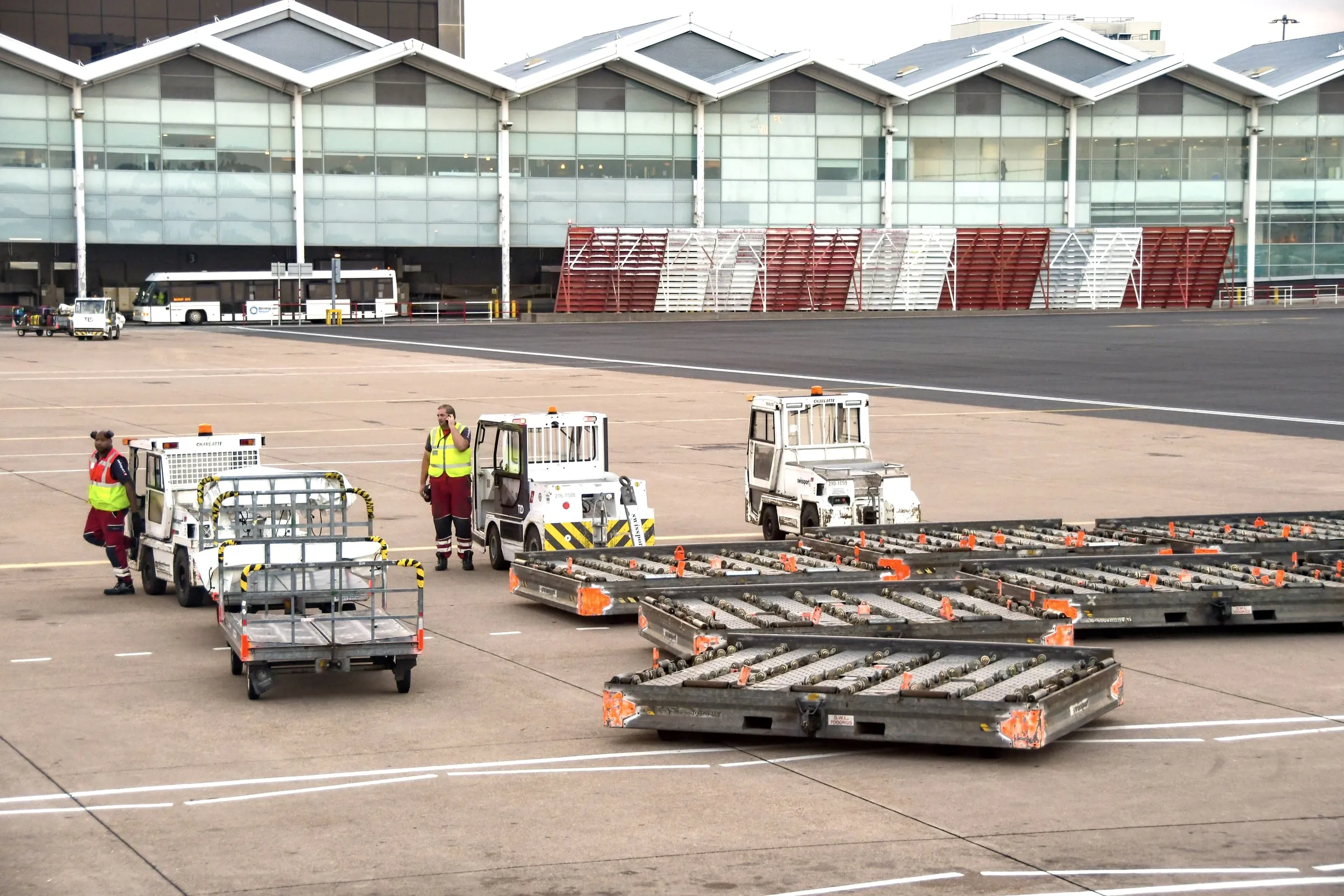
A tenant's hangar door, cargo dock and FBO ramp exit all open onto the airfield, which makes the tenant responsible under the airport operator's security program for who passes through them, and a door left unattended during a busy turn is a finding against the tenant, not the airport.
Corporate aviation and cargo move at night
Charter departures, late arrivals, overnight freight builds and early morning cargo trucks mean the FBO lobby and the cargo gate are active when the tenant's own staff is thinnest, and a facility that staffs security only during office hours has its most exposed hours uncovered.
The ramp is full of people who belong and a few who do not
Fuelers, caterers, line crew, mechanics, drivers and passengers' guests cross the FBO ramp all day, each under a different badge or escort rule, and an officer who cannot tell at a glance which rule applies to whom cannot challenge the one person who should be challenged.
Airside vehicle rules are strict and easy to break
A delivery driver or contractor who follows a tenant vehicle through the gate onto the ramp without an escort or an airside permit has breached the airport's rules under the tenant's name, and the penalty and the explanation fall on the facility manager.
The tenant’s share of airport security
TSA screens passengers and baggage at the commercial terminals. The airport operator runs the security program for the field as a whole: the perimeter, the badging, the rules for who may drive where. Between those two sits the tenant, the FBO, the cargo operator, the hangar or MRO company, which is responsible under the airport’s program for every one of its own doors and gates that opens onto the airfield. That is where Price Protection’s officers work. They do not screen, they do not patrol the airport’s perimeter, and they do not enter movement areas; they hold the tenant’s own boundary between landside and airside, every hour the operation runs.
The FBO lobby, the hangar door and the cargo gate
Each of these is a different post with a different rhythm. The FBO lobby is a front desk where crews, passengers and their guests arrive at odd hours, and the officer’s job is a courteous check against the trip sheet before the ramp door opens, with the kind of presence a corporate aviation customer expects; our lobby and concierge post describes that register. The hangar door is a maintenance environment where mechanics, parts deliveries and contractors come and go and the risk is a badge not worn or a contractor left unescorted. The cargo gate is a gate guard post in the truest sense: drivers, manifests, seals where the shipper requires them, and a vehicle log the airport’s security office may ask for. One contract can cover all three for a tenant with a combined operation, with post orders written separately for each.
Airside rules the officer works inside
An airport’s badge and vehicle rules are not ours to interpret. Officers assigned to an airport post complete that airport’s badging and, where the tenant’s authorization includes it, the airport’s driver training, before they stand the post. Escorting an unbadged person is done exactly as the airport’s program requires, with the escort ratio and the sign-in the program sets. Vehicle escorts onto the ramp are provided only where the tenant’s authorization allows them and the route is written in the post orders. Where any of this is not in place the officer works the landside and the building interior and escorts on foot within the leasehold. The result is a tenant that can show the airport’s security office a log of every airside door opening and every escort, which is the evidence the program expects.
Why the post runs at night
Corporate aviation departs early and returns late. Freight is built overnight and trucked before dawn. Maintenance crews work a hangar until the aircraft is due back on the line. The hours when the tenant’s own staff is thinnest are the hours when the ramp door, the hangar personnel door and the cargo dock are most likely to be left to look after themselves. A 24/7 post covers all 168 hours of the week with a rota built for three shifts and relief; where an operation is quiet by day a continuous or overnight-only window is chosen from the actual movement schedule rather than from office hours.
Local context
Bush Intercontinental and Hobby carry the airline and most of the cargo traffic; Ellington hosts government, aerospace and general aviation tenants near Clear Lake; Sugar Land Regional and the smaller fields around the city serve corporate and charter operators. Each airport runs its own security program and badge office, and posts are set up field by field. Tenants on Ellington whose work is export-controlled will find the program-security side covered on our aerospace and defense facilities page.
Starting a post
A proposal needs the posts you want staffed, their hours, which doors and gates open airside, whether any airside driving is expected, the airport’s badging requirements for contractors, and the name of your airport-liaison contact. We walk the leasehold with you, write post orders per post that reference the airport’s rules by section, start badge applications immediately, and schedule the first shifts alongside your staff so the officers learn the trip-sheet, the hangar schedule and the cargo rhythm before they hold the door alone.
How we cover it
Every service, applied to this post.
- Unarmed security guards
An unarmed officer staffs the FBO lobby or cargo building entrance, greets passengers and crews, checks visitors and drivers against the day's expected list, and keeps the lobby-to-ramp door closed to anyone the tenant's procedure does not clear.
- Access control
Hangar, cargo and ramp-side gates are controlled under the airport operator's badge rules and the tenant's own authorization: badge displayed and checked, escort confirmed for anyone unbadged, and the gate log kept in the form the airport's security office can inspect.
- Vehicle patrol
A patrol covers the landside lots, the fence sections the tenant is responsible for and the building exterior through the night; airside vehicle escorts are provided only where the tenant's airport authorization and the officer's training permit, and never on movement areas.
- Camera monitoring
From the lobby or gate post the officer watches the tenant's own cameras on the hangar door, cargo dock and ramp exit, sending the patrol to anything that needs a person rather than a recording.
- Incident reporting
The daily report records every ramp-side door opening outside scheduled operations, every unbadged person escorted, every vehicle admitted airside and by whose authorization, and every challenge made, so the tenant can answer the airport's security office from the record.
A typical post
What a shift looks like here.
The evening officer takes the FBO desk from the day shift with the night's expected movements: two late charter arrivals, a maintenance crew working a hangar until midnight, a freight truck due before dawn. Every person who comes through the lobby toward the ramp door is matched to one of those reasons or to a badge, and the door is held until the match is made.
When a crew arrives for a departure the officer confirms identities against the operator's manifest or the FBO's trip sheet, lets the line crew know, and watches the ramp door while bags and passengers move through, so that a guest who wandered out to photograph the aircraft is turned back before reaching the ramp, politely and on the record.
The night patrol checks the hangar personnel doors, the cargo dock roll-ups and the fence sections the tenant is responsible for, notes any gate found unsecured with the time and whether anyone from the tenant's staff was on site, and calls the airport's operations center only through the chain the post orders set out, never freelancing a call to the tower.
At shift change the officer hands over the ramp door log, the vehicle airside log and any open item, such as a contractor badge not yet returned, so the morning officer can close it rather than discover it when the airport's badge office calls.
Reporting
What the daily report covers here
Every client receives a written report each day, and officer performance is reviewed and documented daily. This is what the report records on this kind of post.
- Lobby-to-ramp door openings outside scheduled movements, with the reason and who authorized it
- Unbadged persons escorted airside, by whom, for how long and where
- Vehicles admitted through the tenant's airside gate, with permit or escort noted
- Challenges made on the ramp or in the hangar, and the outcome
- Hangar doors, cargo roll-ups and fence sections checked on patrol, with times
- Contractor and visitor badges issued and returned, with any not returned at shift end
Questions
About airports & aviation facilities coverage.
Anything else? Call dispatch at (281) 326-9189.
Do your officers do passenger or baggage screening?
No. Screening of passengers and baggage at commercial terminals is a government function carried out by TSA. Private officers staff the tenant's own posts: FBO lobbies, hangar and cargo entrances, ramp-side doors and gates, and landside patrol, under the airport operator's security program.
Can officers drive on the airside?
Only where the tenant's airport authorization covers it, the officer has completed the airport's driver training and badging, and the post orders define the route. Where that is not in place the officer works the landside and the building and escorts on foot within the tenant's leasehold.
Which airports and airfields do you staff posts at?
Posts can be set up for tenants at Bush Intercontinental, Hobby, Ellington and Sugar Land Regional, and at smaller fields around Houston, subject to the airport's badging process for each officer. Each airport's rules differ, and the post orders are written for the specific field.
How long does badging take before an officer can start?
That depends on the airport's badge office and the background process it runs, which we do not control. We start the badge applications as soon as the contract is signed, assign officers who already hold a badge at that airport where we can, and tell you plainly where the airport's process sets the start date.
Can the FBO lobby officer be in a softer uniform than a gate officer?
Yes. The FBO desk often calls for a professional, lower-profile presence that fits the lobby, while the cargo gate and night patrol are better served by a marked uniform. Both are set in the post orders for each post.
Related pages
Industries we serve
Service areas
Request a proposal
Request a proposal for airports & aviation facilities.
Two short steps. Dispatch reviews every request and calls you back about coverage. For urgent unarmed coverage we can typically staff most sites within hours.
24-hour dispatch
(281) 326-9189