
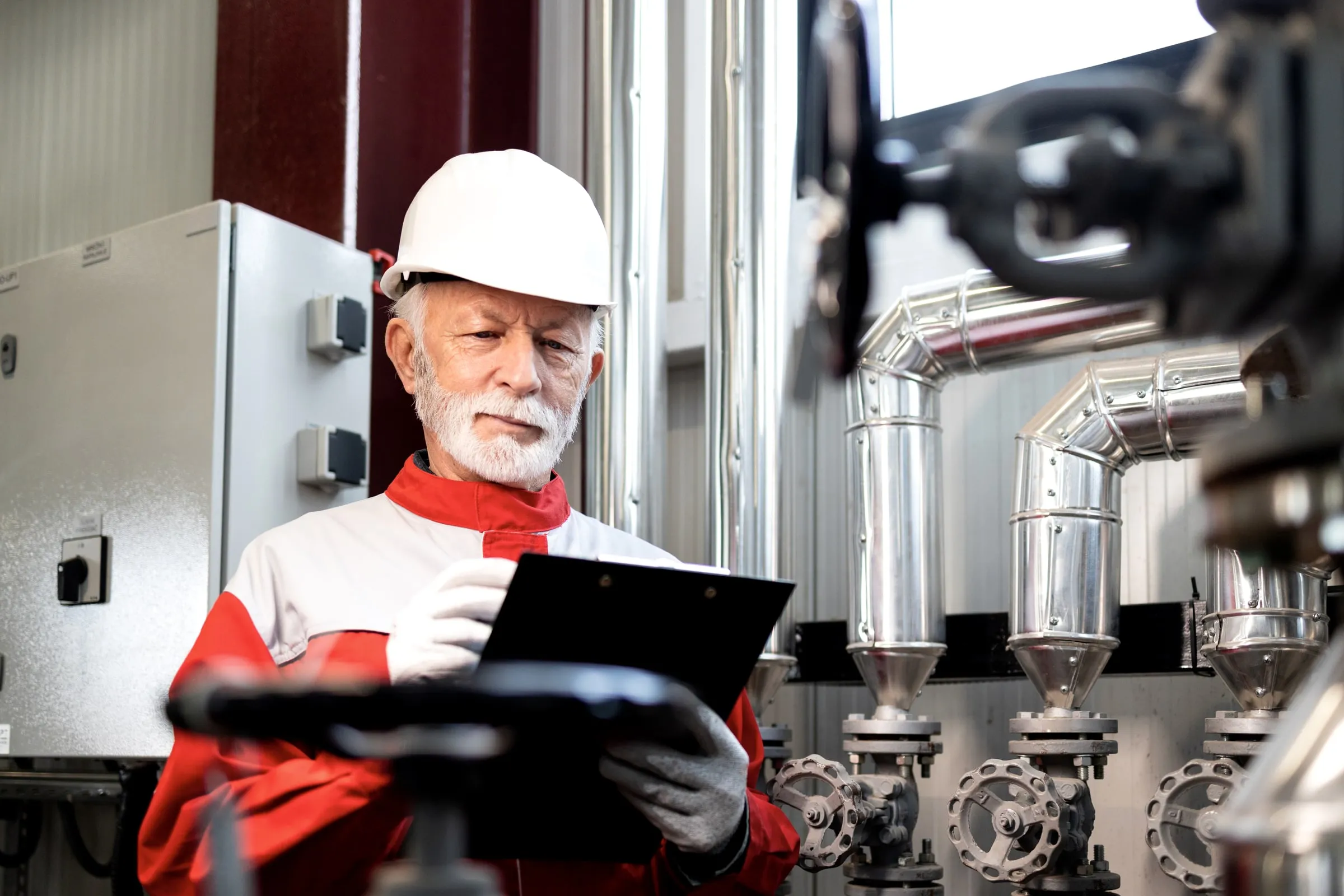
Security Guards for Critical Infrastructure
A gatehouse that never closes, a patrol that reaches the remote sites, and records that answer a regulator's questions without a reconstruction.
Request a proposalThe situation
What sets a critical infrastructure post apart from an ordinary industrial gate
The consequence of a breach is not confined to the site
A tampered valve station, a cut fiber vault or a vandalized pump house affects customers far beyond the fence, which is why the operator's regulators and its own board treat physical security as a reporting obligation, not a housekeeping line.
Many of the assets have no one on them
Compressor stations, lift stations, repeater sites and remote switchyards are unstaffed for most of the day, so an intrusion is discovered when something fails or when a patrol passes, and the length of the gap between patrols is the whole exposure.
Hurricanes and freezes are when coverage matters most
Storm season and a hard freeze bring restoration crews, mutual-aid contractors and media to the gate at the same time the regular staff is stretched, and a site that lets its gatehouse lapse in that window has lost control at the worst possible moment.
Two command structures have to work together
The facility's control room, its corporate security operations center and local law enforcement each expect to be called at a particular point, and an officer who does not know the order of those calls slows down the response the plan was written to speed up.
What the term means at the gate
Critical infrastructure is the federal government’s name for the sectors a region cannot do without: energy, water and wastewater, communications, transportation, chemical, pipelines and the others on that list. For the person running security at one of those facilities the definition has a practical meaning: the consequence of an intrusion is measured in customers, not in stolen property, and the operator answers to a regulator as well as to its own management. A guard post at such a site is therefore judged on two things an ordinary industrial gate is not: whether it was staffed every hour it was supposed to be, and whether its records can prove it.
Greater Houston has more of this than most regions. Refineries and terminals along the Ship Channel, pipelines and compressor stations across the suburbs, water plants and lift stations in every district, carrier hubs, rail yards, the airports and the generating plants and substations that keep all of it running. The pages for power plants and substations and chemical plants and refineries go into those sectors in detail; this page covers what the posts have in common.
The gatehouse is the control point
Everything about a critical facility’s physical security depends on one decision being made correctly, repeatedly, at the gate: does this person, in this vehicle, have a reason to be here now. The post orders reduce that decision to three lists, the badge roster, the day’s work orders and the expected deliveries, and a rule for anyone outside them: hold, and call the control room. The officer is not asked to judge whether a contractor looks legitimate. The officer is asked to match the person to the list and to log the result, including the holds, because a regulator reviewing a year of gate logs is as interested in who was refused as in who was admitted.
A 24/7 gatehouse is 168 hours a week. One officer cannot hold it, and neither can three once days off, training and sickness are counted, so the rota is built with more than four officers per post and a relief officer who knows the same post orders. The arithmetic is laid out on our page about how many officers a 24/7 post needs.
Perimeter and the sites nobody is on
The main plant has staff on it; the compressor station, the lift station, the repeater site and the remote switchyard do not. For those, the exposure is the length of time between visits, and the operator’s own risk assessment decides how long that may be for each asset. We turn that assessment into a timed patrol route with scanned checkpoints, so the report shows not only that a site was visited but when, and how long it went unseen before and after. Where the interval proves too long, the route is tightened or a second patrol is added. The patrol officer checks locks, lighting, fencing and signage, photographs conditions where the operator permits it, and stays outside energized or hazardous areas without exception; entering them is the operator’s crews’ job, under the operator’s own safety rules.
Control rooms, SOCs and law enforcement
A critical facility usually has a control room watching the process, and often a corporate security operations center watching cameras and alarms across many sites. The on-site officer is the response both of them rely on: the person who goes to look. The post orders fix the notification order, control room, dispatch, police, and the information each expects, and the first shifts include a walk-through of that chain with your security director so that the officer’s first live call is not the first time they have made it. Railroad police, port police, airport police or the local department may be the enforcement partner depending on the site; the officer deters, observes, reports and hands off to whichever of them the plan names.
Hurricanes, freezes and continuity
June through November, and again during a hard freeze, is when the gate sees restoration crews, mutual-aid contractors, fuel deliveries and media at the same time as the regular staff is at its thinnest. The post orders include a storm annex agreed with your emergency coordinator: which officers ride out the event on site, how they are relieved when the roads reopen, how temporary crews are checked in against a roster that changes hourly, and how the report is kept when systems are down. Our general hurricane season guidance applies here too, but for a critical facility it becomes a written part of the post rather than a seasonal reminder.
Starting coverage
A proposal starts with a list of posts, the hours for each, which posts are armed, the remote sites the patrol must reach, and the names of the control room, the SOC if there is one and the police agency the plan designates. We survey the gate and the route with your security director, write post orders per post, build the three-shift rota with relief, and agree the report format before the first shift so that the records begin on day one in the form your reviewers will eventually ask for.
How we cover it
Every service, applied to this post.
- Unarmed security guards
An unarmed officer runs the gatehouse through all three shifts: employees by badge, contractors by work order and orientation record, deliveries by manifest, with the control room called for anyone the day's list does not cover.
- Armed security guards
Where the operator's security plan designates a post as armed, a Level III commissioned officer staffs it under the same post orders, observing and reporting and holding the gate until law enforcement arrives rather than confronting a threat alone.
- Vehicle patrol
A marked patrol covers the fence line, unstaffed outstations and remote sites on a written route with timed checkpoints, so the operator can show how long any given asset went unseen and can shorten that interval where the risk assessment calls for it.
- Camera monitoring
From the gatehouse the officer watches the operator's own perimeter and gate cameras, dispatches the patrol to anything the cameras show, and leaves the recording and retention to the operator's system rather than running a separate one.
- Incident reporting
The daily report is kept in a form the operator can hand to an auditor or regulator: every entry decision, every patrol checkpoint with time, every alarm and the notification chain that followed, and any condition found on the perimeter.
A typical post
What a shift looks like here.
The night officer takes the gatehouse with a briefing from the day shift and the control room: which crews are inside, which outstations have work scheduled, which alarms are known to be faulty. From then on each vehicle at the gate is matched to a badge, a work order or a delivery manifest, and anyone outside those three is held while the control room is called.
Between arrivals the officer runs the perimeter cameras and sends the patrol out on its route. The patrol reaches each remote site, checks locks, lighting and fence condition, scans the checkpoint and moves on, calling the gatehouse before and after each stop so a vehicle that stops answering is noticed within one leg of the route rather than at the end of the night.
When an alarm fires or a camera shows a person at the fence, the officer follows the notification order in the post orders: control room first, then dispatch, then police if the control room directs it. The officer observes from a safe position and reports what is seen; entering an energized or hazardous area is never part of the job.
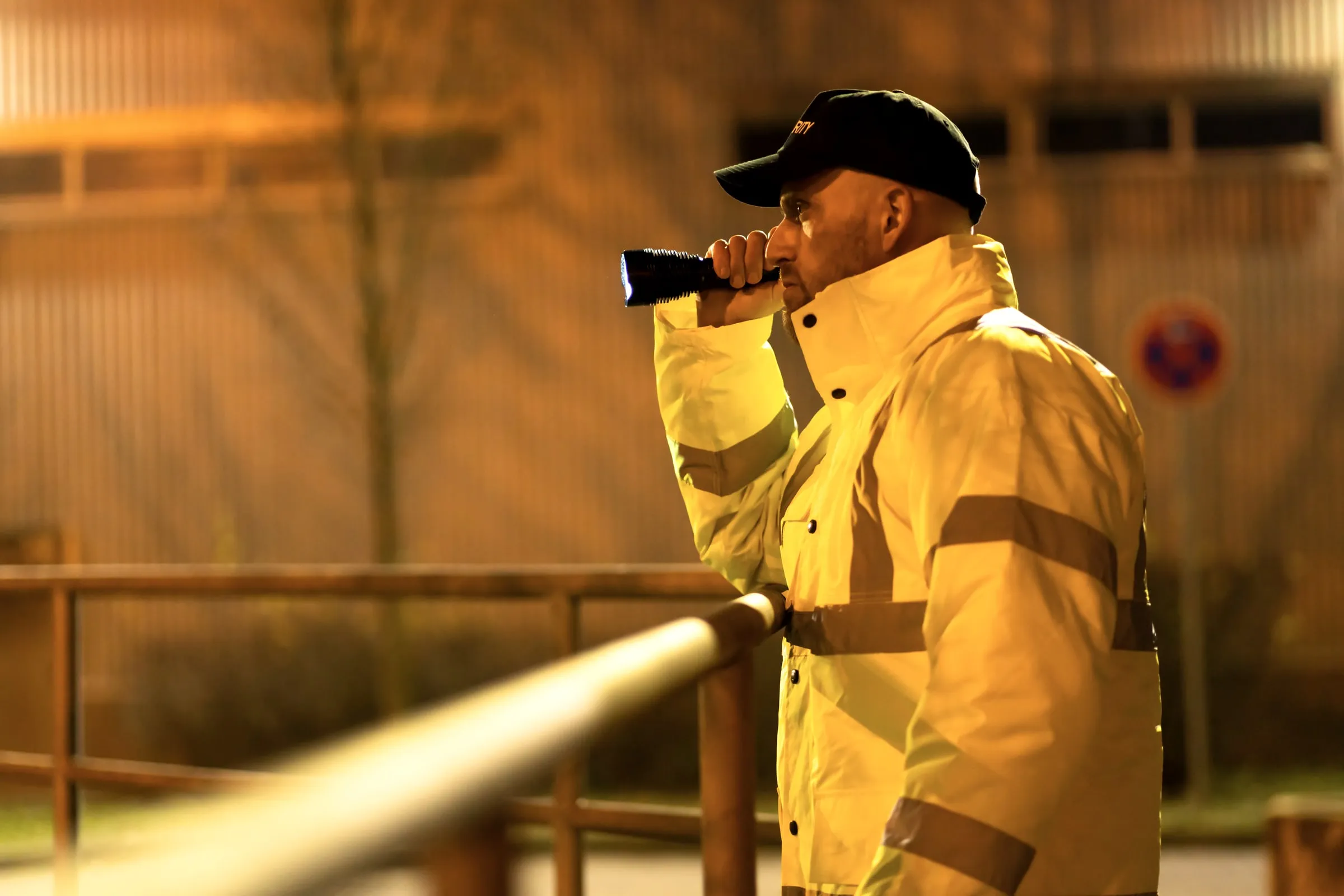
Reporting
What the daily report covers here
Every client receives a written report each day, and officer performance is reviewed and documented daily. This is what the report records on this kind of post.
- Gate entries by category: badge, work order, delivery manifest, with holds and outcomes
- Patrol route checkpoints with scan times, and any site where the interval was exceeded
- Perimeter conditions found: fence, gate, lighting, signage, with photographs where permitted
- Alarms and camera events, the notification chain followed and the time of each call
- Contractor crews on site at shift change, by location
- Weather, road and access conditions affecting the patrol route
Which facilities count as critical infrastructure for this kind of post?
We use the term the way the federal government does: the sectors whose disruption would affect public health, safety or the economy, which includes energy, water and wastewater, communications, transportation, chemical and pipeline facilities among others. The post is built around the site's own security plan, whatever sector it falls in.
How do officers coordinate with our control room and with police?
The notification order is written into the post orders with your security director: who the officer calls first, what information the control room expects, and when police are called directly. Officers rehearse that order during the first shifts so it is not read for the first time during an event.
Can the patrol cover remote sites that are miles from the main gate?
Yes. Remote outstations are written into a timed patrol route with checkpoint scans, and the route is adjusted as the operator's risk assessment changes. The report shows the interval between visits for each site so you can see where a shorter gap is needed.
What happens to the post during a hurricane or a freeze?
The post stays staffed. Before a storm we confirm with your emergency coordinator which officers remain on site, how they are relieved when roads reopen, and how restoration crews and mutual-aid contractors are checked in, so the gatehouse keeps control while everyone else is moving fast.
Do your records satisfy our regulator?
The regulator's requirements belong to the operator, and we do not certify compliance. What we provide is the daily report, patrol checkpoint data and incident reports in a format agreed with your security director, so that the physical-security evidence a reviewer asks for already exists.
Related pages
Industries we serve
Services
Glossary
Request a proposal
Request a proposal for critical infrastructure.
Two short steps. Dispatch reviews every request and calls you back about coverage. For urgent unarmed coverage we can typically staff most sites within hours.
24-hour dispatch
(281) 326-9189