
Security Guards for Power Plants and Substations
A gatehouse that knows the difference between a plant employee, an outage contractor and a fuel truck, and a patrol record a compliance lead can file.
Request a proposalThe situation
What a generating plant and its substations need from a security post
Three kinds of traffic at one gatehouse
Plant staff on shift rotation, contractors on a work package, and fuel, chemical and parts deliveries all arrive at the same gate. Each has a different credential and a different rule, and the gatehouse has to apply the right one without holding up a shift change.
Substations are unstaffed and full of copper
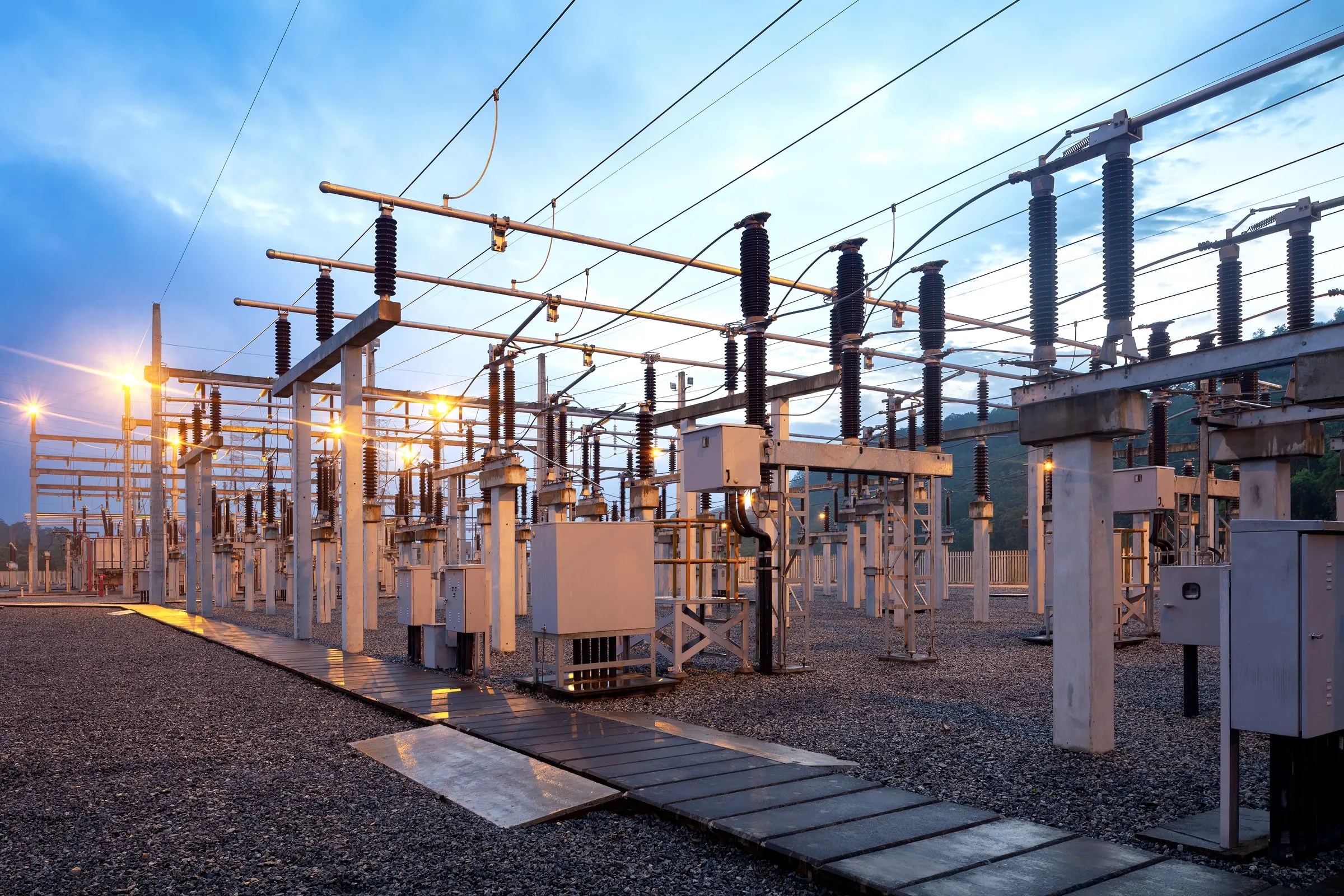
A transmission or distribution substation is a fenced yard with nobody in it, grounding copper in the gravel, and a padlock on the gate. Theft of grounding conductor is dangerous to the thief and leaves the yard unsafe for the crew that follows.
An outage brings a plant's worth of contractors
A planned outage puts hundreds of contractors inside the fence for weeks, with cranes, laydown areas and night shifts. The gatehouse built for a normal day cannot badge that volume without extra lanes and extra officers written up in advance.
Storms end at the staging yard
After a hurricane or an ice storm, restoration crews, bucket trucks, pole trailers and transformer stock stage in a yard that did not exist the week before. It needs a gate, a patrol and a log from the first hour.
The gatehouse at a generating plant
A plant gatehouse handles three populations with three rule sets. Plant employees badge through on the plant’s reader at shift change, in volume, and the officer’s job is to notice the person who tailgates or whose badge fails. Contractors present a company badge and a work package number, and the officer checks both against the day’s list and the plant’s orientation records. Fuel, chemical and parts deliveries present a bill of lading against a delivery schedule and are released only after the receiving contact confirms. The post orders set out each procedure, and the officer applies them the same way at three in the morning as at eight. The gate guard services page describes the general gatehouse post; at a plant the orientation and the delivery rules are what make it different.
Substations and the fence line
A substation is a fenced yard with no one in it, and the copper in the gravel is the target. A marked vehicle runs the utility’s substation route on a varied schedule, and at each yard the officer stops outside the fence, checks the lock, walks the fence for cuts or leaning panels, looks for disturbed gravel or exposed grounding leads, notes lighting and camera condition, and photographs the gate with a timestamp. The officer never goes inside an energized yard. A person inside the fence, a cut lock or a disturbed ground mat is reported to the control center at once and the officer waits at a safe distance until a qualified crew or the police arrive.
Outages bring a plant’s worth of people
A planned outage puts hundreds of contractors inside the fence for weeks, working nights, with cranes and laydown areas in places that were empty the month before. The gatehouse that handles a normal day cannot badge that volume without extra lanes and officers, and the perimeter patrol has to add the laydown areas. We write the outage as a temporary change to the post orders with the outage manager before the first contractor arrives, staff it at outage strength on every shift, report a daily count to the outage office, and return to normal strength when the package closes. The staffing guide for a 24/7 post explains how a temporary surge is layered onto a standing rota.
What a compliance lead can take from the logs
Utilities subject to NERC CIP-014 carry their own obligations for the physical security of the transmission stations and control centers they have identified. That obligation belongs to the utility and is assessed by the utility’s own processes and its regulators, not by a guard company. What the post contributes is a record: gate logs by category, patrol stops with times and photographs, holds and refusals with the plant contact named, and incident reports completed the same day. We keep those records in a form the compliance lead can retain with the facility’s own files and extract for a review period. This is a summary, not legal or compliance advice.
Safety rules the officer works under
Every officer assigned to a plant or a substation route completes the site’s electrical safety orientation before the first shift and renews it on the plant’s cycle. The post orders repeat the plant’s rules in the officer’s terms: where the officer may drive and walk, which areas are closed without a qualified escort, what personal protective equipment is worn at the gate and on the route, and who to call when something inside an energized area looks wrong. An officer who is unsure stays outside and calls.
Storm restoration staging
After a hurricane or a freeze, a restoration staging yard appears in a matter of hours: bucket trucks, pole trailers, transformer stock, fuel, and crews from other utilities who do not know the site. The yard needs a gate, a patrol and a log from the first hour, and the plant’s storm annex names the officers who stand it up. The post orders for the staging yard are drafted before the season and filled in with the yard’s location when the storm is named.
Starting coverage
Dispatch needs the gate procedures for staff, contractors and deliveries, the orientation requirement, the substation list and route if a patrol is wanted, the outage calendar, and the control center’s escalation contacts. A supervisor walks the plant with the security manager, the post orders are written and approved, and the first shift starts on the date the plant sets.
How we cover it
Every service, applied to this post.
- Unarmed security guards
Unarmed officers staff the plant gatehouse on all three shifts, checking plant badges, contractor credentials and delivery paperwork, with the site's electrical safety orientation completed before the first shift and refreshed as the plant requires.
- Armed security guards
Where the utility's own risk assessment designates a plant gate, a control center or a critical substation as an armed post, a Level III commissioned officer holds it under post orders that set out use of force and the hand-off to law enforcement.
- Access control
Contractors are admitted against the plant's work package list and orientation records, fuel and chemical deliveries against the day's delivery schedule and the receiving contact, and visitors against a host who meets them at the gate. A credential the officer cannot verify is a hold.
- Vehicle patrol
A marked vehicle runs the plant's perimeter and a route of substations on a varied schedule, checking gate locks, fence integrity, grounding copper, lighting and camera condition from outside the energized yard, with a photograph at each stop.
- Incident reporting
The daily report records gate activity by category, holds and refusals, perimeter and substation findings, outage lane counts and any security event, in a form the plant's security manager and compliance lead can retain with the facility's own records.
A typical post
What a shift looks like here.
At shift change the gatehouse officer runs two lanes: plant staff badging through on the reader and contractors presenting a company badge and a work package number against the day's list. A contractor whose orientation has expired is sent to the training trailer, not through the gate, and the hold is logged with the name of the plant contact who was told.
Mid-shift a fuel delivery arrives. The officer checks the carrier and the bill of lading against the delivery schedule, confirms the receiving contact by radio, logs the truck in with the tank it is bound for, and directs it on the plant's approved route. A truck not on the schedule waits outside the gate until the receiving contact clears it.
The patrol officer leaves the plant on the substation route after dark, stops outside each yard, checks the gate lock and the fence, looks for disturbed gravel or cut grounding leads from the fence line, notes lighting outages and camera condition, and photographs the gate. The officer never enters an energized yard; a finding inside the fence is reported to the control center for a qualified crew.
During an outage the gatehouse adds a contractor lane and a second officer, the laydown and crane areas go onto the patrol route, and the night shift stays at outage strength until the plant's outage manager closes the package. The post orders for the outage are written and approved before the first contractor arrives.
Reporting
What the daily report covers here
Every client receives a written report each day, and officer performance is reviewed and documented daily. This is what the report records on this kind of post.
- Gate activity by category: plant staff, contractors, deliveries, visitors
- Holds and refusals at the gate, with the reason and the plant contact informed
- Fuel and chemical deliveries logged against the schedule, with receiving contact
- Substation route stops, with lock, fence, grounding and lighting findings by site
- Plant perimeter patrol, with any breach, debris or vehicle near the fence
- Outage lane counts and any surge issue reported to the outage manager
- Security events with time, location, response and police report number
Do your officers enter the switchyard or energized areas?
No. Officers complete the plant's electrical safety orientation and follow its rules, which keep them outside energized yards and process areas unless the plant provides a qualified escort. A finding inside a substation fence is reported to the control center for a qualified crew.
Can you cover an unstaffed substation on a patrol route?
Yes. A marked vehicle runs a route of substations on a schedule the utility sets, stopping outside each yard to check the gate lock, the fence, grounding copper visible from the fence line, lighting and cameras, with a photo and a time at each stop. Routes vary so the pattern cannot be learned.
How do you staff a planned outage?
As a defined change to the post orders, written with the outage manager before the first contractor badges in: extra gate lanes, extra officers on each shift, laydown and crane areas added to the patrol, and a daily count reported to the outage office. When the package closes, the post returns to its normal strength.
Do your patrol records support our CIP-014 obligations?
CIP-014 is the utility's obligation, not ours, and it applies to the stations and control centers the utility has identified. What a post provides is evidence: gate logs, patrol records with times and photographs, and incident reports kept in a form the compliance lead can retain. This is a summary, not legal or compliance advice.
What happens to the post when a hurricane evacuation order is issued?
The post orders carry a storm annex agreed with the plant: who stays with the ride-out crew, when officers stand down under a mandatory order, how the gate is re-staffed when roads reopen, and how the restoration staging yard is covered. The annex is reviewed with the plant before each hurricane season.
Related pages
Industries we serve
Insights
Glossary
Request a proposal
Request a proposal for power plants & substations.
Two short steps. Dispatch reviews every request and calls you back about coverage. For urgent unarmed coverage we can typically staff most sites within hours.
24-hour dispatch
(281) 326-9189