
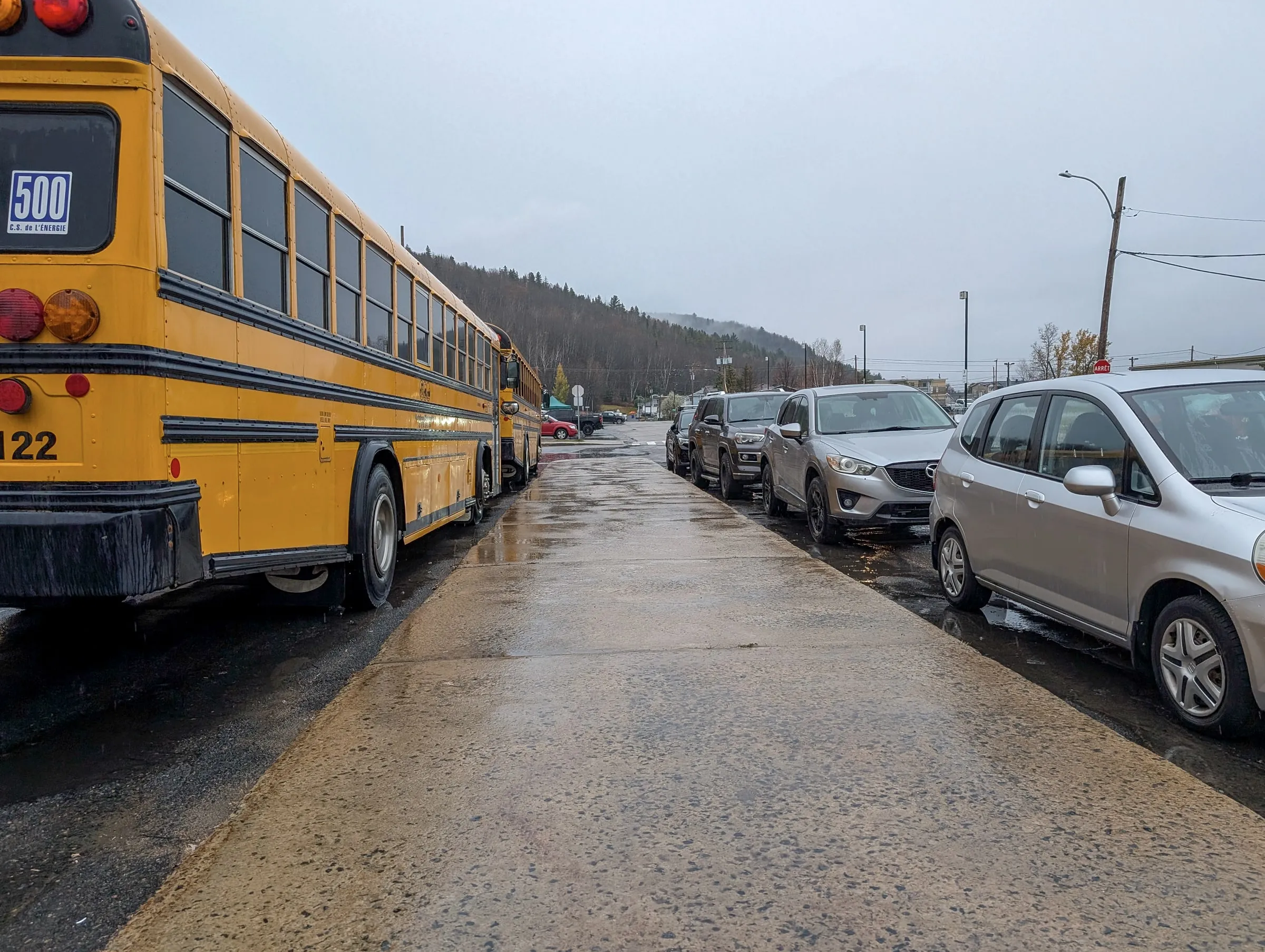
Security for School Drop-Off and Dismissal
The car line worked to the school's own number system, so a name is checked against a car, not guessed at through a window.
Request a proposalThe situation
What the car line has to manage in twenty minutes
A twenty-minute window carrying the whole school
Most of a campus's daily vehicle traffic happens in a compressed window at the start and end of the day, and a line that moves too slowly backs up onto the feeder road while one that moves too fast starts skipping the checks that keep it safe.
The bus lane and the car line sharing an entrance
Many campuses run buses and cars through the same driveway or adjacent lanes, and the two do not mix well: a bus stopping to load blocks a car line that has nowhere else to go, or a car cuts across a bus lane to make a turn it should not.
Walkers and bike riders crossing a line of moving cars
Students who walk or bike to school cross the same driveways the car line uses, often at the exact minutes traffic is heaviest, and a driver focused on finding their child's number is not always watching the crosswalk.
A name at the window is not the same as a name on the list
Dismissal by car-rider number or family name only works if someone is checking it against the list, and on a day the front office is short-staffed, that check is the first thing to slip.
The window, not the whole day
Drop-off and dismissal are the only times most of a school’s daily vehicle traffic happens at once, compressed into fifteen or twenty minutes that a campus repeats twice a day. Price Protection’s post orders for this coverage are built around that window specifically: where the release point sits, how the school’s own car-rider system works, and what pace keeps the line moving without skipping the check that makes it safe. A line that runs smoothly looks unremarkable from the road, which is usually the sign it is being worked correctly.
The check happens at release, not at the curb
A car-rider number, a name called over a radio, or a tag held to the windshield only works as a safety measure if someone verifies it against the school’s list before a child reaches the vehicle. The officer’s position is chosen for that reason: close enough to the release point to make the check on every single car, not stationed further back where the job becomes waving traffic through. On a day the front office is short-staffed for the window, this is often the one part of dismissal a school cannot afford to skip, and it is the part the post is built to hold.
Buses, cars and walkers sharing one driveway
Many Houston campuses were not built with separate approaches for buses, cars and students on foot, so the post orders account for wherever those three actually meet. A bus stopped to load blocks a car line with nowhere to go around it; a car cutting through a bus lane to make a turn creates the kind of conflict that a school’s own staff, focused on the dismissal list, may not have a spare set of eyes for. Where the driveway carries all three, a second position or a patrol post is added specifically to keep the bus lane clear and to watch the crossing point walkers and bike riders use during the same window traffic is heaviest.
Weather and the days the line runs long
A Houston downpour turns an ordinary dismissal into a longer, more crowded one, with parents pulling closer to the doors than usual and an indoor dismissal plan changing where the actual release point is. The post orders account for a school’s rainy-day procedure as its own version of the line, not an exception handled on the fly, so the same list check applies whether a child is walked to a car at the curb or handed off just inside a propped door.
Starting coverage
Dispatch needs the school’s drop-off and dismissal procedure as it is actually run today, the car-rider or release system in use, the layout of the driveway relative to the bus lane, and any known trouble spots such as a backup onto a feeder road. A supervisor walks the line during an actual dismissal before writing the post orders, and coverage can generally begin within days once that walk is done.
How we cover it
Every service, applied to this post.
- Unarmed security guards
An unarmed officer works the car line itself, verifying car-rider numbers or names against the school's dismissal list before a child is released, and staying at the point in the line where that check actually happens, not just directing traffic around it.
- Vehicle patrol
Where a campus's lot and feeder road back up, a second officer or a vehicle position manages the flow into and out of the line, keeping the bus lane clear and preventing cars from cutting through a lane meant for buses.
- Access control
The dismissal list, whether by car-rider tag or family authorization, is applied at the point of release, and a child is not walked to a vehicle that has not been checked against it, no matter how familiar the car looks.
- Camera monitoring
Where the school has its own cameras on the driveway or the lot, the officer can reference footage for a plate or a description the front office needs after a dismissal-time question is raised.
- Incident reporting
A daily report on the dismissal window: line duration, any release that needed a second check, walker and crossing observations, and any bus-lane or driveway conflict noted for the school to raise with transportation.
A typical post
What a shift looks like here.
Before the line starts, the officer confirms the day's dismissal list with the front office and checks for anything unusual: an early release, a field trip return, a change to a student's normal pickup. Position is taken at the release point rather than at the head of the line, since that is where the actual check against the list happens.
During the window itself, cars are worked through at the pace the school's own procedure sets, with the officer verifying each car-rider number or name before a child is walked to the vehicle. Where the bus lane runs alongside or through the same driveway, the officer or a second post keeps it clear, since a stalled bus lane backs up faster than the car line does.
As the line thins, walkers and bike riders crossing the driveway get particular attention, since the last cars through are often moving fastest to clear the lot. The officer stays until the line has genuinely cleared, not just until the bell has rung, and the report notes the window's actual duration and anything that slowed it down.
Reporting
What the daily report covers here
Every client receives a written report each day, and officer performance is reviewed and documented daily. This is what the report records on this kind of post.
- Dismissal window duration, from first car to last car cleared
- Any release that required a second check against the list
- Bus lane and car line conflicts, with times
- Walker and bike-rider crossings observed during the window
- Traffic backing onto the feeder road, if it occurred
- Any vehicle description or plate noted at the front office's request
How does the officer check who is picking up a child?
Against the school's own dismissal list, whether that is a car-rider tag, a number system or a name check, applied at the point where the child is actually released to the vehicle rather than earlier in the line.
Can coverage include both the car line and the bus lane?
Yes, particularly where the two share a driveway. A second position or a patrol post is added specifically to keep the bus lane clear where the layout makes that a recurring issue.
What happens if traffic backs up onto the public road?
The post orders set the school's own pace for the line, and where backup onto a feeder road is a recurring problem, the proposal can include a position further back to manage the approach rather than just the release point.
Do you provide crossing coverage for students who walk or bike to school?
Where the school identifies a crossing that needs a presence during drop-off or dismissal, an officer is positioned there for that window, working alongside the school's own crossing procedure rather than replacing it.
Can dismissal coverage be added just for the afternoon, not the morning?
Yes. Many schools cover dismissal, which runs longer and involves the list check, and skip a separate morning post, or cover both. The proposal is scoped to the windows the school wants.
Related pages
Industries we serve
Service areas
Insights
Glossary
Request a proposal
Request a proposal for drop-off and dismissal.
Two short steps. Dispatch reviews every request and calls you back about coverage. For urgent unarmed coverage we can typically staff most sites within hours.
24-hour dispatch
(281) 326-9189