
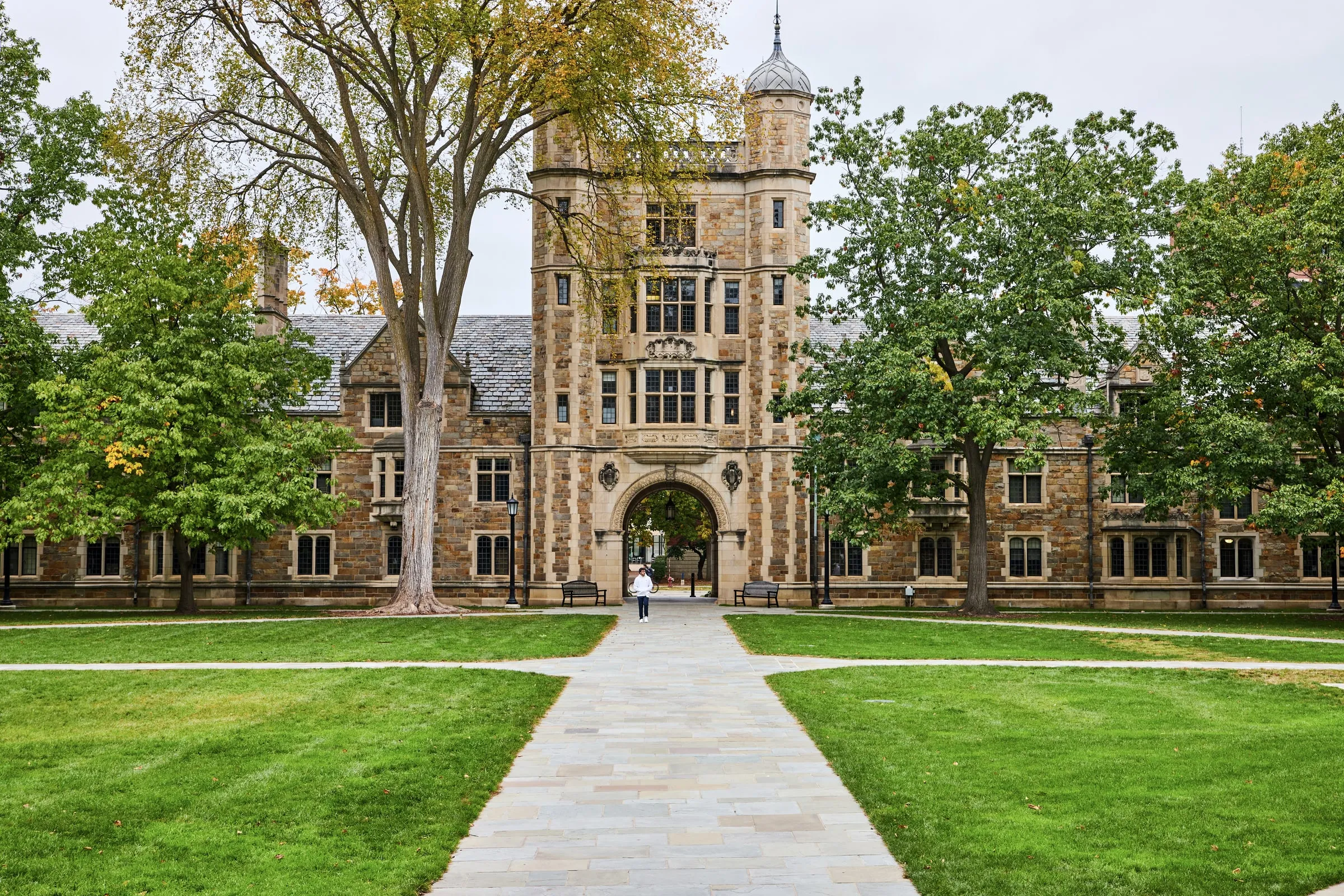
Security Guards for Colleges and Universities
Coverage built around the buildings, the garages and the hours a campus is actually in use, not a single gate.
Request a proposalThe situation
What a college campus has to cover that a K-12 site does not
No single perimeter
A college campus is generally open to the public by design, with multiple entrances, through-streets and buildings that serve the neighborhood as well as the students. There is no one gate that controls who is on the property, so coverage has to be built around specific buildings and hours instead.
Night classes and a campus that empties unevenly
A campus can be nearly empty by early evening except for one lit classroom building, a library open late, or a lab running past dark, leaving students walking to distant garages or lots alone after most of the property has gone quiet.
Parking garages and structures
Multi-level garages create sightlines a surface lot does not have: stairwells, blind corners and levels with almost no traffic late at night, where a car break-in or a confrontation is far less likely to be seen by anyone passing.
A public building open to more than its own students
Libraries, event spaces and administrative buildings admit visitors who are not enrolled at the school, and a lobby desk built for wayfinding is not the same as a lobby desk built to notice who does not belong.
An open campus has no one gate
Most colleges and universities operate as open property: streets run through them, the public uses the library and the event spaces, and there is rarely a fence line that would let a single post cover the whole campus. Price Protection builds coverage the same way a campus safety office would, around named buildings and hours rather than a perimeter that does not exist. A lobby post at an academic building, a late post at the library, and vehicle patrol through the garages together cover more of a campus’s actual risk than one static post ever could.
The hours between the last class and a quiet campus
A campus that is busy at noon can be nearly empty by nine, with one lit building holding a night class or a lab and the rest of the property dark. That gap between a full campus and an empty one is where students end up walking farthest alone, often to a garage on the far side of a lot that has gone quiet. Coverage built around evening and night hours puts an officer where the remaining activity actually is and a patrol vehicle on the routes between it and the garages, rather than assuming the daytime pattern still applies after dark.
Garages are their own property type
A parking structure behaves nothing like a surface lot. Stairwells, blind ramps and levels that see almost no traffic after early evening create sightlines a foot patrol cannot cover as efficiently as a vehicle can, and a dead lightbulb on level three can go unnoticed for days without someone checking it directly. Patrol rounds through a campus’s garages are built to check both security, watching who is on each level, and the facility itself, so lighting and gate issues get reported to campus facilities before they become a security problem on their own.
A building that welcomes more than its students
Libraries, event venues and administrative lobbies on a college campus regularly admit people with no university affiliation, which is by design and not a flaw to fix. The officer’s role in those buildings is not to challenge every visitor but to notice who does not fit the pattern of the space, who is in an area the building does not generally admit the public to, and who stays past the hours a building is meant to be occupied. That distinction, built into the post orders for each building, is what makes an open building manageable without making it feel controlled.
Starting coverage
Dispatch needs a list of the buildings and garages the campus wants covered, the hours each operates, the academic calendar’s busy and light periods, and a contact for campus facilities or safety. A supervisor walks the buildings and garages named, writes post orders specific to each, and coverage can generally begin within days, with hours adjusted as the semester’s schedule changes.
How we cover it
Every service, applied to this post.
- Unarmed security guards
Unarmed officers are posted at the buildings and hours a campus identifies as priorities, covering an academic building's lobby, a library's late hours or a garage's pedestrian entrances rather than trying to hold the whole property from one post.
- Vehicle patrol
A patrol vehicle works the garages, surface lots and perimeter roads on rounds through the evening and overnight, checking stairwells and levels a foot post cannot reach as often and reporting lighting or gate issues as they are found.
- Access control
Buildings that lock down after a set hour are checked against the campus's own schedule, with the officer verifying doors are secured on time and admitting only those with a legitimate reason to be inside after hours.
- Camera monitoring
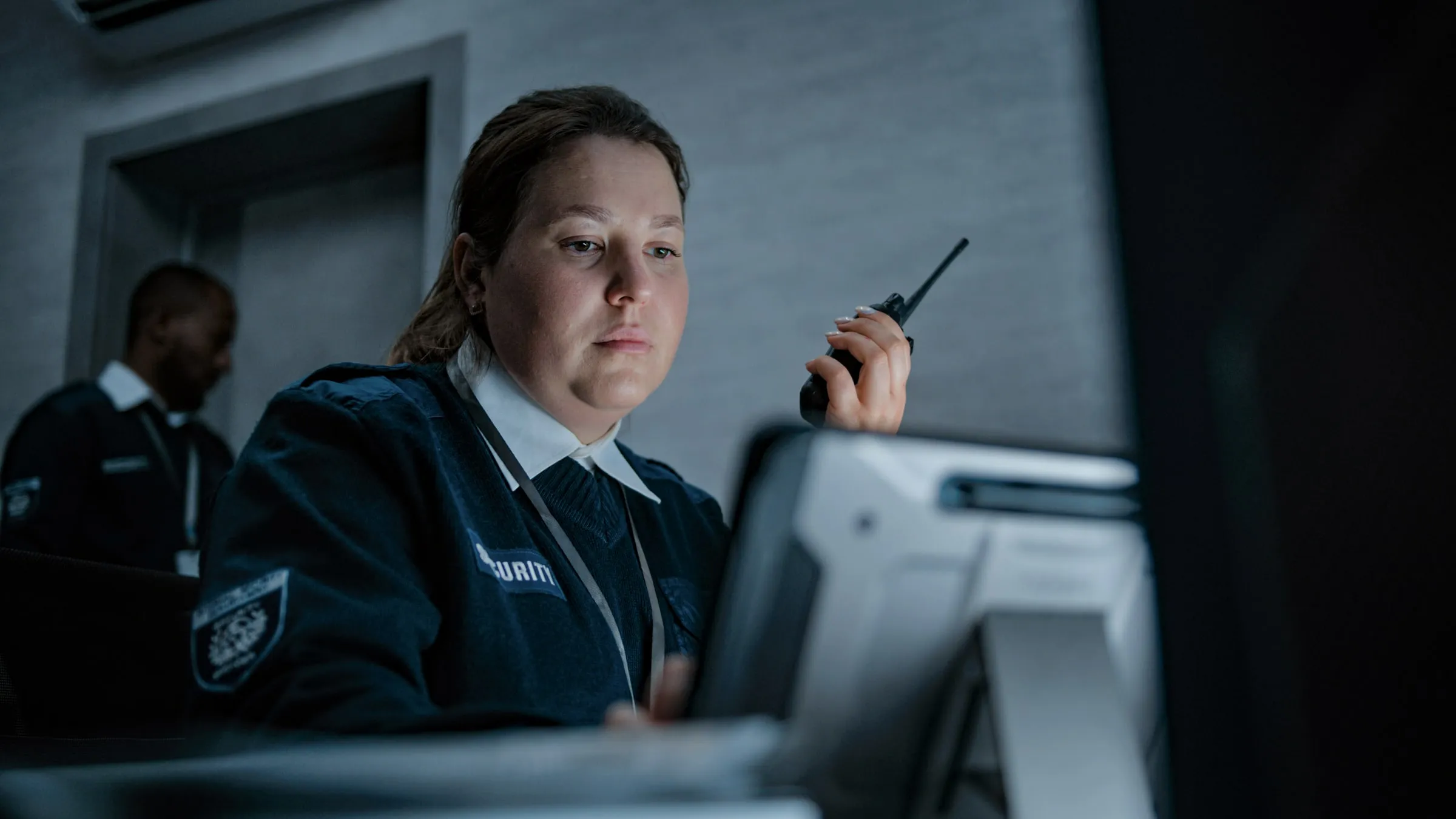
Where the campus operates its own camera system for garages, lobbies or exterior grounds, the officer monitors it from the post and pulls footage for campus safety on request rather than leaving review for after an incident.
- Incident reporting
A daily report to campus safety: buildings checked and locked on schedule, garage and lot rounds with times, persons on the property outside normal hours, and anything logged for facilities to follow up on.
A typical post
What a shift looks like here.
The evening officer starts as the daytime crowd thins, checking which buildings are scheduled to stay open for night classes or lab work and which are due to lock down. A round of the main garage notes any lighting that has gone out since the last check, since a dark stairwell at eight is a different post than the same stairwell at noon.
Through the evening the officer splits time between the occupied buildings, where a presence in the lobby or near the exit matters most as the halls empty, and the garages, where a slow patrol pass covers levels that would otherwise sit unwatched for hours. A student asking about a well-lit route to a distant lot gets a direct answer, and where the post allows it, an escort to the vehicle.
Late in the shift the officer confirms the last scheduled class or lab has let out, walks the building's exits to be sure night doors are secured, and finishes with a final garage and lot pass before the report is written: which buildings were checked, what the garages showed, and anything facilities needs to address before the next night's shift begins.
Reporting
What the daily report covers here
Every client receives a written report each day, and officer performance is reviewed and documented daily. This is what the report records on this kind of post.
- Buildings checked and confirmed locked on the campus's own schedule
- Garage and lot patrol rounds, with times and any lighting or gate issues
- Persons on campus outside normal hours and the reason given
- Vehicle break-ins or damage found on a garage or lot round
- Escort requests handled, where the campus's post orders allow them
- Facilities issues logged for follow-up: lighting, doors, gates
Can coverage focus on specific buildings instead of the whole campus?
Yes. Most college posts are built around named buildings and hours rather than the entire property, since an open campus rarely has one perimeter to hold. The proposal is scoped to the buildings and garages the campus identifies.
Do officers patrol parking garages separately from the campus grounds?
Yes, generally by vehicle, since a garage's stairwells and levels take longer to cover on foot and see far less traffic late at night than the open grounds do.
Can coverage change between the fall semester and a lighter summer schedule?
Yes. Hours and posted buildings can be adjusted at renewal or with notice as a campus's own schedule changes, so a summer session with fewer night classes is not staffed the same as a full fall term.
Do officers provide walking escorts to a parking garage at night?
Where a campus's post orders include it, yes. It is set up as a defined part of the post rather than an open-ended offer, so students and staff know what to expect and when to ask.
Can coverage be added quickly for an unplanned late building opening?
Yes. A facility issue or an unscheduled evening use of a building can be covered on short notice, separate from the campus's standing evening posts.
Related pages
Industries we serve
Service areas
Insights
Glossary
Request a proposal
Request a proposal for colleges and universities.
Two short steps. Dispatch reviews every request and calls you back about coverage. For urgent unarmed coverage we can typically staff most sites within hours.
24-hour dispatch
(281) 326-9189