
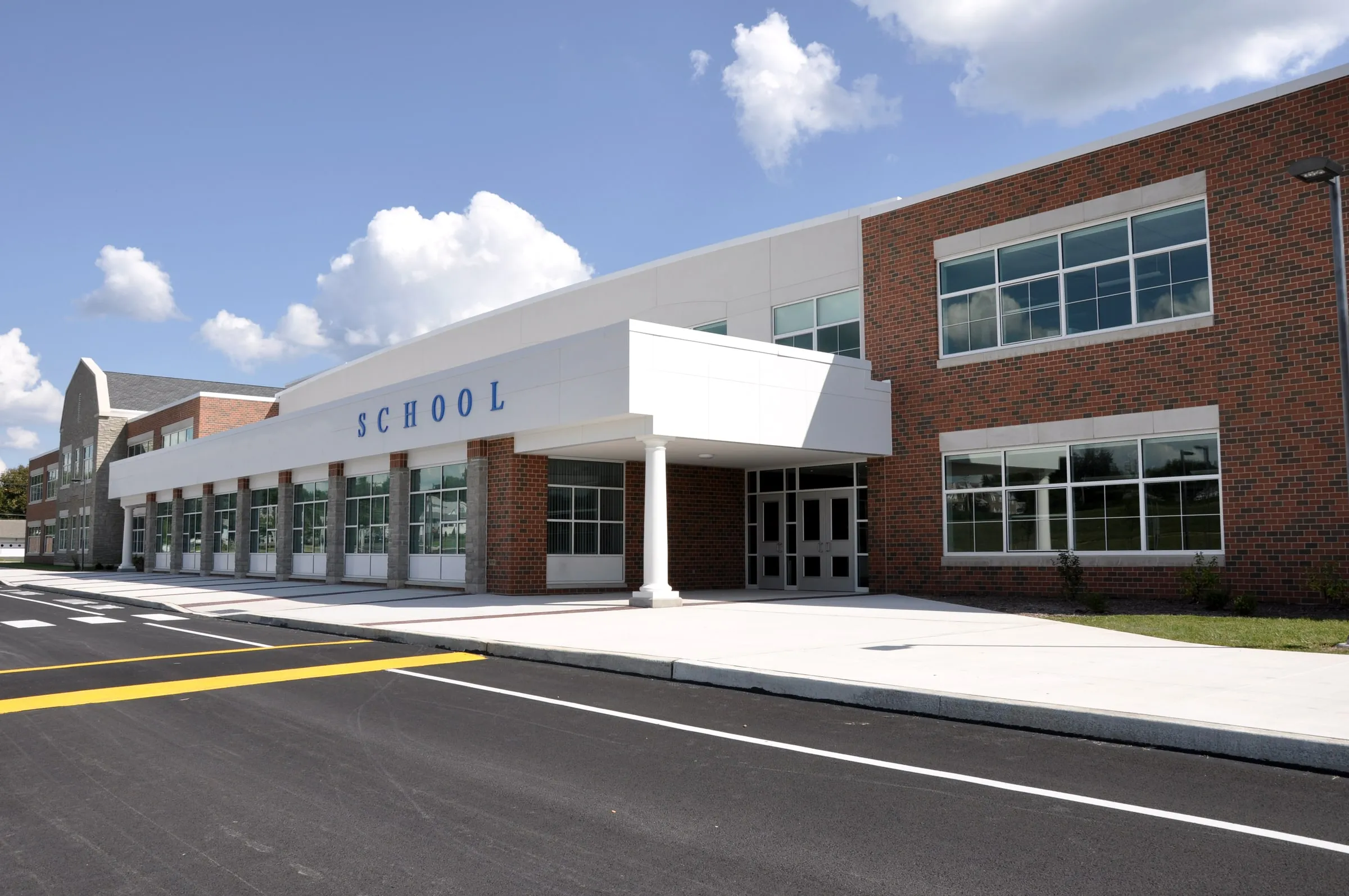
Security Guards for Charter Schools
An officer who works the building the campus actually has, not the one a purpose-built school would.
Request a proposalThe situation
What a charter campus deals with in its building
A building that was not built as a school
A former office building, retail unit or warehouse fitted out as classrooms often keeps its original storefront or lobby entrance, a door a stranger can walk straight up to without the setback or sightlines a purpose-built campus has.
A shared lot or a shared plaza
Many charter campuses sit in a business park or a strip center with other tenants, so the parking the school uses for drop-off is also public parking for the plaza, and a car with no reason to be there is not automatically out of place.
Enrollment that moves faster than the building
A charter can add a grade level or grow a waitlist mid-year, and portables or a second leased suite get added to a campus that was sized for a smaller one, changing where the entrances and the blind spots are.
A landlord's building, a school's rules
The school does not own the shell, so the cameras, the doors, the after-hours access and sometimes the fire alarm panel belong to the landlord or the property manager, and the post has to work inside that rather than around it.
The building the campus actually has
A charter school’s security starts with an honest look at the building, because it is rarely one built for the job. A converted office suite keeps its lobby turnstile or none at all; a former retail space keeps a storefront glass door; a campus assembled from portables has a ramp and a gravel path instead of a covered walkway. Price Protection writes post orders from a walk of that specific building rather than a template for a school, naming the entrance the campus actually uses, the doors between leased or added space, and the parts of the property that belong to a landlord instead of the school.
Sharing a lot with businesses that are not the school
Where a campus sits inside a business park or a strip center, the parking lot the school uses for drop-off is also the lot everyone else in the plaza uses during business hours. That means a car circling near the school’s entrance is not automatically a school family, and a school family circling near a neighboring business is not automatically the school’s problem to solve alone. The patrol pattern is built around that overlap: working the school’s own line closely while watching the edge where school traffic meets plaza traffic, and keeping the two apart at the times both are busiest.
Growth that outruns the floor plan
A charter’s enrollment can move faster than its facility, with a grade level added, a waitlist filled, or a second suite leased mid-year. Where that happens, a supervisor walks the new space and updates the post orders rather than treating the addition as an afterthought, so a portable classroom or a second-floor suite gets the same entrance and round coverage the original building has. Facilities directors who are managing a lease and a landlord relationship at the same time as a school day get one point of contact for the security side of that change.
Working inside a landlord’s systems
Many charter buildings keep cameras, door hardware, and sometimes a fire alarm panel that belong to the property owner rather than the school. The officer works within what that system provides, reports what it does not cover to the operator, and keeps the school’s own visitor and release policy as the standard applied at the door regardless of what the building’s original design intended. Where the landlord restricts after-hours access, the post orders reflect that restriction rather than assuming the school controls hours it does not.
Starting coverage
Dispatch needs a walk of the actual building or floor plan, the hours the campus operates, the current visitor and release policy, and any planned changes to the space, including a new portable or an added suite. A supervisor writes the post orders around what the building is today, and coverage can generally begin within days once that walk is done and any landlord access issues are identified in advance.
How we cover it
Every service, applied to this post.
- Unarmed security guards
An unarmed officer works the campus's actual entrance, whatever door that turns out to be, applying the front office's sign-in and release procedure and walking the leased suites or portables on rounds through the day.
- Access control
The entrance the building was built with, often a lobby or storefront door, is controlled to the school's own visitor and release policy, and doors added between leased suites or into portables are checked on rounds.
- Camera monitoring
Where the campus has its own cameras, they are watched from the post; where the landlord's system covers shared areas like the plaza or the garage, the officer coordinates with property management for what it shows.
- Vehicle patrol
A patrol vehicle works the shared lot at drop-off and pickup and through the day, watching for vehicles with no reason to be at the school's end of a plaza that other businesses also use.
- Incident reporting
A daily report to the operator or principal: visitors, doors found unsecured between leased spaces, lot activity unrelated to the school, and anything the landlord's building systems affected that day.
A typical post
What a shift looks like here.
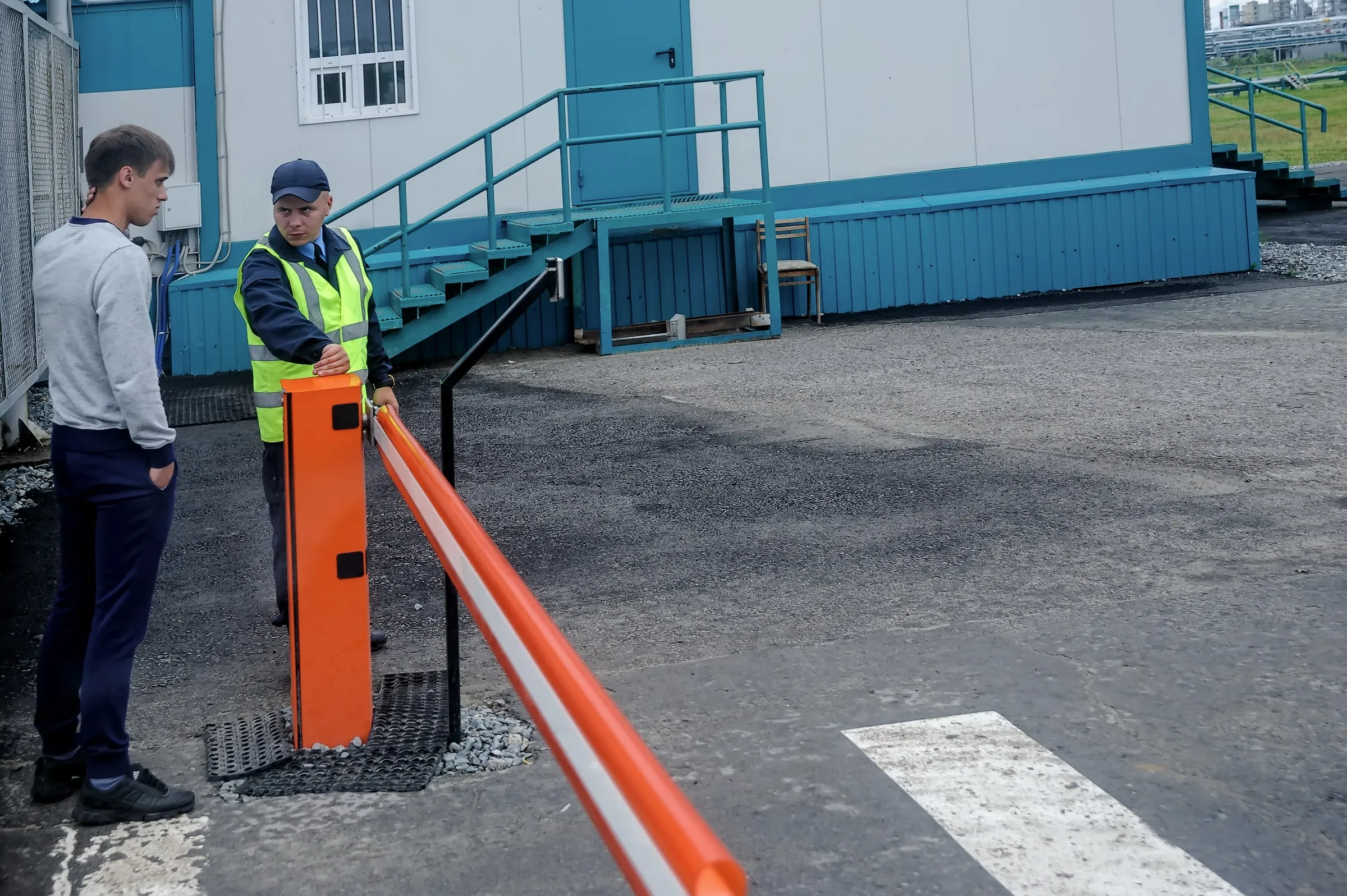
The morning officer arrives before the lot fills and checks the building's actual entrance against the day's schedule, since a charter's front door can be a converted lobby, a storefront or a temporary trailer ramp depending on how the campus was built out. Drop-off is worked at that entrance, with the shared plaza's other traffic kept separate from the school's own line where the lot layout allows it.
Through the day the officer walks the leased suites and any portables on a set round, checking doors between the school's space and whatever else is in the building, and watching the shared lot for vehicles idling near the school's entrance with no visible reason to be there. A delivery meant for another tenant is redirected rather than assumed to be the school's.
At pickup the same shared-lot pattern repeats in reverse, with the officer working the school's line while plaza traffic continues around it. The report notes anything found unsecured between the school's leased space and the rest of the building, since that boundary is the one thing a purpose-built campus would not have to watch.
Reporting
What the daily report covers here
Every client receives a written report each day, and officer performance is reviewed and documented daily. This is what the report records on this kind of post.
- Entrance and release checks at the campus's actual front door, with times
- Doors between the school's leased space and the rest of the building
- Shared-lot activity not connected to the school, with vehicle descriptions
- Visitors and contractors signed in and their reason for being on site
- Portable or added-suite rounds, with anything found unsecured
- Landlord or property-management issues affecting the campus, with times
Does the post change if our campus is in a leased or shared building?
Yes. The post orders are written from a walk of the actual building, not a standard school layout, and they name whichever entrance, shared lot or portable classroom the campus actually has.
Can coverage be added quickly if enrollment grows mid-year?
Yes. A supervisor can walk an added suite or a new portable and update the post orders without starting the arrangement over, and hours can be adjusted at the next scheduling point.
How does the officer tell school traffic from the rest of the plaza?
By the post orders, which describe the school's line, its usual hours and the vehicles connected to it. Anything outside that pattern gets a closer look and, where warranted, is logged in the report.
Do you coordinate with our landlord or property manager?
Where the building's cameras, doors or fire systems belong to the landlord, the officer works within what that system allows and reports building issues to the operator so they can be raised with property management.
Can a charter school with more than one campus use the same coverage?
Each campus gets its own post orders written from its own building, since a converted office and a converted retail unit rarely share a layout. Scheduling across campuses is arranged through dispatch.
Related pages
Industries we serve
Service areas
Insights
Glossary
Request a proposal
Request a proposal for charter schools.
Two short steps. Dispatch reviews every request and calls you back about coverage. For urgent unarmed coverage we can typically staff most sites within hours.
24-hour dispatch
(281) 326-9189