
Security guard service
Multi-Post Security Staffing for Large Facilities
Gatehouse, lobby, dock, patrol and camera room staffed at the same time, coordinated by one shift lead and reported in one document.
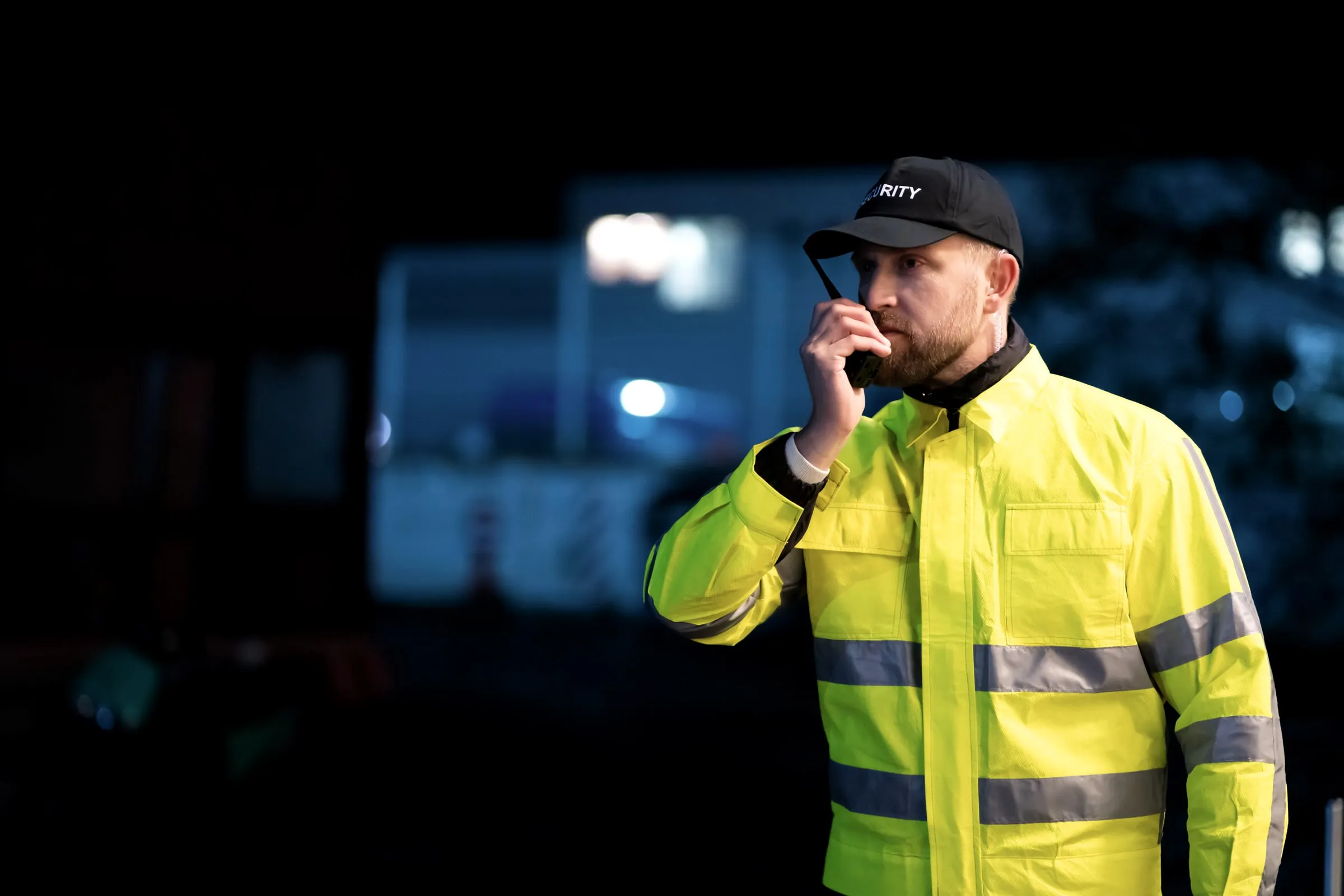
Multi-post security staffing is several guard posts on one site, staffed at the same time and run as one team: a gatehouse, a lobby desk, a dock window, a patrol and a camera room, each with its own post orders and its own line on the rota, coordinated by a shift lead over radio and reported in a single daily document. Price Protection staffs posts this way at large facilities across Greater Houston where the entrances, the ground and the hours are too much for one officer, using armed or unarmed officers as each post calls for.
Every post is surveyed on its own
A large site is not one post with a long list of duties. It is several posts with short lists, and the difference shows in the post orders. On the walk-through a supervisor stands at each location in turn: what arrives here, by which rule is it admitted, who approves the exception, what is logged, what does the officer do between arrivals, where is the nearest colleague. The answers become a separate set of post orders for that post. The dock officer’s orders talk about seals, driver identification and the day’s appointment list. The lobby officer’s orders talk about hosts, visitor badges and the elevator bank. The patrol officer’s orders are a route, a checkpoint list and the doors to try. Nobody is asked to hold four rulebooks in their head.
The shift lead holds the site together
Each shift has a lead. The lead takes a radio check from every post on a set cycle and logs it, so a post that goes quiet is noticed in minutes rather than at the end of the shift. The lead takes the client’s calls, which keeps the post officers at their doors. The lead moves the rover to wherever relief or a second pair of hands is needed, walks between posts to see each one during the shift, and writes the shift log. On most sites the lead also staffs the post nearest the client’s own people, usually the lobby or the gatehouse, so the client has a face to walk up to. Dispatch sits behind the lead at every hour and is the escalation when the lead needs an extra officer or the supervisor.
Relief without an empty post
The failure of a multi-post site is the quiet one: an officer steps away for a meal, nobody covers the door, and the gap is invisible until the report shows an admission with no name against it. The relief plan prevents this. Breaks are scheduled into the post orders at each post’s quietest hour, no two neighboring posts break at the same time, and a rover or the shift lead stands into the post before the officer leaves it. The relief is logged with both names and the time, the same way a shift change is, and the glossary entry on shift handover describes what passes between them. The supervisor’s visits check the relief log as closely as the incident log.
One report for the whole site
The client receives one daily report for the facility, not one per post. It is organized by post, with a section for the gatehouse, one for the lobby, one for the dock, one for the patrol and one for the camera room, and a short summary at the top that reads across them: what happened, what is open, what the client needs to decide. Incident reports are separate and go out when the incident happens. A security manager reading the report sees the site as a whole and can also follow a single event from the camera room’s timestamp to the patrol’s arrival to the gatehouse’s log of who left. The answer page on the daily activity report covers the format.
Adjusting the mix from the evidence
The first set of posts is a hypothesis built on the walk-through. The reports test it. After a few weeks they show which posts carry the activity, which hours at each post are quiet, where the patrol keeps finding the same propped door and whether the dock really needs its own officer after mid-afternoon. The mix is then adjusted with the client: a post is lengthened, shortened, merged with its neighbor or added. Because each post is a line on the rota and a section in the post orders, those changes are small edits rather than a renegotiation, and the staffing worksheet is a useful way to see the whole picture when they are made.
Where several posts run at once
Data centers with a gatehouse, a lobby mantrap and a mechanical yard patrol. Plants and terminals with a truck gate, an employee gate and a perimeter. Corporate campuses with a main lobby, parking structures and a loading dock. Distribution centers with a driver window, a dock and a yard. Large apartment communities with a staffed gate and a courtesy patrol on the same night. Each of these runs as one team under one shift lead, and the enterprise security page describes how several such sites are run as one account.
When you need it
When multi-post staffing is the right call.
One officer cannot be at the gate and the dock at once
A truck gate at the back of the site, a visitor lobby at the front, a dock running from six in the morning. When the arrivals overlap, one roving officer leaves one of them unattended for part of every hour, and the log shows gaps nobody intended.
The camera room needs eyes while the patrol walks
A facility with a monitor wall wants an officer watching it, and the perimeter still needs rounds. Two different jobs on the same clock mean two posts, and a radio between them so the camera operator can send the patrol to what the screen shows.
The site is too large to walk in a round
A plant with several buildings, a campus with parking structures at both ends, a logistics park with a long fence line. Rounds that take most of a shift leave the entrances unstaffed; fixed posts at the entrances plus a vehicle patrol between them cover the ground without the gap.
Different entrances have different rules
The employee door is badge-only, the visitor lobby needs a host, the contractor gate works from the day's work orders, the dock checks seals. Each is its own set of post orders, and an officer who covers all four from memory will eventually apply the wrong rule at the wrong door.
Starting coverage
What dispatch needs to start.
- A site plan marking every entrance, dock, lobby, camera room and the ground the patrol must cover
- The hours each post runs; they rarely match, and the rota is built post by post
- The access rule at each entrance and who approves an exception there during the day and at night
- Whether a vehicle is needed for the patrol post and where it can be parked between rounds
- The client's contact for the shift lead on each shift and the format the combined report should take

How does a shift lead coordinate several posts at once?
By radio and by walking. The shift lead takes a check-in from every post on a fixed cycle, moves the rover to whichever post needs relief or help, takes the client's calls so the post officers are not pulled off their doors, and keeps the shift log that becomes the combined daily report. On most sites the shift lead also holds one of the posts, usually the one nearest the client's staff.
What happens when an officer on one post takes a break?
A rover or the shift lead steps into that post before the officer leaves it, and the handover is logged with both names and the time. The break schedule is written into the post orders so breaks fall at the quieter hours of each post, and no two adjacent posts break at once.
Can the posts have different hours from each other?
Yes, and they usually do. A dock post may run from early morning to mid-afternoon, a lobby post through office hours, a gatehouse and a patrol around the clock. Each post has its own line on the rota and its own section in the post orders. The combined report still covers the whole site for the whole day.
How do you decide the right number of posts for a site?
From the walk-through and then from the reports. The walk-through identifies the entrances that must be staffed, the ground that must be covered and the hours each is active. After the first weeks the daily reports show which posts carry the activity and which hours are quiet, and the mix is adjusted with the client: a post is extended, shortened, merged with a neighbor or added.
Is the camera room officer part of the same team as the patrol?
On a multi-post site, yes. The camera operator and the patrol share a radio channel and a shift lead, so what appears on the monitors is passed to the officer on the ground within the same minute, and what the patrol finds is recorded against the camera timestamp. Both appear in the same section of the combined report.
Related pages
Industries we serve
Services
Insights
Glossary
Resources
Where we are
Multi-post staffing across Greater Houston.
Every area below is staffed and supervised from our Sugar Land headquarters. Open an area to see the property types, neighborhoods and questions we hear there.
24-hour dispatch
(281) 326-9189Fort Bend County
Sugar Land and its neighbors, closest to our headquarters.
Houston
Neighborhoods and business districts inside the city.
North and west
Katy and Cypress up to The Woodlands and Conroe.
South and east
Pearland and Clear Lake across to Pasadena and Baytown.
Request a proposal
Request a proposal for multi-post staffing.
Two short steps. Dispatch reviews every request and calls you back about coverage. For urgent unarmed coverage we can typically staff most sites within hours.
24-hour dispatch
(281) 326-9189