
Fire watch and compliance
What Is a Fire Watch? A Plain-English Guide for Property Owners
By Price Protection SecurityReviewed TX DPS Lic #B09430601
Short answer
A fire watch is a trained person assigned to walk a building or a work area continuously and look for fire while the protection a code or permit relies on is missing. That happens two ways: a required sprinkler, alarm or standpipe system is out of service, or hot work such as welding or torch roofing is under way. The watch carries no other duties and keeps a written log until the system is restored or the post-work period has passed.
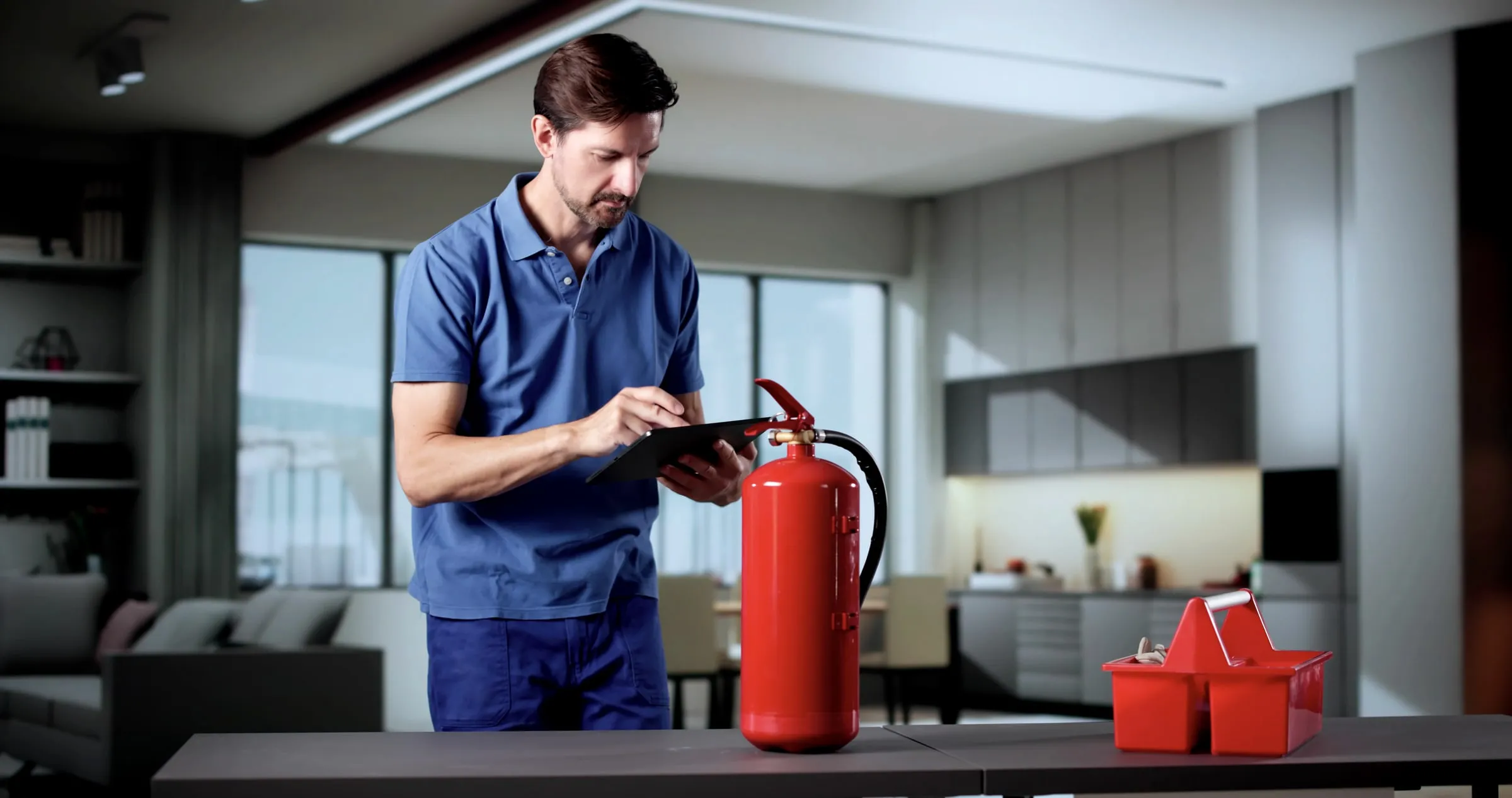
A fire watch stands in for a system that is not working
Every occupied building is permitted on the assumption that its fire protection works: the sprinklers will knock down a fire before it spreads, the alarm will tell people to leave, the standpipe will give firefighters water on the tenth floor. A fire watch exists for the hours or days when one of those pieces is missing, either because a required system has failed or been shut off, or because the work happening in the building is itself capable of starting a fire the way welding, cutting and torch-applied roofing are. In both cases the fire code’s answer is the same: put a trained, dedicated person in the space with no job but to notice fire early, raise the alarm and call for help.
That is the whole idea. It is not a form of security patrol wearing a different name, though a Price Protection officer trained for both can run a security post and a fire watch on the same shift where the post orders allow it. A fire watch has a narrower purpose and a schedule set from outside the building, by a code section, a fire marshal or a hot-work permit, rather than by the property manager’s own judgment about risk.
The two situations that actually require one
Almost every fire watch a Texas property owner will ever book falls into one of two categories, and they come from different rulebooks.
A required system is out of service. Section 901.7 of the International Fire Code, which Houston and most Texas jurisdictions adopt with local amendments, requires that when sprinklers, a fire alarm, a standpipe or a fire pump go out of service, the fire department and the fire code official are notified immediately, an impairment coordinator is named, and, where the official requires it, the building is either evacuated or kept occupied under an approved fire watch until the system is back and tested. The IFC 901.7 article works through that section clause by clause.
Hot work is happening. Welding, cutting, brazing and torch-applied roofing throw sparks and slag that can travel and smolder in insulation or debris long after the torch is off. OSHA 29 CFR 1910.252(a)(2)(iii) requires a fire watch wherever combustibles sit within 35 feet of the work, sit farther away but could still catch a spark, or are exposed through an opening in a wall or floor, and the watch continues at least 30 minutes after the work stops. NFPA 51B, which most hot-work permits reference, asks for at least an hour. The OSHA hot-work article covers that standard in full.
A third, less common trigger is a contract or insurance condition: an owner’s representative, a general contractor or an insurer’s impairment permit can require a watch even when the code does not strictly demand one for a particular duration, and that requirement is treated the same way once it exists.
| Trigger | Governing rule | What starts the clock | What ends it |
|---|---|---|---|
| A required system out of service | IFC 901.7, as adopted locally | The system goes down and is reported | Restored and tested |
| Hot work | OSHA 29 CFR 1910.252(a)(2)(iii), NFPA 51B | The torch is lit | Work stops, plus the post-work period |
| Contract or insurance condition | The permit, policy or site rule | Whatever the document sets | Whatever the document sets |
What actually happens during the watch
Once a watch starts, the job is narrower than it sounds. For an impairment, the officer walks the areas the system would have protected, on an interval set by the fire code official or, absent a specific number, by the coordinator from the building’s fire plan, looking and smelling for smoke and heat, checking that exits are clear and extinguishers are where they belong, and logging each round with the time. For hot work, the officer does not patrol at all; the job is to stay where the sparks land, watch the floor below an opening or the far side of a wall being cut, keep an extinguisher within reach, and remain through the post-work period once the tools are down.
If a fire is found, the sequence is the same in either case: raise the alarm by whatever method the post orders set for a building whose system may be down, call 911, warn occupants, and use an extinguisher only on a fire small enough to put out safely. Everything gets written down, with times, because to an inspector or an insurer a watch that was not logged did not happen.
Who can perform the watch
The fire code official decides who counts as an approved fire watch for a given building, and the answer is not fixed. Some buildings cover a short daytime valve closure with their own maintenance staff, who know the layout and can call 911 as well as anyone. Longer watches, overnight coverage, emergencies that start at midnight and hot-work watches on construction and renovation sites more often go to a contracted security company whose officers are trained specifically for this and have no other duties competing for their attention during the watch. Price Protection staffs permanent, temporary and emergency fire watches across Greater Houston, and the who can perform a fire watch article goes further into where that line usually falls.
Getting a watch started
Dispatch needs a short list of facts to open a fire watch: the address and the type of building, which system is down or what hot work is planned, the areas affected, whether the fire marshal has already given a direction, the round interval if one has been set, and the name of the coordinator or permit holder. With that, officers can be assigned and post orders drafted while they are en route, and the log opens the moment they arrive on site. For a planned shutdown there is time to schedule the watch around the contractor’s window; for an emergency, the same call opens it the same day.
This is a summary, not legal advice. A property’s own fire code official has the final say on what a specific building must do, and the articles linked throughout this guide go deeper into each piece: the impairment side, the hot-work side, the coordinator’s role and the log that ties it all together.
Questions
Related questions
Is a fire watch the same thing as a security patrol?
No, though the same officer can do both if the post orders say so. A security patrol watches for people and property crime on a route set by the manager. A fire watch watches for smoke and heat, on a route and interval set by the fire code official or the hot-work permit, and it stops the moment the underlying condition ends.
Does every building need to know about fire watch rules even if nothing is ever out of service?
It helps to know the two triggers before a system fails, because the first hours of an impairment are the ones where a building can fall behind: notifying the fire department, naming a coordinator and starting a watch all happen at once, and knowing the sequence in advance shortens it.
What is the very first call to make when a system goes down?
The fire department and the fire code official, immediately, then the building's own impairment coordinator or, if one has not been named, whoever is filling that role for the moment. Dispatch for a fire watch officer can be the next call, and the watch and the notification can happen in parallel.
Related pages
Insights
- IFC 901.7: What Happens When a Sprinkler System Is Out of Service
- OSHA Fire Watch Rules for Hot Work: 29 CFR 1910.252 Explained
- Impairment Coordinators: The Role Every Building Should Assign
- Fire Alarm Outages: When a Fire Watch Is Required
- Fire Extinguisher Checks During a Fire Watch
- Fire Watch After a Fire: Securing a Damaged Building
Answers
Glossary
Request a proposal
Request a proposal for your property.
Two short steps. Dispatch reviews every request and calls you back about coverage. For urgent unarmed coverage we can typically staff most sites within hours.
24-hour dispatch
(281) 326-9189