
Fire watch and compliance
Who Is Qualified to Perform a Fire Watch in Texas?
By Price Protection SecurityReviewed TX DPS Lic #B09430601
Short answer
Texas has no license category specifically for fire watch. The fire code official decides for a given building who may perform an approved watch, usually accepting trained building staff for a short daytime impairment and expecting a contracted, continuously present officer for anything overnight, multi-day or tied to hot work. Price Protection's officers hold Texas DPS security registrations and fire watch training, which is separate from any fire watch-specific credential, because none currently exists.
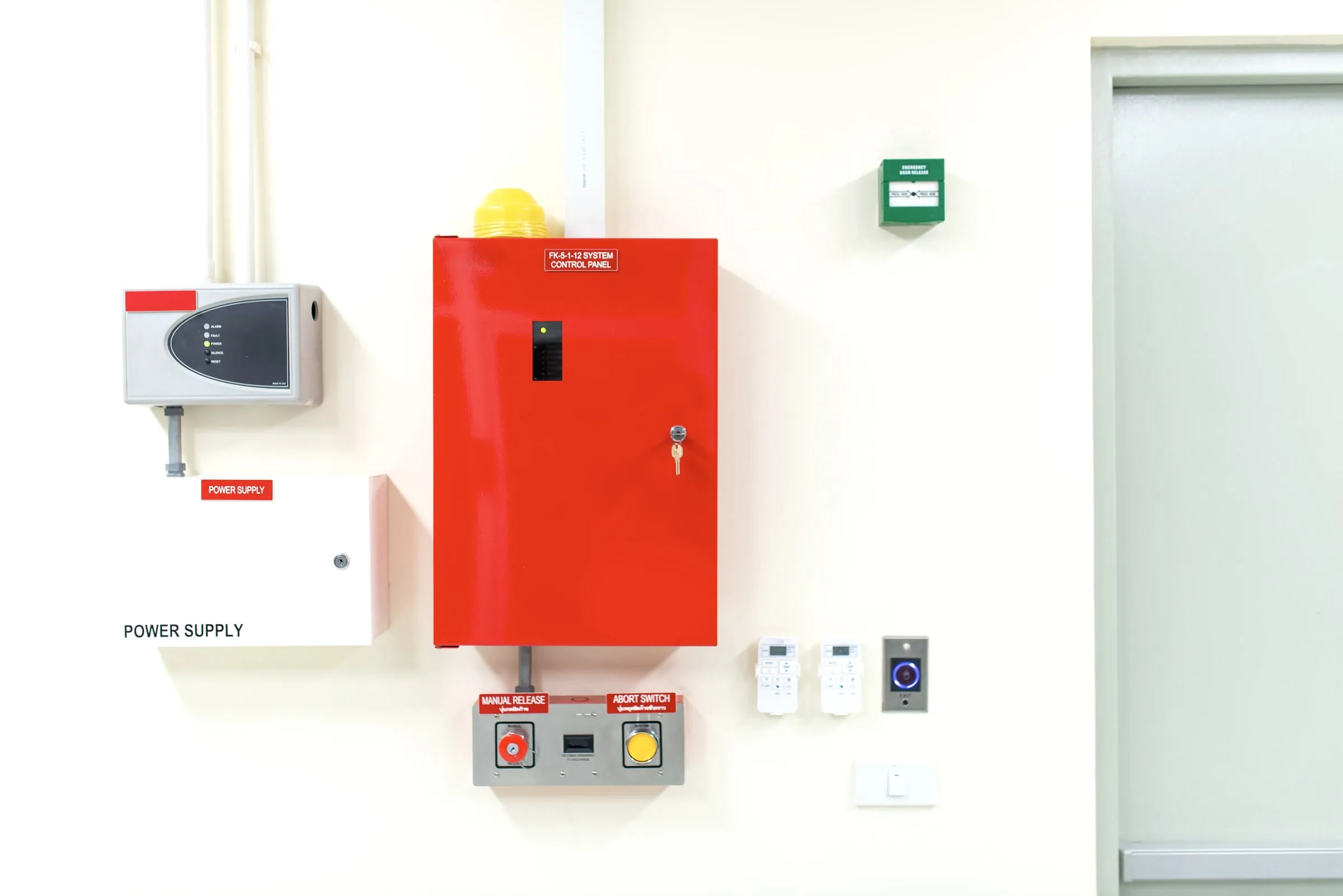
A property arranging its first fire watch often expects to find a license number to check, the way it would for an electrician or an armed guard. Texas does not have one. Fire watch is not a licensed occupation under state law, which means the question of who may perform one is answered by the fire code, building by building, rather than by a credential printed on a card.
No license, one decision-maker
Texas Occupations Code chapter 1702, administered by the Texas Department of Public Safety’s Private Security Program, licenses security guard companies and registers individual officers by level: Level II non-commissioned after a 30-hour course, Level III commissioned after a 45-hour course including firearms proficiency, Level IV personal protection officer with further training. None of those levels is written around fire watch duty specifically. The authority that actually decides who may perform an approved fire watch is the fire code official, in Houston the Fire Marshal’s Office, under the International Fire Code’s section on systems out of service. That official can accept trained building staff, require a contracted officer, or set conditions particular to the building, and there is no statewide rule that overrides that local judgment. This is a summary, not legal advice.
What “approved” looks like on paper, or doesn’t
Approval rarely arrives as a formal certificate. It shows up as a line in an impairment permit naming who is performing the watch, a condition an inspector states during a walk-through and the coordinator writes down afterward, or a requirement in an insurer’s impairment permit that the building agrees to as a condition of coverage during the shutdown. A coordinator who cannot point to where that approval is documented, even informally, has a gap in the building’s file that matters if a fire marshal or an adjuster asks about it later. Getting the authority’s direction in writing, even a short email confirming a verbal instruction, is worth the extra step.
Staff, a contractor’s crew, or a security company: the real differences
The choice among these three usually comes down to how long the watch needs to run and whether the person has any other job to do at the same time, not which one is inherently more qualified on paper.
| Who performs it | Works well for | Struggles with |
|---|---|---|
| Trained building staff (engineer, maintenance) | A short daytime impairment, a few hours, one location | Overnight coverage, multi-day watches, being genuinely free of other duties |
| A contractor’s own crew member | Hot work the contractor is already doing, for that specific task | Watches unrelated to the contractor’s own work; ends when the crew leaves |
| A contracted, trained fire watch officer | Overnight, multi-day, emergency and hot-work watches with no competing duties | Nothing structurally; the tradeoff is arranging it in advance where possible |
What sits behind a contracted officer
Price Protection’s fire watch officers hold Texas DPS security registrations, issued after a criminal history background check, and complete training in fire safety, extinguisher use, incident reporting and the log format an inspector expects to see. That registration is a general security credential, not a fire watch-specific license, since Texas has not created one; what it adds is a documented background check and a company, licensed under a Class B security contractor license, that stands behind the person performing the watch. A property choosing between its own untrained staff and a contracted officer is really weighing continuity and training against familiarity with the building, and for anything longer than a short daytime impairment, continuity tends to decide it.
Naming the officer in the log
Whoever performs the watch, the log records who: the officer’s name, and for a contracted officer, a registration number, alongside the coordinator’s own name and the building’s address. That header line is what lets a fire marshal or an adjuster confirm after the fact that an actual, identifiable person covered the watch for its full duration, not that a shift was simply assumed to be staffed. A log with rounds recorded but no name attached to them is a weaker record than one that names the officer at every handover.
When staff coverage stops making sense
A short valve closure on a weekday afternoon, with an engineer already on site and no other pressing task, is a reasonable case for staff to cover. The moment the impairment is expected to run overnight, into a second day, or coincide with hot work that needs a dedicated watcher at the spark radius, the same engineer has other responsibilities pulling at their time, and the fire marshal’s or the insurer’s expectation of a continuous, undistracted watch becomes hard to meet honestly. That is the point at which most buildings call for a contracted officer, not because staff are unqualified in principle, but because the job genuinely needs someone with nothing else to do for the length of the watch.
A question worth asking before the impairment happens
Buildings that only think about who will perform a fire watch after the valve is already closed tend to make the decision under pressure, sometimes assigning it to whoever happens to be on site rather than whoever is genuinely available for the duration. A coordinator who asks the question ahead of time, as part of the same planning that sets the building’s annual testing calendar, can decide in advance which impairments staff will cover and which will call for a contracted watch, and can have dispatch’s number ready rather than searching for it while the fire marshal is already on the phone asking who is watching the building.
What changes for a hot-work watch specifically
Hot work adds a wrinkle staff coverage rarely handles well: the watcher cannot be the person holding the torch, and cannot be a crew member who is also expected to help with the work itself. OSHA’s rule assumes a dedicated watcher whose only task is watching, which is one reason contractors on anything beyond a brief, low-risk task tend to bring in a trained fire watch officer rather than pull a tradesperson off the crew to stand and watch. A property that assumes its maintenance staff can double as the hot-work watch on a contractor’s project should confirm that assumption with the contractor’s own permit requirements before the day of the work, not after the crew has already arrived expecting a dedicated watcher.
Questions
Related questions
Is there a Texas license specifically for fire watch work?
No. Texas Occupations Code chapter 1702 licenses security guard companies and registers individual officers by level, Level II, Level III and Level IV, but none of those levels is defined around fire watch specifically. The fire code, not the occupations code, is what governs who may perform an approved watch.
Can a maintenance technician who also holds a security registration perform the watch?
The registration is not what qualifies them; fire watch training and availability are. A technician with a security registration but no fire watch training, or one who is also fielding maintenance calls during the watch, does not meet the continuity and training the role requires any more than an untrained technician would.
Does the fire marshal put the approval of who performs the watch in writing?
Sometimes, as a condition on an impairment permit or an inspection report; sometimes it is a verbal direction given during a site visit that the coordinator documents afterward. Either way, the building's file should show what the authority actually said, not just what the coordinator assumed.
What training does an officer have before a fire watch shift?
Recognizing early signs of fire and smoke, using a portable extinguisher, following the specific alarm method the post orders set for that building, and completing the log correctly. Officers also hold a Texas DPS security registration after a background check, which is a separate requirement from the fire watch training itself.
Related pages
Insights
Answers
Request a proposal
Request a proposal for your property.
Two short steps. Dispatch reviews every request and calls you back about coverage. For urgent unarmed coverage we can typically staff most sites within hours.
24-hour dispatch
(281) 326-9189