
Fire watch and compliance
Fire Watch vs Security Guard: What Is the Difference?
By Price Protection SecurityReviewed TX DPS Lic #B09430601
Short answer
A security guard post is staffed for an ongoing purpose the property sets, deterring loss, controlling access, patrolling grounds, and typically runs for as long as the contract does. A fire watch is staffed for a specific, temporary condition a fire code or OSHA regulation defines, a sprinkler or alarm system out of service, or hot work under way, and it ends when that condition ends. The training, the equipment and the log each carries are built around those different jobs.
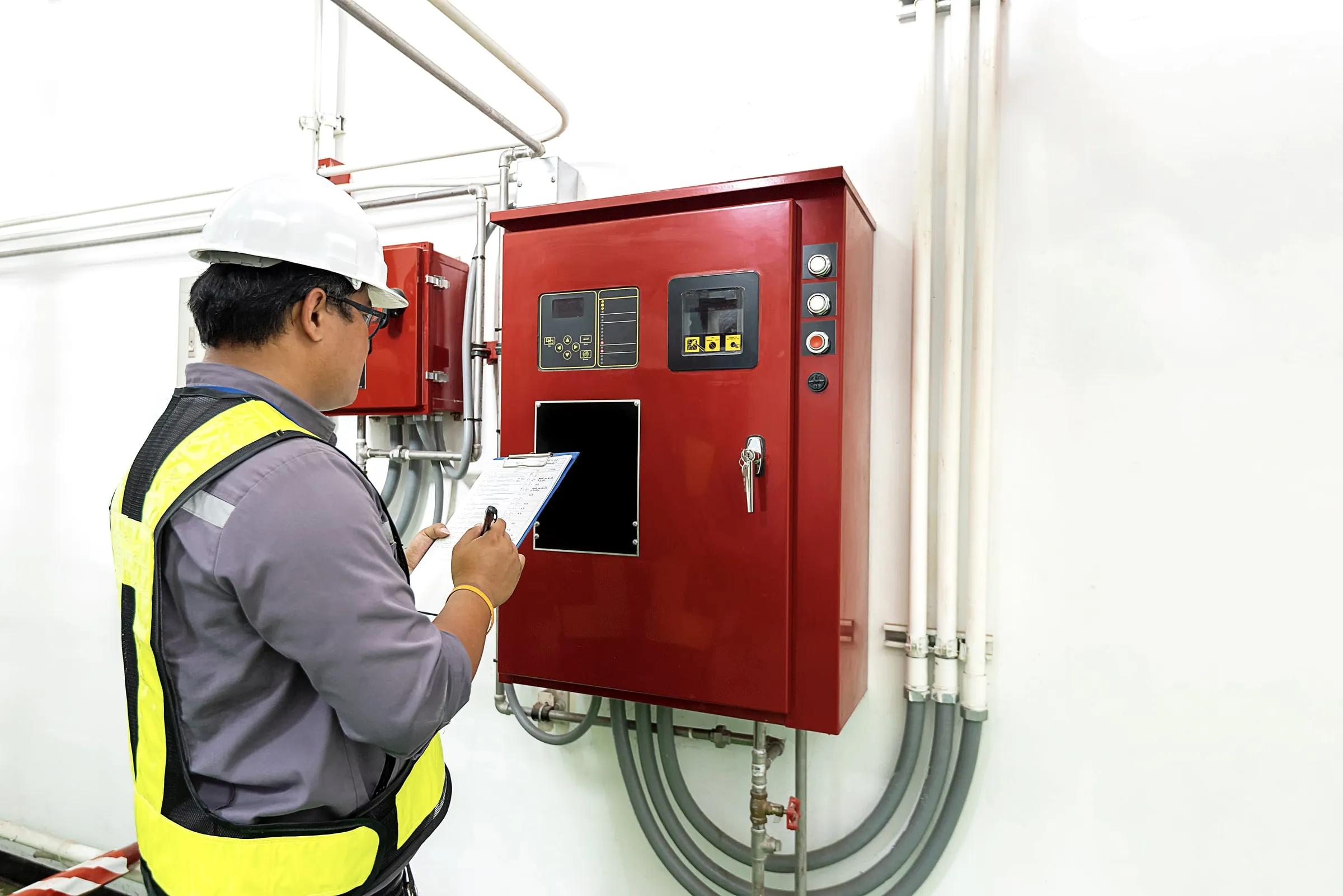
Both a fire watch and a security guard show up in a uniform, carry a radio and keep a written record of the shift, and it is easy to assume one is just a version of the other. The two jobs answer different questions, though, and the difference shows up in what triggers the post, what the officer actually watches for, what gets carried, and what has to happen before the post can end.
Different trigger, different clock
A security guard post exists because a property has an ongoing need, deterring theft at a warehouse, checking visitors at a gate, patrolling an apartment community overnight, and it runs for as long as the contract calls for it, renewed and adjusted as the property’s needs change. A fire watch exists because a specific, defined condition is true right now: a required fire protection system is out of service under IFC 901.7, or hot work is under way within the distance OSHA’s welding standard sets. The fire watch’s clock starts when that condition starts and stops when it is resolved, whether that takes two hours or two weeks; it is not renewed the way a security contract is, because there is nothing to renew once the sprinklers are back on line or the torch has gone cold for the required period.
What each one is actually watching for
A security officer’s attention is spread across a property: who is coming and going, whether a gate or a door has been left open, whether a vehicle in the lot looks out of place, whether a call from a resident or a tenant needs a response. A fire watch officer’s attention is narrow and specific: smoke, heat and anything burning, in the areas a lost system or hot work puts at risk, on a route built for that purpose alone. A fire watch officer with other duties, answering the property’s general security calls at the same time, is not really watching for fire the way the role requires; that is why the roles are kept distinct even when combined into one shift with the property’s agreement.
| Security guard | Fire watch | |
|---|---|---|
| What starts it | A property’s ongoing security need | A system impairment or hot work, as defined by code |
| Typical duration | Length of the contract, ongoing | Length of the condition, hours to weeks |
| What the officer watches for | People, vehicles, access, property condition | Smoke, heat, fire risk in the affected area |
| Equipment | Radio, and a firearm for an armed post | Radio, extinguisher knowledge, no firearm |
| The record kept | Daily activity report and incident reports | Fire watch log, rounds and closing entry |
| What ends it | The contract or the manager’s decision | Restoration and test, or the post-work period ending |
Training built for different jobs
Security officers are trained in security protocols, customer service, incident reporting, first aid and fire safety, and an armed officer holds a Texas Level III commission after a 45-hour course including firearms proficiency; an unarmed officer typically holds a Level II registration after a 30-hour course. Fire watch training focuses on recognizing fire and smoke early, using an extinguisher on a fire small enough to put out safely, knowing the building’s alarm method when the system itself is down, and keeping a log an inspector can read. Many of Price Protection’s officers hold both a security registration and fire watch training, which is what makes combining the two roles on one post possible, but the training itself is not the same course twice; it covers two different sets of judgment calls.
When the two are combined
The clearest case for combining them is a building damaged by fire, flood or storm: the fire watch rounds cover rekindle and any system still impaired, while security duties cover the perimeter, the openings and the people who show up wanting to look, salvage or shelter. A hot-work project on an occupied building sometimes combines the two as well, with the fire watch stationed at the work and a separate security presence covering the rest of the property during the same hours. Where the two are combined, the post orders name both sets of duties explicitly and each is logged on its own record, so a fire marshal reviewing the fire watch log and a property manager reviewing the daily report each see a complete account of their own concern.
Who can require each one
A security guard post is entirely the property’s choice: a manager, an owner or a lender decides the property needs one and contracts for it, and no outside authority has to approve the decision. A fire watch is different. The fire code official, the insurer or a hot work permit can each require one whether or not the property would otherwise have chosen to staff it, and the property’s only real choice at that point is who performs the watch, not whether one is needed. That distinction matters when a manager is deciding how urgently to act: a security post can be planned on the property’s own timeline, but a fire watch that the fire marshal has required has to start on the timeline the authority sets.
How the cost is thought about differently
A security contract is priced against an ongoing schedule the property controls: so many hours a week, for as long as the arrangement runs, adjusted at renewal. A fire watch is priced against a condition of unknown length: an impairment that might close in an afternoon or run for a week, and the property does not always know at the start of the call which it will be. That uncertainty is a real part of what makes fire watch feel different to book than a standard security post, and it is also why a coordinator who can give dispatch a contractor’s honest estimate up front gets a more accurate initial plan than one who cannot.
Deciding which one your property needs
Start with what triggered the call. A sprinkler valve closed for repair, an alarm panel in trouble, or a contractor with a hot work permit each call for a fire watch, and the code sets the terms for how long it runs. A concern about theft, unauthorized access, disturbances or general property condition calls for a security guard post, staffed on the schedule the property sets rather than a code-defined window. Some situations call for both at once, and dispatch can staff either or both from a single call, but naming the actual trigger first is what determines which post, or which combination, fits the property’s situation.
Questions
Related questions
Can the same officer be both the fire watch and the security guard on one post?
Yes, where the post orders say so and the officer is trained for both roles. A building damaged by fire, for example, often combines fire watch rounds for rekindle with security duties for the perimeter and the openings, with each duty logged separately even when one officer performs both.
Does a fire watch officer carry a firearm?
No. Fire watch is an unarmed role built around observation, extinguisher use and raising the alarm, not enforcement. A property that also wants an armed presence during an impairment or a hot-work project arranges that as a separate, additional post.
Which one do we need if our fire alarm panel just failed?
A fire watch, staffed on the interval the fire marshal or your coordinator sets, walking the zones the panel would have covered. If the property also wants deterrence or access control during the same period, a security post can run alongside it, but the alarm outage itself calls for the fire watch.
Do fire watch officers write the same daily report as security guards?
No. A fire watch keeps a fire watch log, organized around rounds, checkpoints and the impairment or hot work, signed by the coordinator or the permit holder. A security post's daily report is organized around patrols, calls and incidents, reviewed by the property manager. A combined post produces both records.
Related pages
Insights
Answers
Glossary
Request a proposal
Request a proposal for your property.
Two short steps. Dispatch reviews every request and calls you back about coverage. For urgent unarmed coverage we can typically staff most sites within hours.
24-hour dispatch
(281) 326-9189