
Fire watch and compliance
Fire Watch for Warehouses and Cold Storage
By Price Protection SecurityReviewed TX DPS Lic #B09430601
Short answer
A warehouse fire watch is built around square footage and blocked sightlines: high-piled racking cuts visibility to a single aisle at a time, so the route is planned aisle by aisle rather than as one open sweep, often covered partly by vehicle where the building is large. Cold storage adds insulated panel construction and refrigeration equipment to what the watch has to account for, along with officers working in a cold environment for the length of the watch.
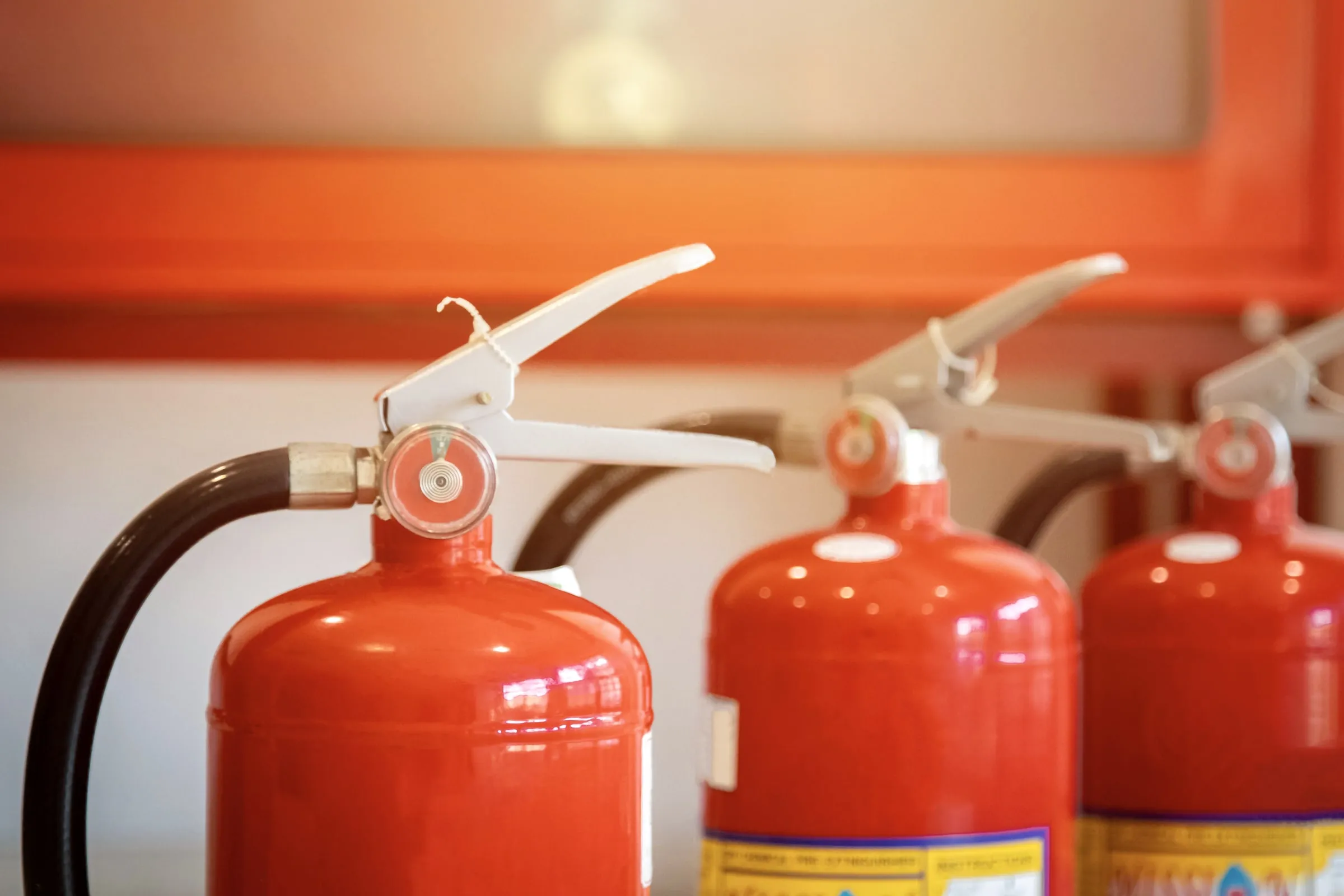
A warehouse rarely triggers a fire watch for the reason a hotel or an office building does. It is not usually a single valve closure over a small footprint; it is often an alarm outage or a sprinkler impairment spread across tens or hundreds of thousands of square feet, stacked with racking that blocks sightlines the moment an officer steps into an aisle. Cold storage adds a second layer entirely, insulated construction and refrigeration equipment on top of everything a dry warehouse already presents.
Square footage decides the route before the industry does
Two buildings can have the same impairment, a fire alarm zone down, and need very different watches simply because one is forty thousand square feet and the other is four hundred thousand. A route sized for the smaller building on foot alone becomes unworkable on the larger one inside any reasonable interval, and a supervisor’s first job on a large distribution center is to time a proposed route honestly before committing to how it will be walked. Where the footprint is large enough, the route splits: open floor and dock areas covered by vehicle, rack aisles and mezzanines covered on foot, with the post orders specifying which is which so the officer is not guessing mid-shift.
What racking does to a round
High-piled storage turns a warehouse floor into a series of narrow corridors rather than one open room. An officer standing at one end of an aisle cannot see the next aisle over, which means a round has to actually travel down each aisle rather than sweep the floor from a distance, and checkpoints are placed along the aisles themselves, not only at their ends, so a scan or a log entry proves the officer covered the length of it. Racked product also adds fuel load in a concentrated footprint, which is part of why fire watch on an impaired system in a fully loaded warehouse gets taken seriously even where the building’s overall risk profile might otherwise seem straightforward.
What is different about cold storage
Cold storage buildings are commonly built with insulated metal panels, a construction method that behaves differently in a fire than standard warehouse walls and roofing, which is part of why an impairment on a cold storage facility’s fire protection is not treated as a lesser concern just because the space is refrigerated. The refrigeration equipment itself, compressors, condensers and the mechanical rooms that house them, is also part of what a watch has to account for, since that equipment represents its own set of hazards distinct from the racked product. Doors on a cold storage facility are also built to stay closed for temperature control, which changes how a route is planned: an officer’s path has to account for doors that are not meant to be propped, and the post orders describe how access is arranged without compromising the space’s temperature for longer than necessary.
| Consideration | Dry warehouse | Cold storage |
|---|---|---|
| Construction | Standard walls, roofing, open racking | Insulated panel construction throughout |
| Equipment to account for | Racking, dock equipment, chargers | Refrigeration compressors and mechanical rooms, plus racking |
| Doors on the route | Generally open or easily propped | Built to stay closed; access planned around temperature control |
| Officer conditions | Standard ambient conditions | Rotated exposure to cold, warm-up time between rounds |
Working around a building that does not stop moving
Most warehouses and distribution centers do not pause operations for a fire watch. Forklifts, dock traffic and shift changes continue, and the officer’s route and staging point are planned around that activity rather than through the middle of it. Post orders note dock hours, shift-change times and any area where equipment traffic makes a standard walking route unsafe, and the officer coordinates with the site’s own operations supervisor on where to stand between rounds so the watch does not become an obstacle to the work still happening around it.
Hot work on racking and refrigeration systems
Warehouse maintenance regularly includes hot work: repairing racking, cutting into a refrigeration line, welding a dock leveler. Each of these triggers OSHA’s fire watch requirement on its own terms, separate from any building-wide impairment that might also be running. A large facility can have an alarm-outage watch covering the whole building and a hot-work watch on one specific racking repair happening at the same time, each logged separately, and dispatch keeps the two distinct so a report on one does not get confused with the other.
Mezzanines, racking offices and the spaces above the floor
Many distribution centers build a mezzanine level into the racking structure, office or picking space suspended above the main floor, and that level needs its own place in the route rather than being treated as an extension of the ground floor below it. Stairwells and lifts connecting to a mezzanine are natural checkpoints, and a fire watch route that only covers the ground floor because that is where most of the traffic is misses exactly the kind of enclosed, less-visited space where an unnoticed hazard can sit longest. A supervisor building the route asks specifically whether the building has mezzanine or elevated office space, since it is the kind of feature easy to overlook on a phone description of a warehouse but obvious the moment someone walks the floor.
Houston’s distribution corridor and what it means for scheduling
Warehousing and distribution along Houston’s Beltway, the Ship Channel corridor and the growing logistics parks further out means a fire watch officer covering these facilities is often working a large, isolated site with limited nearby amenities and, at night, little ambient light beyond what the building itself provides. Relief planning for a multi-day watch on one of these sites accounts for the drive time between the site and wherever an officer might otherwise be posted, and a facility’s own security desk or gate, where one exists, becomes a natural staging point for the fire watch between rounds rather than leaving the officer without a base on a large, empty property overnight.
Starting a watch for a warehouse or cold storage facility
Call dispatch with the address, the square footage and layout, whether racking or cold storage construction is involved, and dock or shift hours that affect the route. A supervisor can plan a vehicle-and-foot route sized to the actual building rather than assuming a standard walking loop will work, and officers rotate through cold storage sections where the facility requires it. The vehicle patrol and hot work fire watch pages describe how each piece of a large-site watch is staffed.
Questions
Related questions
Can one officer cover a large distribution center on foot?
Rarely without a vehicle. A supervisor times the proposed route before setting the interval, and where a walking loop cannot reach every checkpoint inside the required time, the route splits between a vehicle segment for the open floor and foot checks through the rack aisles and mezzanines a vehicle cannot reach.
Does active loading dock traffic change how the watch is staffed?
It changes where the officer stays between rounds and how the round is timed. A dock running forklifts and trucks through a shift needs the officer's route planned around that traffic rather than through it, and the post orders note dock hours so the interval accounts for a busier or quieter period.
How does cold storage affect an officer working a long watch?
Rounds through refrigerated or frozen space are brief and rotated between officers so no one is in sustained cold for an entire shift, with warm-up time built into the post orders between passes. The interval itself does not change; how the officer's time between rounds is spent does.
Does rack height or ceiling height matter to the route?
Yes. High-piled storage and tall racking put more combustible material into a smaller footprint and can block a clear view of anything above the current aisle, which is why checkpoints in tall-rack warehouses are set at more frequent intervals along the aisles rather than only at the ends.
Related pages
Industries we serve
Insights
- How Fire Watch Rounds Work: Intervals, Routes and Checkpoints
- Fire Watch on Construction Sites: Hot Work, Temporary Systems and Handover
- Warehouse Security: Gates, Yards and Shift Changes
- Fire Alarm Outages: When a Fire Watch Is Required
- Fire Extinguisher Checks During a Fire Watch
- Fire Watch After a Fire: Securing a Damaged Building
Answers
Glossary
Request a proposal
Request a proposal for your property.
Two short steps. Dispatch reviews every request and calls you back about coverage. For urgent unarmed coverage we can typically staff most sites within hours.
24-hour dispatch
(281) 326-9189