
Security Guards for Trucking Company Lots
A gate post that knows which drivers are dispatched, which tractors are parked overnight, and hands the safety director a count that matches the dispatch board.
Request a proposalThe situation
What a trucking company's own lot deals with day to day
The lot is the company's own fleet, not a public yard
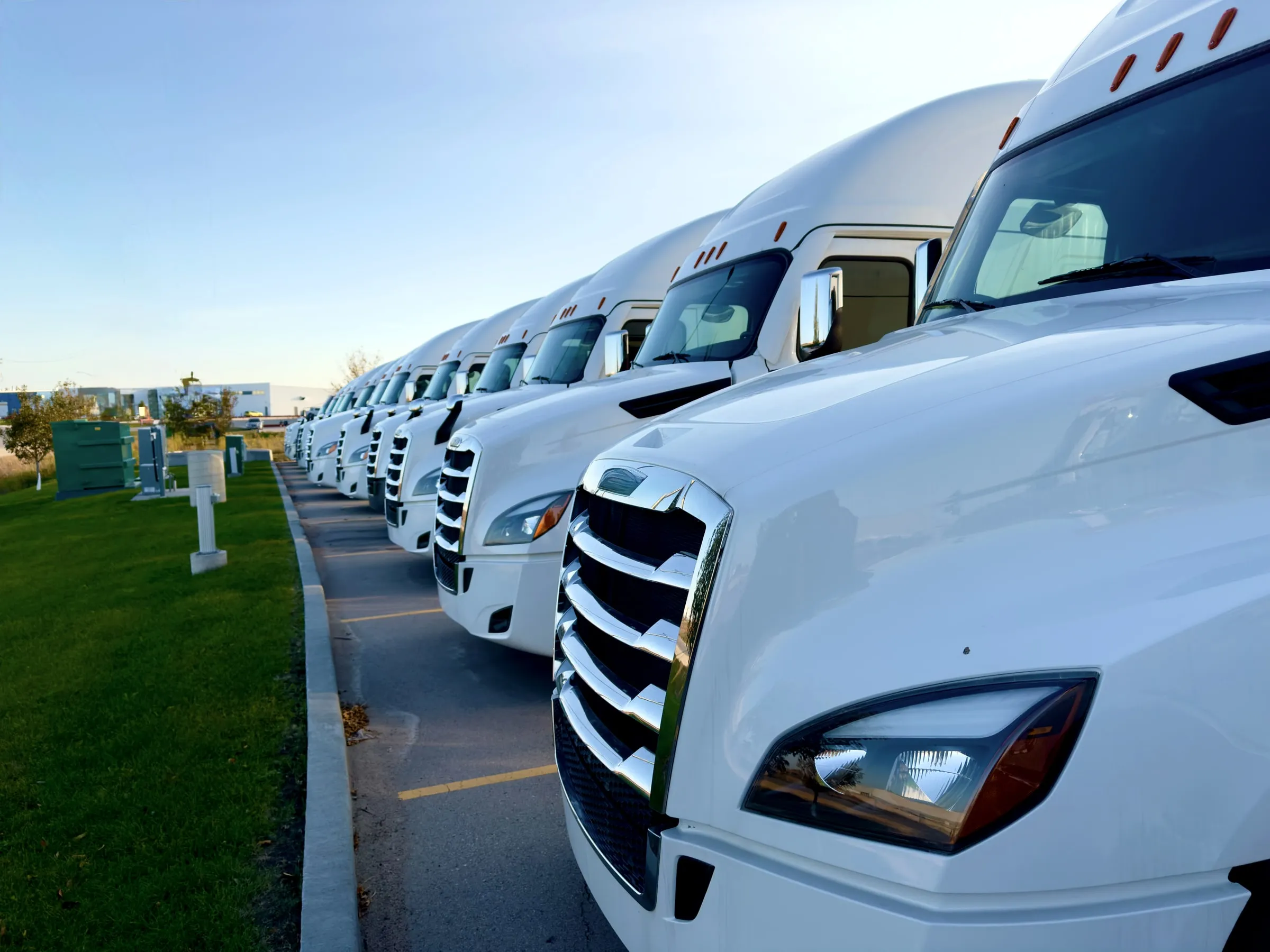
Every tractor and trailer parked at the lot belongs to the company or is under its lease, which means a missing unit is a direct loss to the fleet, not a customer's freight, and the gate log is the company's own record of who had access to it.
Drivers come and go on dispatch, not a fixed schedule
A driver's day starts and ends when dispatch assigns it, not on a set shift, and a gate that cannot check a driver in or out at any hour has no reliable record of who picked up which tractor when.
The fuel island is where non-drivers show up
A company fuel island and maintenance bay draw people who are not drivers, from fuel theft to unauthorized use of the shop, and the traffic there needs its own check separate from the main gate.
Employee vehicles and company tractors share the same lot
Personal vehicles parked for a driver's trip and company tractors sit in the same lot, and a security plan that only tracks company equipment misses the employee parking area where a personal vehicle theft or break-in still becomes the company's problem.
The lot is the company’s own fleet on the ground
Unlike a public terminal moving freight for many different shippers, a trucking company’s home lot holds the fleet the business actually owns or leases. Price Protection’s gate post is built around the dispatch board rather than a generic visitor list: every tractor and trailer that leaves is tied to a driver dispatch has assigned, and the log exists so the safety director can answer, at any hour, who had which unit and when.
Dispatch runs around the clock, and the gate has to match it
A driver’s day does not follow a fixed shift; it starts when dispatch assigns a load and ends when the tractor comes back to the lot, which can be any hour. The post orders here staff the gate for the hours the company actually dispatches drivers, checking each one in and out against the board rather than assuming a schedule that does not reflect how the fleet really runs.
The fuel island is its own checkpoint
A company fuel island and maintenance shop draw activity that has nothing to do with a driver picking up a load, from unauthorized fueling to shop access outside scheduled hours. The patrol treats that part of the lot as a separate check within the same round, since a gate officer focused on driver traffic at the front of the property is not positioned to also watch who is at the pumps in the back.
Personal vehicles are parked on company property too
Drivers leave personal vehicles in company parking while they are out on a run, and a theft or break-in there is still a problem the company hears about even though the vehicle is not company-owned. The patrol’s round through the employee lot is part of the standard coverage, not an extra service, because the lot’s overall condition reflects on the company regardless of who owns what is parked in it.
Starting coverage
To begin, dispatch needs access to the company’s own dispatch board or an equivalent daily list, the lot layout including the fuel island and employee parking, and the hours drivers actually come and go. Coverage typically starts with a gate post matched to the busiest dispatch hours, with a patrol added to cover the fuel island and lot count as the safety director sees how the reporting fits the fleet’s own records.
How we cover it
Every service, applied to this post.
- Unarmed security guards
An unarmed officer staffs the gate, checking drivers in and out against the dispatch board, logging which tractor and trailer each driver takes or returns, and watching the employee parking area on rounds.
- Access control
Drivers, mechanics and vendors are checked against the company's own access list; anyone not on dispatch for that day is held at the gate while a supervisor confirms them.
- Vehicle patrol
A marked vehicle counts tractors and trailers in the lot against the dispatch board on a set schedule, checking the fuel island, the shop and the employee parking area on the same round.
- Camera monitoring
The lot's gate and yard cameras are watched during coverage hours, with the fuel island checked between rounds and footage pulled if a fuel or tractor discrepancy comes up.
- Incident reporting
The daily report lists drivers checked in and out with tractor and trailer numbers, the lot count against the dispatch board, fuel island activity, and any employee parking area finding.
A typical post
What a shift looks like here.
The officer checks each driver against the dispatch board as they arrive to pick up a tractor, logging the unit number before it leaves the lot, since dispatch assigns tractors by number and the gate log is the company's confirmation that the assignment matches what actually left.
Through the day the patrol counts tractors and trailers in the lot against the dispatch board, since a unit dispatch believes is out but is actually still parked, or the reverse, is exactly the kind of discrepancy a physical count catches that a paper schedule alone would not.
The fuel island and shop are checked on the same rounds, watching for anyone fueling or working on a vehicle who is not a company driver or mechanic on the day's list, and the employee parking area is walked as part of the same patrol rather than left uncovered because it holds personal vehicles.
Reporting
What the daily report covers here
Every client receives a written report each day, and officer performance is reviewed and documented daily. This is what the report records on this kind of post.
- Drivers checked in and out with tractor and trailer numbers
- Lot count against the dispatch board
- Fuel island activity outside company driver or mechanic hours
- Employee parking area conditions found on patrol
- Non-dispatched drivers or visitors held at the gate
- Shop and maintenance bay access outside scheduled hours
Can the gate log match tractor numbers to the dispatch board?
Yes, when the company shares its dispatch board or an equivalent list with dispatch. The officer logs the tractor and trailer number a driver takes or returns, which the safety director can then reconcile against the board directly.
Is the fuel island covered separately from driver check-in?
Yes, in the post orders. The fuel island and shop draw a different kind of traffic than driver check-in at the gate, and covering it separately catches unauthorized fuel or shop use that a gate-only post would miss.
Do you watch the employee parking area?
It is included in the patrol round, since a break-in or theft from a driver's personal vehicle in company parking still becomes a problem the company has to deal with, even though the vehicle itself is not company property.
Can a driver be checked in outside normal business hours?
Yes. Dispatch does not run on a fixed shift, and the gate is staffed for the hours drivers actually come and go, checking each one against the dispatch board regardless of the time.
What if the lot count does not match the dispatch board?
The officer rechecks the count and reports the discrepancy to the safety director the same shift it is found, so a tractor dispatch believes is out, or one that should have returned, is chased down while the information is still current.
Related pages
Industries we serve
Services
Service areas
Insights
Glossary
Request a proposal
Request a proposal for trucking company lots.
Two short steps. Dispatch reviews every request and calls you back about coverage. For urgent unarmed coverage we can typically staff most sites within hours.
24-hour dispatch
(281) 326-9189