
Houston and local
Apartment Security in Houston: What Property Managers Are Dealing With
By Price Protection SecurityReviewed TX DPS Lic #B09430601
Short answer
Houston apartment managers deal with a climate that keeps residents outside after dark for most of the year, a hurricane season that runs June through November, a region spread wide enough that one patrol can reasonably cover several communities on a route, and growth corridors where a new phase of units leases up before the last one has settled in. Which of these matters most depends on where the property sits and how old it is.
Heat sets the clock, not the calendar
Houston’s climate is the first thing that shapes an apartment post, because it decides when residents are outside. Pools, courtyards, dog runs and grill stations stay in use well past sunset for most of the year, not just in July and August, which means the hours an officer needs to be visible at the amenities run longer here than in a market with a short, sharp summer. A community that sets its patrol to start at ten at night because that is when a national schedule says the pool closes is often missing the two hours before that, when the courtyard is actually busiest. Post orders written from what a property’s own evenings look like, rather than a generic clock, catch that pattern. The same heat also means covered parking and shaded breezeways draw people who have nowhere else to be, particularly at communities near a bus line or a retail corridor, and those spots need to be on the round even when nothing else about the property has changed.
Hurricane season runs alongside the regular post, not instead of it
From June through November, every Houston apartment community carries a second, thinner set of instructions layered on top of its ordinary post orders. A tropical system does not have to make landfall nearby to matter. Outer bands can knock out power for a night, gates that run on electricity fail open, and a leasing office that closes early for a storm leaves the property without its usual daytime eyes. The post orders for the season describe what the officer does when the gate is dead: hold the entrance in person, check units for residents who need something, and note who has evacuated and who has stayed. None of this replaces a resident’s own preparation. It gives the property a person on site while the systems residents rely on are not working. Communities that write this section before the season starts, rather than during the week a storm is approaching, keep the same officers on the property through it, because the post orders already answer the questions that would otherwise be worked out on the phone at midnight.
Growth corridors lease up faster than the surrounding infrastructure
Houston keeps building outward, and the newest apartment supply sits in corridors where the roads, the lighting and the retail have not caught up with the rooftops yet. Katy, Cypress, Conroe and Pearland all have this in common: a community can go from a mostly empty construction site to a leasing office running move-ins within a matter of months, while the fence around the next phase is still temporary and the streetlights on the frontage road have not been installed. A lease-up community asks for something different from an established one. The leasing office and the model units need a presence during business hours when prospects are touring, the parking area for move-in trucks needs watching because it draws attention from the unfinished phase next door, and the patrol has to account for construction traffic that comes and goes on the same access road residents use. Once the property stabilizes, the post usually settles into the same evening and overnight pattern as an older community nearby, but the first year looks different and the post orders should say so.
The package room is a daily complaint, not an occasional one
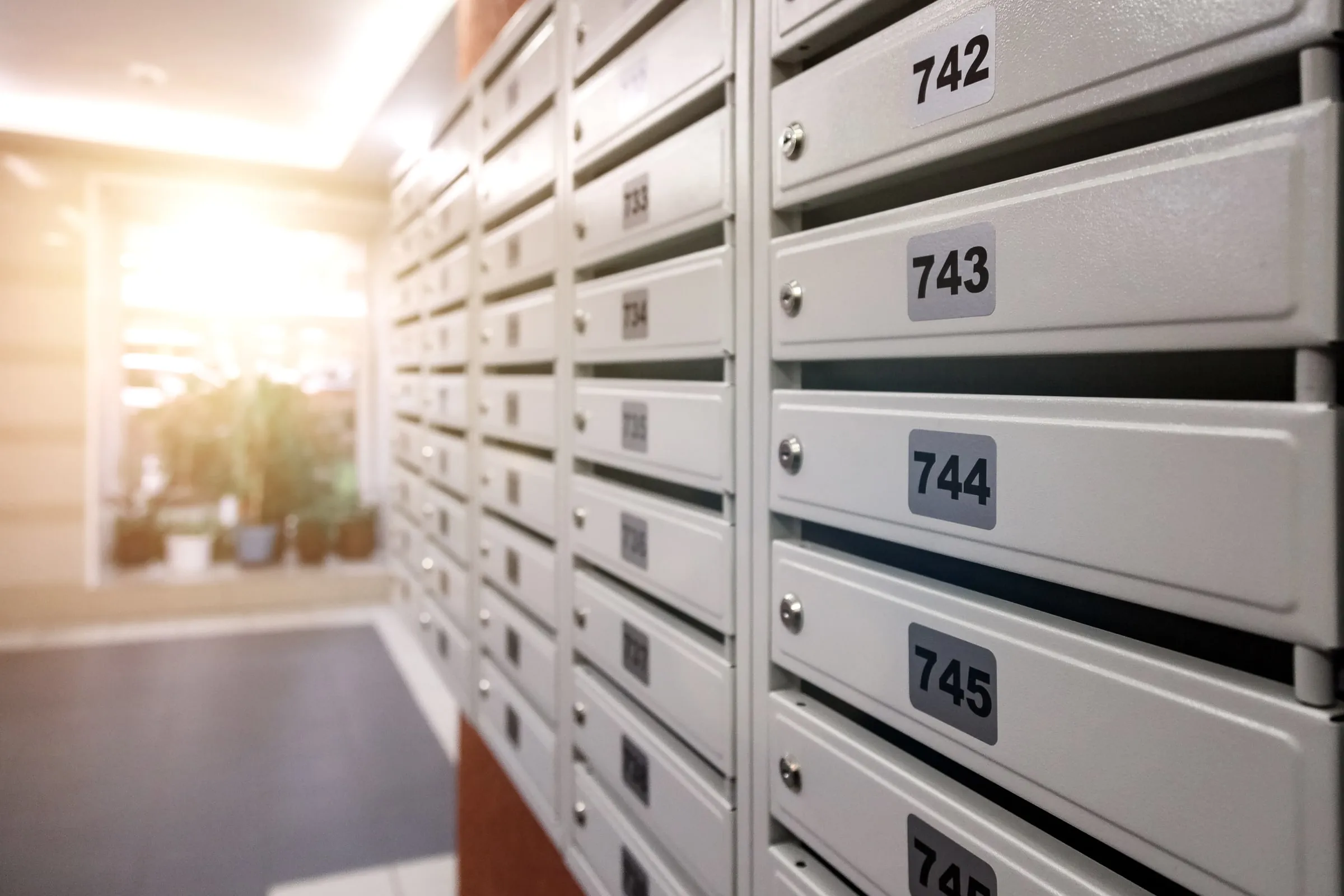
Ask any Houston property manager what generates the most calls to the office and the answer is rarely dramatic. It is the package room, or more often the breezeway mailbank pictured above, where dozens of units share a bank of small metal doors a few steps from the parking lot. A propped exterior door, a broken lock on one compartment, or simply the volume of deliveries during a holiday week turns a mailbank into the property’s most watched and most complained-about square footage. Officers on a courtesy patrol post are told to include the mailbanks and any package room on every round, not because a single missing package is a security emergency, but because the pattern of complaints tells a manager where a camera, a light or a lock needs attention before the next lease renewal conversation happens.
What changes by property type and corridor
No two Houston apartment communities carry the same risk profile, and the table below is a starting point for a conversation, not a formula. A supervisor’s walk-through settles the specifics for any one property.
| Property type | What tends to matter most | Typical coverage |
|---|---|---|
| Established garden community, inner suburbs | Evening and overnight patrol, pool and mailbank rounds | One patrol post, evening through overnight |
| High-rise or mid-rise, urban core | Lobby desk, garage rounds, guest and delivery handling | Concierge-style post plus garage patrol |
| Growth-corridor lease-up | Leasing office hours, model units, construction traffic | Daytime presence plus evening patrol, tapering as the property fills |
| Gated or amenity-heavy community | Gate relief, clubhouse and pool events, resident functions | Gate post paired with patrol, or event coverage as needed |
Starting from what the property actually sees
None of the patterns above are a substitute for a walk-through. A supervisor looks at the entrances, the lighting, the amenity layout and the season, then writes the post orders around what that specific community deals with rather than a template built for a different market. Whether the property is a stabilized community in an inner suburb or a lease-up along a growth corridor, the daily report is what tells the manager, week by week, whether the coverage still matches what the property is seeing. Send the property type, the address and the hours you want covered to dispatch, or request a proposal to start with a walk-through.
Questions
Related questions
Is apartment security different in Houston than in a smaller Texas city?
The property types are the same, but the scale and the climate change the planning. A patrol route here often covers more acreage and more buildings per shift because the region is spread wide, and the season that shapes the post orders runs from June to November rather than a short window in late summer.
Do older Houston communities and newer ones need the same coverage?
No. An established garden community with mature landscaping and a stable resident base tends to need consistent evening and overnight patrol. A community still in its first year of lease-up, especially in a growth corridor, often needs more presence around the leasing office, the model units and whichever buildings are still under construction next door.
What is the most common daily complaint a Houston property manager hears about security?
Packages and access, more than anything dramatic. A breezeway mailbank that residents feel is exposed, a gate that has been propped for a delivery, or a side door that does not latch generates more calls to the office than any other single issue, and it is the pattern our officers are told to watch on every round.
How does hurricane season change an apartment post?
Post orders for the season add what the officer does when the power fails and the gate stops working, how residents are checked on in buildings that lose air conditioning, and how the property is covered if it is damaged. Communities that plan this before June rather than during a storm keep their coverage steadier.
Related pages
Industries we serve
Services
Service areas
Insights
- How Many Security Guards Does an Apartment Community Need?
- Security for Move-In and Move-Out Season at Apartments
- Hurricane Season Security Planning for Houston Properties
- Construction Site Security in Houston's Growth Corridors
- Houston Hurricane Aftermath: Property Security When Power Is Out
- Retail Security Along Houston's Major Corridors
Request a proposal
Request a proposal for your property.
Two short steps. Dispatch reviews every request and calls you back about coverage. For urgent unarmed coverage we can typically staff most sites within hours.
24-hour dispatch
(281) 326-9189