
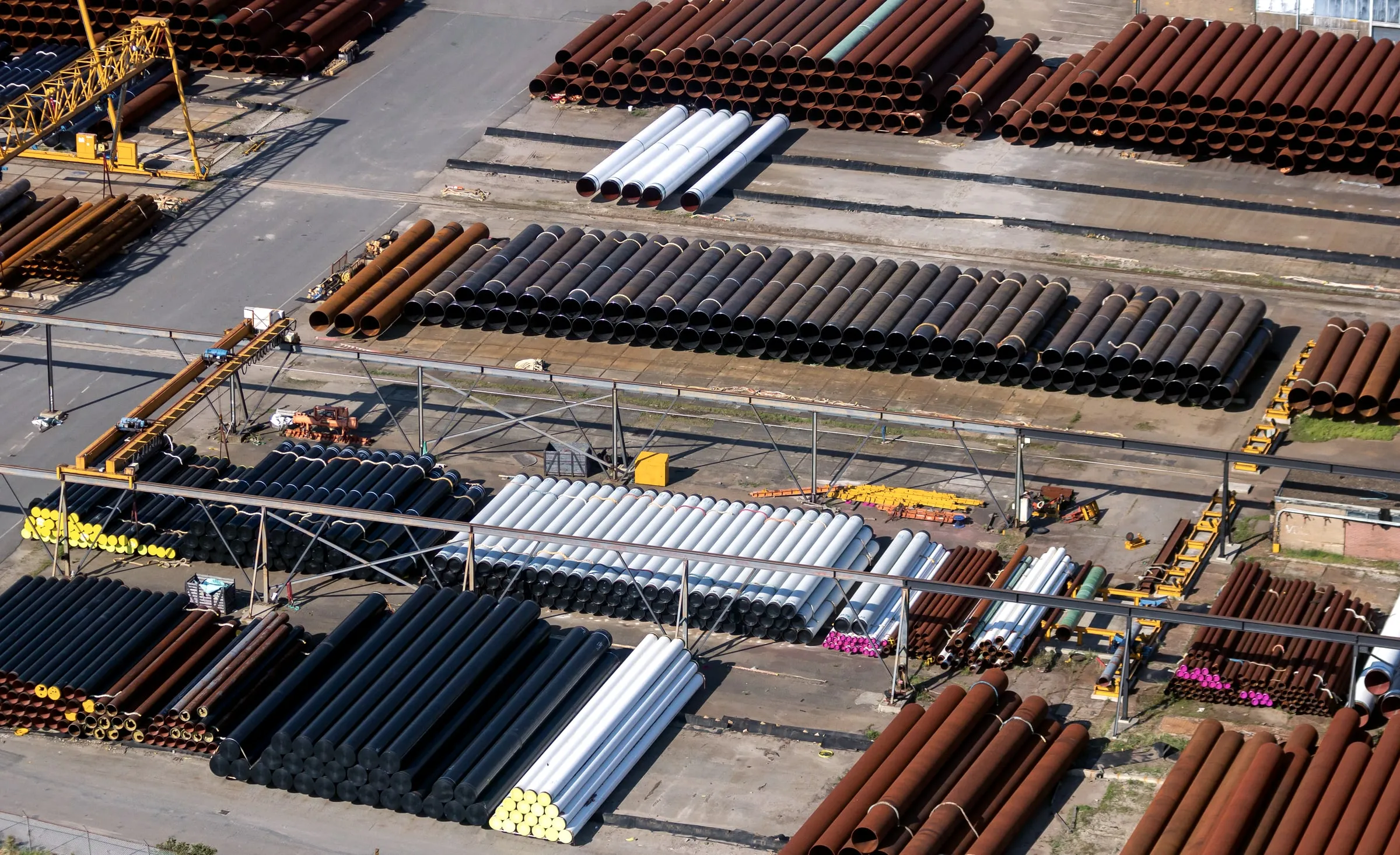
Security Guards for Laydown Yards
A gate that logs every load in and out by heat or lot number, and a patrol that counts the yard against the inventory sheet so a shortage is caught that day.
Request a proposalThe situation
What a laydown yard deals with between deliveries
Material is tracked by heat number, and the yard has to match
Pipe, spools and fittings are tracked by heat or lot number against a project's material sheet, and a delivery logged wrong or a piece moved without a note breaks a chain of custody the project needs for every weld.
The yard changes shape as the project moves
A laydown yard fills and empties in phases tied to construction schedules elsewhere, with material staged, then pulled for installation, then replaced by the next shipment, and a static security plan does not fit a yard that reconfigures every few weeks.
Specialty pipe and fittings are worth stealing in bulk
Coated pipe, valves and specialty fittings staged in an open yard are resalable and easy to load onto a flatbed, and a yard with no gate control has no record of what left legitimately versus what did not.
Deliveries arrive on the trucking company's schedule, not the yard's
Flatbeds and specialty haulers deliver on their own routing, often outside normal business hours, and a yard that cannot check a delivery in after hours either turns trucks away or accepts material with nobody confirming the count.
The gate is a chain-of-custody checkpoint
A laydown yard is not just a fenced lot; it is where a project’s material chain of custody either holds together or breaks. Price Protection’s officers work the gate the way the project’s own material control does, recording heat or lot numbers off the bill of lading rather than just a truck count, so a delivery is tied to the paperwork the project will need at every weld and every installation.
The yard reshapes itself, and the count has to keep up
Unlike a warehouse with fixed racking, a laydown yard fills, empties and refills in phases tied to a construction schedule elsewhere. Material staged for a phase gets pulled for installation, and the next shipment takes its place within weeks or days. The patrol’s row-by-row count against the inventory sheet is set to a schedule that matches how often the yard actually turns over, not a fixed weekly routine that falls behind an active project.
Specialty material is worth stealing in volume
Coated pipe, valves and specialty fittings staged in an open yard are resalable and simple to load with the same equipment used to unload them, which makes gate control the main defense a laydown yard has. An officer checking every delivery and pickup against the day’s expected activity is what turns an open yard into one with a record of everything that came and went.
Deliveries do not wait for business hours
Flatbeds and specialty haulers run on the trucking company’s own routing, and a yard that cannot process an after-hours delivery either turns a truck away, costing the project time, or accepts material nobody confirmed. The post orders here treat an after-hours delivery the same as a daytime one: checked against the expected shipment list, logged by heat number, and held for the coordinator if it does not match.
Starting coverage
To begin, dispatch needs the yard layout and row assignments, the project’s material tracking format, the expected shipment schedule, and who to call for a discrepancy or an unexpected delivery. Coverage typically starts with a gate officer and a set count schedule, and both are adjusted as the project’s phase changes how fast the yard turns over.
A yard supporting a pipeline or plant project often runs alongside a construction schedule with its own deadlines, and a gate that slows deliveries down costs the project time it cannot easily recover. The post orders balance that pace against the same paperwork discipline the material coordinator expects, so a truck is checked in without becoming the bottleneck the schedule cannot absorb.
How we cover it
Every service, applied to this post.
- Unarmed security guards
An unarmed officer staffs the yard gate, checking delivery trucks against the day's expected shipments, logging heat or lot numbers off the bill of lading, and directing loads to the row the yard's material coordinator assigns.
- Access control
Contractors and haulers are checked against the project's access list; anyone not expected is held at the gate while the material coordinator confirms the delivery or the pickup before it proceeds.
- Vehicle patrol
A marked vehicle counts the yard row by row against the material inventory sheet on a set schedule, checking that staged pipe and fittings match what the sheet says should be there.
- Camera monitoring
Where the yard has its own cameras, gate activity and the rows most exposed to the fence line are watched between rounds, with footage available if a count comes up short.
- Incident reporting
The daily report lists deliveries and pickups by heat or lot number, the row-by-row count against the inventory sheet, any discrepancy found, and after-hours activity at the gate.
A typical post
What a shift looks like here.
The gate officer checks each delivery against the day's expected shipment list, recording heat or lot numbers straight off the bill of lading before the load is directed to a row, since a number transcribed wrong at the gate is a chain-of-custody problem the project inherits later.
Through the shift the yard patrol counts material row by row against the inventory sheet, flagging any row that does not match what the sheet says should be staged there. A crew pulling material for installation elsewhere on the project is logged out the same way a delivery is logged in.
After hours, a delivery arriving outside normal business hours is checked against the expected shipment list the same as a daytime delivery would be; a hauler not on the list is held at the gate and the material coordinator is called rather than the load being accepted on trust.

Reporting
What the daily report covers here
Every client receives a written report each day, and officer performance is reviewed and documented daily. This is what the report records on this kind of post.
- Deliveries and pickups by heat or lot number
- Row-by-row inventory count against the material sheet
- Discrepancies between the yard count and the sheet
- After-hours gate activity and haulers checked
- Contractors and haulers not on the access list
- Fence and gate conditions found on patrol
Can you log deliveries by heat number?
Yes, when the project provides the format it tracks material in. The officer records heat or lot numbers off the bill of lading at the gate, which the material coordinator can then match against the inventory sheet.
How often is the yard counted against the inventory sheet?
On a schedule set with the project, typically daily for an active yard with frequent deliveries and pulls, since a yard that reconfigures often needs a count that keeps pace with it rather than a weekly check.
Can you accept deliveries after hours?
Yes, if the project provides the expected shipment schedule in advance. A hauler arriving outside business hours is checked against that list the same as a daytime delivery, and anything not expected is held for the coordinator.
What happens if a row does not match the inventory sheet?
It is rechecked, and if the discrepancy holds, it is reported to the material coordinator the same day rather than at the next scheduled count, so a missing or misplaced piece is chased down while the paper trail is still fresh.
Do you cover a yard that is only active for part of a project?
Yes. Coverage can start when the yard begins receiving material and scale down or end as the project pulls the last of it, on the schedule the project sets rather than a fixed contract term.
Related pages
Industries we serve
Services
Insights
Glossary
Request a proposal
Request a proposal for laydown yards.
Two short steps. Dispatch reviews every request and calls you back about coverage. For urgent unarmed coverage we can typically staff most sites within hours.
24-hour dispatch
(281) 326-9189