
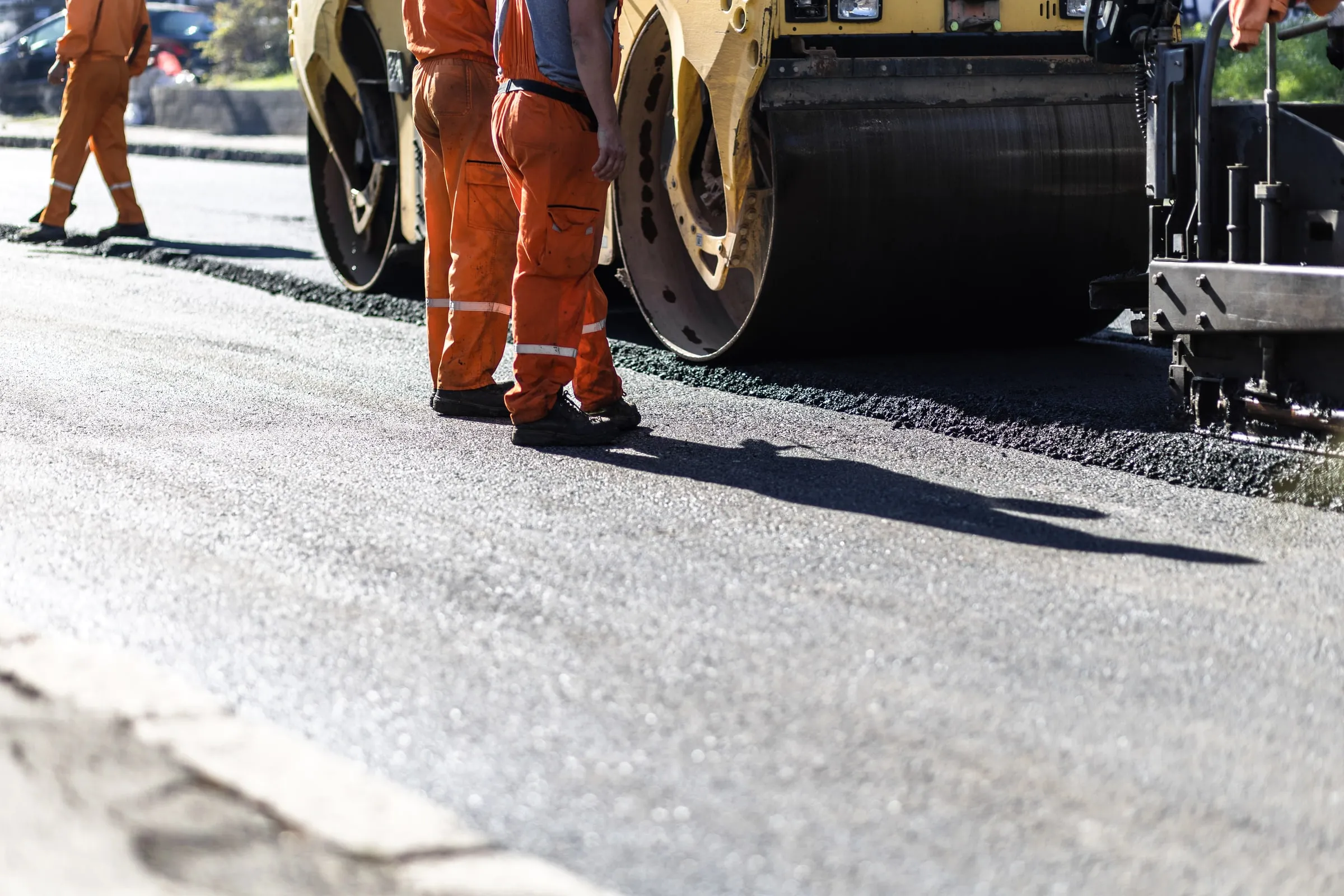
Security for Road and Infrastructure Projects
The crew moves down the corridor every week; the equipment stays behind at night. We patrol the closures and log every machine left along the route.
Request a proposalThe situation
What a road job leaves exposed after the crew clears out
A job site with no fence
A road, bridge or underground utility job runs along a public corridor that cannot be fenced the way a building lot can. Barrels, cones and barricades mark the work zone, but they do not stop a vehicle from driving in after the crew leaves, and the corridor is often miles long with no single point to watch.
Equipment left where the day ended
Rollers, pavers, excavators and message boards stay parked along the route overnight because moving them back to a yard every day is not practical. Fuel, batteries and small tools left in cabs are the first things taken, and a piece of equipment idled for the night is a target for longer than an hour.
Lane closures draw their own risk
A closed lane, a detour or a night paving operation puts drivers, some of them impaired or simply inattentive, close to the crew's equipment and materials at the hours when nobody official is on site. A vehicle that drifts into a closed lane at 2 a.m. is a safety incident before it is a theft.
Underground work leaves open trenches and staged pipe
Utility and drainage work leaves open trenches, staged pipe and manhole sections along the route between shifts. Beyond the theft of material, an open trench near a public street is a liability the contractor is responsible for until it is backfilled or plated over for the night.
A corridor cannot be fenced
A building site has a lot line and a gate. A road, bridge or underground utility project has a corridor, sometimes miles of it, running through public right-of-way that cannot be fenced off the way a lot can. Price Protection covers a corridor project the way it actually sits on the ground: a vehicle patrol that drives the active work zone end to end, rather than a fixed post at an entrance that does not exist. The route is written against the superintendent’s current station map and rewritten as the work advances.
The post orders for a linear project carry things a fixed site rarely needs: which cross streets mark the current limits of work, where barricades and message boards should be and how to tell if one has been moved, where the staging yard or batch plant is if the project has one, and who to call, the traffic control subcontractor, the superintendent, or police, for each kind of problem the officer might find. They are reviewed against the schedule regularly, because a corridor project’s boundaries change on a timeline the post orders have to keep up with.
What sits along the route overnight
Rollers, pavers and excavators are too large to move back to a yard every night, so they stay where the shift left them, along with fuel, batteries and hand tools in the cabs. The patrol’s job is to make that overnight window less quiet: a vehicle stopping at every machine, checking caps and doors, is a different proposition than a corridor nobody drives until the crew returns at dawn. The insight on what gets stolen from Houston job sites and when covers the general pattern; on a linear project it plays out machine by machine along the route rather than at one laydown yard.
Lane closures are a safety problem before a theft problem
A closed lane or a night paving operation puts the crew’s equipment close to live traffic during the hours the crew itself is thinnest on the ground. A driver who is impaired, distracted or simply confused by a detour can enter a work zone that has no barricade left standing, and the first sign of it is often the barricade itself, not the equipment behind it. The officer’s rounds check the closure’s edges as carefully as the equipment inside it, and anything found moved or knocked down is reported immediately rather than left for the morning crew to notice.
Working with the traffic control subcontractor
Barricades, message boards and closure signage usually belong to a traffic control subcontractor working under the general contractor, and that sub carries the liability if a closure fails overnight. The patrol’s report goes to both the superintendent and the traffic control sub when something in the closure itself is disturbed, and how officers coordinate with Houston police covers what happens when a driver’s entry into a work zone is a police matter rather than something the crew can resolve at the next shift.
Starting coverage on a road or infrastructure project
To begin, dispatch needs the corridor’s limits and current station of active work, the equipment list and where it sits overnight, the staging yard or batch plant location if the project has one, and a superintendent’s contact. A vehicle patrol can typically start within hours of the call, and the route is rewritten as the project’s limits move so the corridor being driven each night is the one actually being built.
How we cover it
Every service, applied to this post.
- Vehicle patrol
A marked vehicle runs the length of the active work zone and any lane closures, stopping at each piece of parked equipment, each staging area and each open trench or excavation, and logging mileage and stops so the superintendent can see the corridor was actually covered.
- Unarmed security guards
Where the project has a fixed staging yard, a batch plant or a contractor's trailer near the corridor, an unarmed officer covers that location overnight and on weekends, separate from the vehicle patrol running the linear route.
- Access control
At the staging yard or the batch plant, the officer logs vehicles and equipment moving in and out after hours, checking loads against the superintendent's list before anything leaves the site.
- Incident reporting
The daily report covers the corridor by station or cross street, with equipment checked and its condition, lane closures and barricades found disturbed, open trenches or excavations noted, and any vehicle or person contacted along the route.
A typical post
What a shift looks like here.
The officer starts at the staging yard or the point the day's work ended, confirms the equipment list against what the superintendent left, and begins the first pass along the corridor while there is still light to note where barricades and message boards are placed.
Through the night the patrol runs the length of the active work zone on a route that varies, stopping at every parked machine to check fuel caps and cab doors, at every open trench to confirm plating or barricading is in place, and at any lane closure to watch for vehicles drifting into the work zone.
Before the crew returns, the officer drives the corridor once more, confirms the equipment count matches the start of shift, and writes the report by station or cross street so the superintendent knows what condition the corridor is in before the first truck arrives.

Reporting
What the daily report covers here
Every client receives a written report each day, and officer performance is reviewed and documented daily. This is what the report records on this kind of post.
- Corridor patrol passes with start time, end time and stations covered
- Equipment checked along the route: fuel caps, cab doors, tools secured
- Lane closures and barricades checked, with any found disturbed or moved
- Open trenches, excavations and staged pipe checked for plating or barricading
- Vehicles found stopped or drifting into the closed work zone, with the outcome
- Staging yard or batch plant gate log, vehicles and loads in and out
The job moves down the road every week. Does the patrol route move with it?
Yes, and it is rewritten as the work progresses, usually against the same schedule the superintendent uses for barricade placement. A corridor project does not have a fixed address the way a building site does, so the route is updated station by station as the active zone shifts.
Can you cover a night paving operation while it is running?
Night work with a crew present still benefits from a patrol covering the closure's edges and the staged equipment the crew is not actively using, since the crew's attention is on the paving itself, not on the parked rollers and the material stockpile behind them.
What do officers do about a driver who enters the closed lane?
Observe, note the plate and time, and contact the crew or police depending on whether it is a safety hazard in progress or already past. The officer does not step into traffic to stop a vehicle; the post orders describe what is reported and to whom for a corridor project specifically.
Do you coordinate with the contractor's traffic control subcontractor?
Where one is on site, yes. Barricades, message boards and lane closures are usually that subcontractor's equipment, and the patrol's report on anything found moved or missing goes to them as well as to the general contractor, since it is often their liability.
Can you start coverage on a project that is already underway?
Yes. Dispatch needs the corridor's limits, the current station of active work, the equipment list and condition, and a superintendent's contact, and a vehicle patrol can typically begin within hours of the call regardless of how far into the project it starts.
Related pages
Industries we serve
Insights
Glossary
Resources
Request a proposal
Request a proposal for road and infrastructure.
Two short steps. Dispatch reviews every request and calls you back about coverage. For urgent unarmed coverage we can typically staff most sites within hours.
24-hour dispatch
(281) 326-9189