
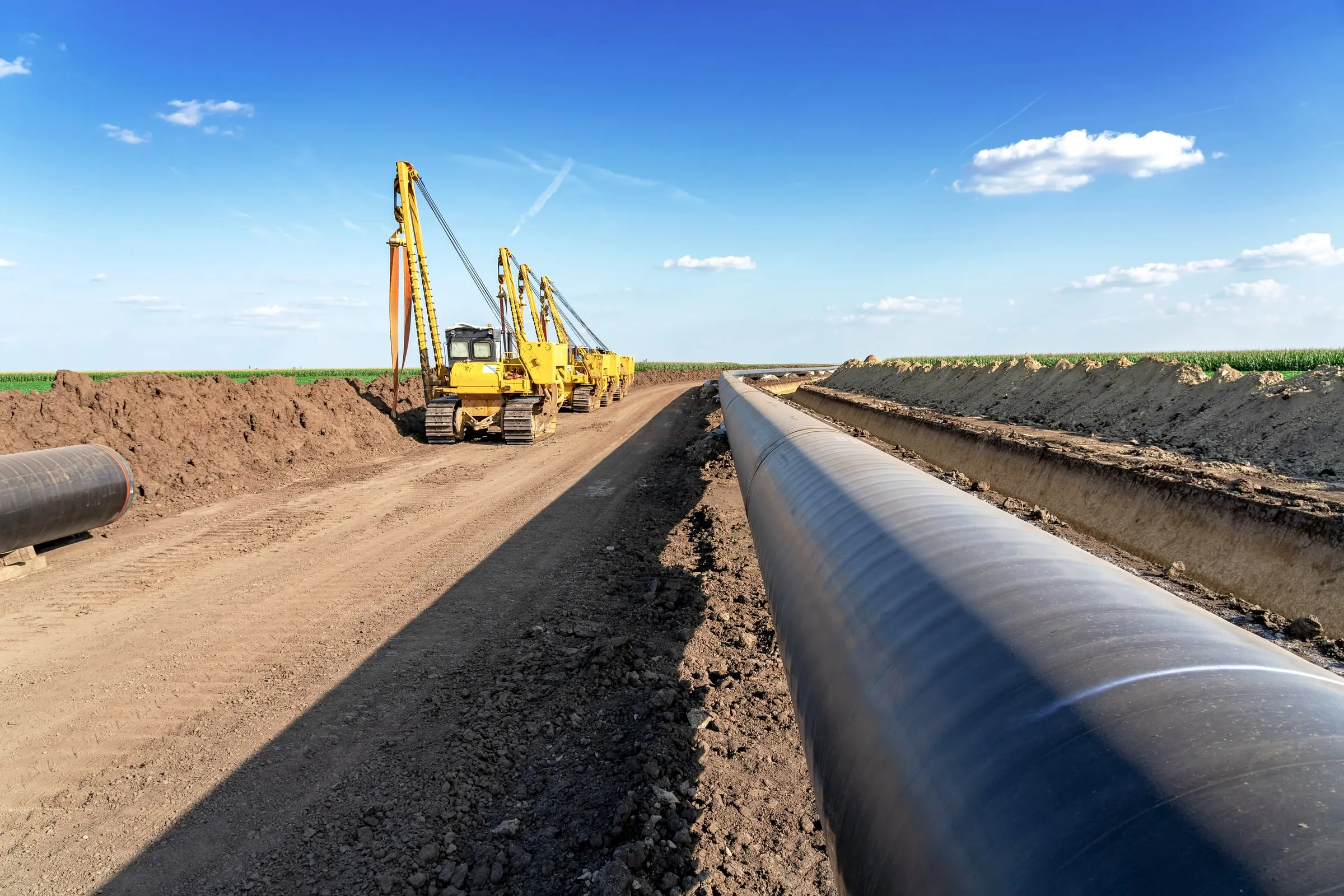
Security for Pipeline Construction Projects
The spread moves every week and the pipe yard does not. We post the yard, patrol the right-of-way and log every gate the crews pass through.
Request a proposalThe situation
Where a pipeline project is exposed
A job site that is miles long and yards wide
The right-of-way is a strip across other people's land, crossed by county roads and reached by temporary access roads the contractor built. Every crossing is an entrance nobody staffs, and the equipment parked on the right-of-way at night is spread along the whole length of the spread.
Sidebooms, welders and fuel left on the line
Pipelayers, excavators, welding rigs and fuel trailers stay where the day ended, because moving them back to the yard is a day lost. Diesel, batteries, welding leads and hand tools go missing from equipment that is a long way from any road a patrol car would normally use.
The pipe yard and the coating stock
Joints, bends, valves and coating material sit in a yard by the highway for the life of the project. The yard is the stable target, the place a truck can back up to at night, and the place where a loss shows up as a schedule problem weeks later when a joint is missing from the count.
Landowners, gates and public attention
Access depends on gates staying closed, livestock staying in and landowners staying willing. Pipelines also draw people who object to them, and a person on the right-of-way at night may be a curious neighbor, a thief or someone who wants to be found there. The officer has to tell them apart and act within post orders.
A linear site needs a fixed post and a moving one
A pipeline project has two places that need watching and they behave differently. The pipe yard is a fenced lot on a highway that fills up before the spread starts and empties as the joints go out; it can be covered by a fixed post at the gate. The right-of-way is a strip that advances every day, crossed by public roads, with the contractor’s equipment parked wherever the shift ended. It can only be covered by a vehicle that drives it. Price Protection staffs both, under one set of post orders written with the spread superintendent, and rewrites the patrol route as the work moves.
The post orders for a spread carry things a building site never needs: the station numbers for the week’s work, the access road map, which landowner gates must be chained and which must be left as found, where livestock is, which crossings the sheriff patrols and which they do not, and who at the operator gets the call when someone is on the easement. They change at the weekly look-ahead, and the officer working the patrol reads the new version before each shift.
The right-of-way at night
After the crews leave, the line is a row of machines parked on skids and mats with fuel in their tanks, welding leads coiled on the rigs, and pipe strung along the trench. The thefts are practical: diesel siphoned, batteries pulled, leads and tools taken from cabs that were not locked. The patrol stops at every machine, checks caps and doors, and notes the ones left open so the foreman hears about it in the morning. Open trench, exposed pipe and the drill site are logged too, because the inspector’s first question after any incident is what condition the line was in and when it was last seen.
Gates, livestock and the people who own the land
The contractor’s welcome on a tract depends on gates. A gate left open lets cattle onto a county road, and the landowner who finds them there calls the operator, not the contractor. The officer closes and chains every gate behind the truck on every pass, records its condition, and calls the landowner liaison the same night if a gate or a fence is damaged. That call, made before the landowner makes theirs, is often the most valuable thing the post does all week.
People on the right-of-way after hours are handled by the post orders and by talking. Most are neighbors. Some are there to take something, and a few are there to object to the project. The officer’s job with all of them is the same: identify, explain that the easement is closed, ask them to leave, record it, and call the sheriff or police for anything more. How officers handle trespassers is covered in detail on its own page.
Working with the spread superintendent and the inspector
The superintendent gets the report before the morning safety meeting, with the yard log, the patrol stops and anything found open. The inspector reads the same report for the condition of the line and the coating stock. A drill site running overnight gets its own section, with the crew on site and the hours. Where the operator has a public affairs contact, the officer’s notes on people encountered go to them as the post orders direct, in the officer’s words, the same day.
Where we work and how to start
We are headquartered in Sugar Land and serve clients across Texas, including the refinery and terminal corridors east of downtown along the ship channel, where replacement and lateral work runs through industrial land, and the rural counties around the city where new lines cross farmland. To start a post, dispatch needs the yard location, the spread’s start point and direction, the superintendent’s pickup list and the hours wanted; the access road map and station numbers follow when the spread begins. Unarmed coverage at a yard can typically begin within hours of the call.
How we cover it
Every service, applied to this post.
- Vehicle patrol
A marked vehicle runs the length of the active spread on the access roads and the county road crossings, stopping at each equipment park, each open trench section and each landowner gate. Routes and timing vary from night to night, and mileage and gate times go in the report.
- Unarmed security guards
A fixed unarmed post at the pipe yard or the contractor's staging area, overnight and on weekends, checks vehicles in and out, walks the pipe racks and the coating stock and watches the highway frontage. Unarmed officers also take the fixed post at horizontal directional drill sites that run through the night.
- Armed security guards
Where the operator or the contractor has had confrontations on the right-of-way, or where the spread runs through country with a long police response, a Level III commissioned officer may take the patrol post. The armed officer observes, reports and calls the sheriff, the same as any other post.
- Access control
At the yard gate and at drill sites the officer logs every vehicle, checks that after-hours pickups match the superintendent's list, and holds anything that is not on it until someone with authority answers the phone. Landowner gates are closed and chained behind the patrol on every pass.
- Incident reporting
The daily report is written per spread, with the yard log, the patrol mileage and stops, the gates checked and their condition, equipment found unlocked or leaking, people encountered on the right-of-way, and anything the inspector or the landowner liaison needs to know before the morning.
A typical post
What a shift looks like here.
The officer starts at the pipe yard, reads the superintendent's notes on where the spread stopped for the day and which access roads are open, and walks the racks and the coating stock before the yard post or the patrol vehicle takes over for the night.
On patrol the officer drives the access road to the end of the day's work and back, stopping at each parked machine to check fuel caps and cab doors, closing every landowner gate behind the truck, and noting where the trench is open and where the pipe is strung on skids. A vehicle at a county road crossing gets a look and a plate.
Near the end of the shift the officer returns to the yard, confirms the gate log matches the pickups that left, and writes the report for the spread, with a separate note to the landowner liaison if a gate was found open or a fence was down, so it is dealt with before the landowner calls.

Reporting
What the daily report covers here
Every client receives a written report each day, and officer performance is reviewed and documented daily. This is what the report records on this kind of post.
- Yard gate log: vehicles and loads in and out, with the release for each
- Patrol mileage along the spread, with each equipment park and gate stop timed
- Landowner gates found open, closed or damaged, by tract or station number
- Equipment checked on the right-of-way: fuel caps, cab doors, leads and trailers
- Drill site or night work coverage, with the crew on site and the hours
- People or vehicles on the right-of-way after hours, with the outcome
The spread moves every week. Does the post move with it?
The patrol does; the yard post stays. The vehicle route is rewritten with the superintendent as the spread advances, usually at the weekly look-ahead, so the officer is covering the equipment where it actually sits and not where it was. The yard post stays where the pipe is until the yard closes.
Can you cover a directional drill that runs around the clock?
Yes. A drill site with a crew on it all night still needs someone watching the entrance, the pipe string on the far side and the fluid and fuel on the near side, because the crew is watching the hole. That post is usually a fixed officer at the site for the length of the drill.
What do officers do about someone protesting on the right-of-way?
Observe, report and follow the post orders. The officer does not confront, does not touch anyone and does not argue. If a person is on the easement without permission the officer says so, asks them to leave, notes what they say and calls the sheriff or police if they do not. The operator's landowner and public affairs contacts are notified as the post orders direct.
Do you work with the inspector and the landowner liaison?
Both read the report. The inspector wants to know what was open, what was leaking and who was on the line; the liaison wants to know about gates, fences and livestock. We write the report so each can find their part, and the officer calls the liaison directly when a gate problem needs fixing before morning.
Can you start the post at the yard before the spread begins?
That is the best time. Pipe stockpiles for weeks before the first joint is welded, and the yard is at its fullest and least visited then. Dispatch needs the yard location, the hours, the superintendent's pickup list and, when the spread begins, the access road map and the station numbers for the week's work.
Related pages
Industries we serve
Insights
Glossary
Resources
Request a proposal
Request a proposal for pipeline projects.
Two short steps. Dispatch reviews every request and calls you back about coverage. For urgent unarmed coverage we can typically staff most sites within hours.
24-hour dispatch
(281) 326-9189