
Fire watch and compliance
How Long Can a Fire Watch Last?
By Price Protection SecurityReviewed TX DPS Lic #B09430601
Short answer
A hot-work watch has a fixed floor: the work itself plus a required period afterward, at least 30 minutes under OSHA or at least an hour under NFPA 51B. An impairment watch has no fixed length at all; it runs until the fire marshal, the coordinator and the contractor confirm the system is restored and tested, which can be an afternoon for a routine valve closure or several weeks for storm damage or a part on backorder. There is no code-set maximum for either.
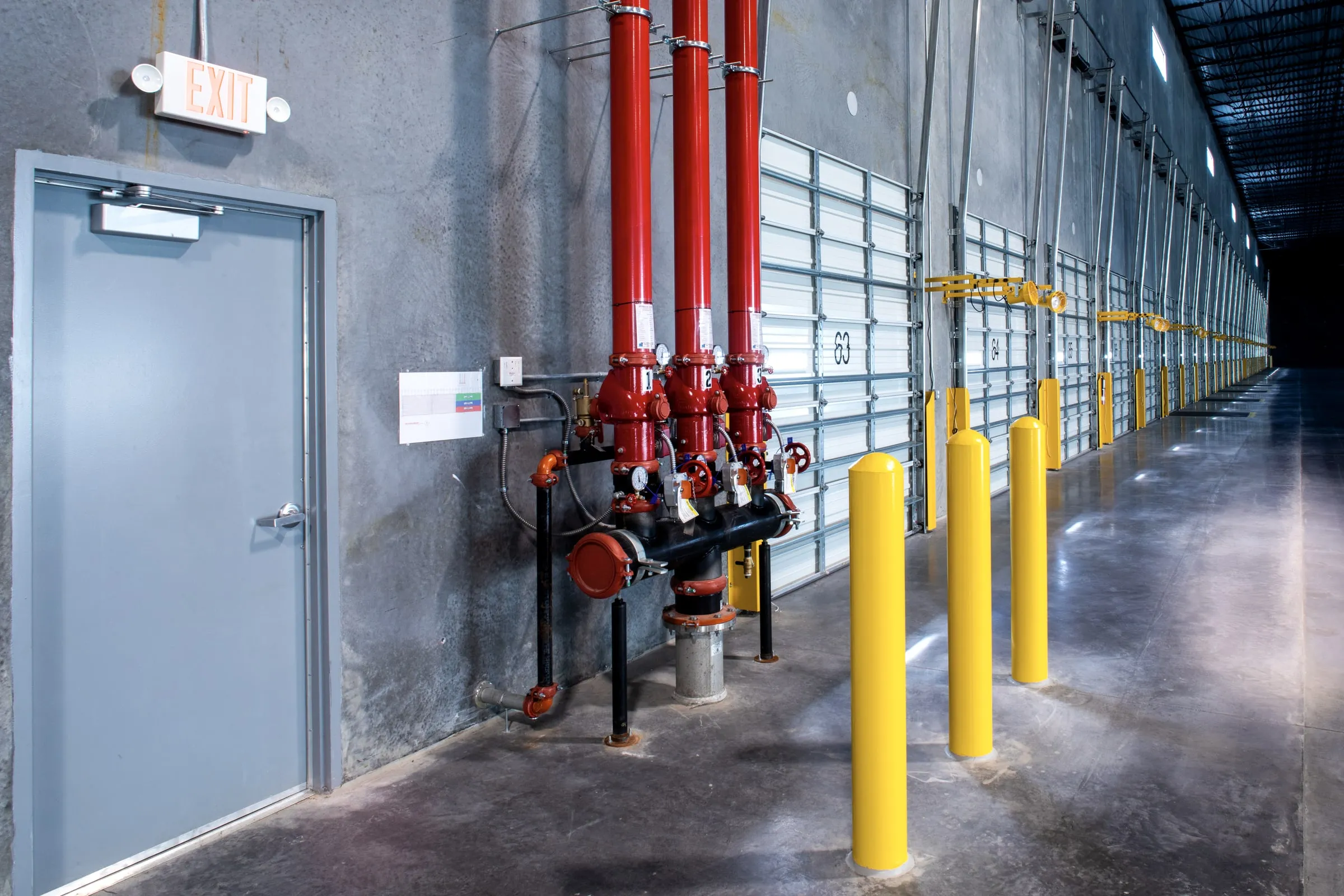
Property managers booking their first fire watch often ask for a duration up front, the way they would for a contractor’s job, and the honest answer is that one of the two kinds of fire watch does not really have one. A hot-work watch is bounded by the work itself and a fixed period after it. An impairment watch is bounded by nothing but the repair, and the repair’s timeline is often the least predictable part of the whole event.
Two different clocks
A hot-work fire watch has a floor set by regulation: the duration of the welding, cutting or torch work itself, plus a required period afterward to catch delayed ignition, at least 30 minutes under OSHA’s 29 CFR 1910.252(a)(2)(iii), at least an hour where the site’s permit follows NFPA 51B. That total is knowable in advance within a reasonable margin, since the crew’s own schedule sets most of it. An impairment fire watch, covering a sprinkler, alarm or standpipe system out of service under IFC 901.7, has no such floor and no ceiling either; it runs from the moment the system goes down until the coordinator and, where required, the fire marshal confirm it is restored and tested. This is a summary, not legal advice.
What actually stretches an impairment watch
The contractor’s original estimate is a starting point, not a promise. A pump rebuild can wait on a part that turns out to be back-ordered by weeks rather than days. A five-year internal pipe inspection can find corrosion that turns a two-day job into a two-week one. A hurricane that damages a riser room can leave a building’s insurance claim, engineering assessment and contractor scheduling all needing to line up before repair work even starts, stretching the interval between “the system went down” and “the system is back” far past anyone’s first guess. None of these are failures of the fire watch; they are the reasons the watch exists in the first place, keeping the building safely occupied while the actual repair takes as long as it takes.
Is there an upper limit?
Not one written into the fire code itself. What functions as a practical limit is the fire code official’s own judgment: an authority watching a repair drag on with no clear end can decide a continuous watch is no longer an adequate substitute for the system and require the affected space be vacated instead, or set additional conditions on the watch. Insurers and lenders sometimes add their own limits through impairment permits or loan covenants, treating a system down beyond a set period as an event that needs escalated attention regardless of what the fire marshal requires. A coordinator managing a watch that has already run past its second or third extension is well served by raising that history directly with the fire marshal rather than assuming an open-ended watch is automatically acceptable indefinitely.
| Scenario | Typical length | What is driving it |
|---|---|---|
| Routine planned valve closure for testing | A few hours | Contractor’s own scheduled test window |
| Alarm panel failure, vendor part in stock | One to a few days | Vendor’s response time and parts availability |
| Fire pump rebuild, part on backorder | One to several weeks | Manufacturer lead time on the replacement part |
| Storm or fire damage requiring full system repair | Weeks to months | Insurance process, engineering assessment, contractor scheduling |
Staffing a watch that keeps extending
A watch expected to last an afternoon is staffed differently from one that is now in its second week. Dispatch builds a rotation for anything that runs past a single shift, with relief officers scheduled and a supervisor checking in periodically rather than assuming one person can sustain attention for days without a break. Each handover is a log entry with both officers’ names and the time, so a watch that has changed hands a dozen times over two weeks still reads, to anyone reviewing it, as one continuous record rather than a series of disconnected shifts that happen to cover the same building.
When a long watch prompts a bigger conversation
A watch that keeps extending is, itself, useful information. A building whose alarm panel has needed three separate emergency watches in a year because the same aging equipment keeps failing is telling its owner something about the panel, not just about the watch. Coordinators who track how often and how long a system needs a watch, rather than treating each extension as an isolated event, are better positioned to bring a capital replacement conversation to ownership backed by a real pattern, instead of reacting to the same failure again the next time it happens.
What the length changes about the log, not just the staffing
A watch measured in hours produces a single sheet: a header, a handful of rounds, a closing entry. A watch measured in weeks becomes a stack of dated pages that has to be organized so a reader, whether a fire marshal mid-impairment or an adjuster a year later, can follow it without confusion. Each day’s page repeats the header information, each shift’s handover is its own entry, and a supervisor numbers the pages in sequence so none can go missing without it being obvious. Buildings sometimes underestimate how much this matters until they are the ones trying to reconstruct three weeks of coverage from a stack of loose sheets that were never numbered as they were written.
Length and cost are related, but not in a fixed way
A watch that runs longer costs more simply because more hours are staffed, but the relationship is not a straight line from duration to price the way a flat daily rate might suggest. A watch that stays on one small zone for three weeks needs one relief rotation; a watch that expands from one riser to a whole building partway through needs more officers added mid-stream, which changes the staffing plan more than the extra days alone would. Coordinators managing a budget for an extended impairment do better asking dispatch to walk through what is actually being staffed, zone by zone and shift by shift, than assuming length alone tells the whole story.
Booking a watch without a fixed end date
Give dispatch the contractor’s honest estimate, even a rough one, and tell dispatch immediately when that estimate changes in either direction. A watch that was booked for a day and needs a fifth is staffed the same way it was staffed on day one, with relief scheduled and the log continuing, rather than treated as a new booking each time. The 24-hour fire watch page describes how a multi-day rotation is built and handed off between shifts.
Questions
Related questions
Does a fire watch ever need to run for months?
It can, though it is unusual. A building working through insurance and a full sprinkler system replacement after major storm damage, or a historic building whose panel replacement is delayed by lead-time on custom parts, are the kinds of situations that stretch a watch well past what anyone initially expected.
Can the fire marshal order evacuation instead of an open-ended watch?
Yes. Where the fire code official decides a watch is not an adequate substitute for a system that will be down indefinitely, or a building cannot sustain a continuous watch, the alternative under the fire code is to require the space be vacated rather than occupied under a watch. That decision belongs to the authority, not the property.
How does a multi-week watch affect the log's format?
It becomes a numbered set of daily pages rather than a single sheet, each dated and kept with the ones before it, with a handover entry at every shift and officer change. A supervisor reviews the whole set periodically so the record reads as one continuous watch rather than a stack of disconnected shifts.
What if the contractor gives a new estimate every few days?
The watch simply continues on the same terms each time the estimate slips, with the coordinator updating dispatch and the log noting the revised timeline. A watch is not restarted or re-booked each time the contractor's estimate changes; it is extended, which keeps the log continuous.
Related pages
Insights
- Planned Impairments: Scheduling Fire Watch Around System Testing
- Impairment Coordinators: The Role Every Building Should Assign
- Fire Watch Costs: The Factors That Set the Price
- Fire Alarm Outages: When a Fire Watch Is Required
- Fire Extinguisher Checks During a Fire Watch
- Fire Watch After a Fire: Securing a Damaged Building
Request a proposal
Request a proposal for your property.
Two short steps. Dispatch reviews every request and calls you back about coverage. For urgent unarmed coverage we can typically staff most sites within hours.
24-hour dispatch
(281) 326-9189