
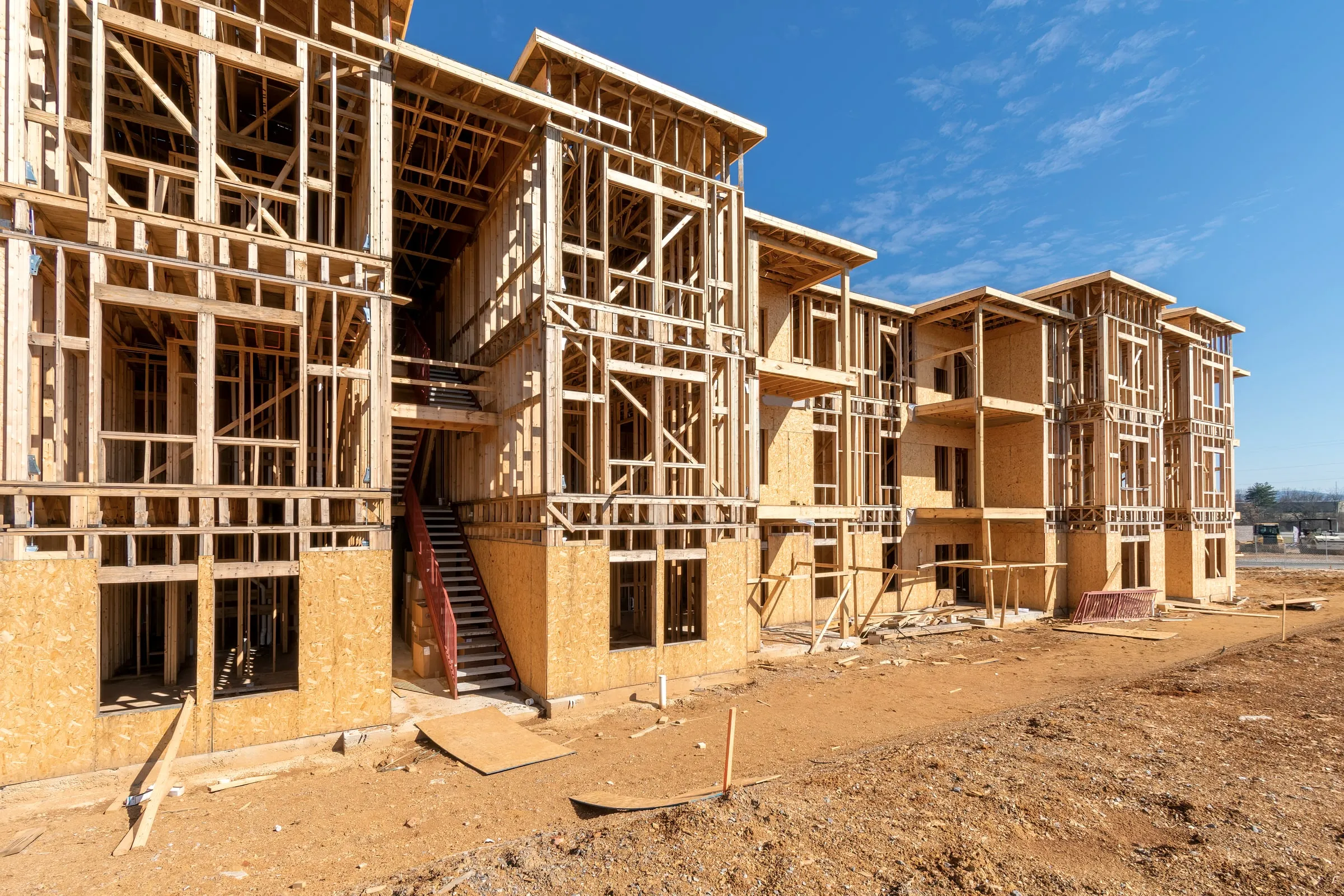
Security for Multifamily Construction Sites
One phase leasing while the next one frames. We keep future residents out of the work and the crew out of the buildings people already live in.
Request a proposalThe situation
What changes when part of the property is already occupied
Leasing starts before the last building tops out
Multifamily projects are frequently phased, with the first buildings leasing and occupied while later buildings are still framing. A prospective resident touring the leasing office is a few hundred feet from an active work zone, and a curious new resident is not the same as a trespasser to be treated the same way.
A door and an appliance set for every unit
A hundred-unit community means a hundred doors, a hundred appliance packages and a hundred sets of fixtures, all delivered and installed on a rolling schedule rather than all at once. The exposure at any given time is smaller per building than a single-family subdivision's, but it repeats building after building for the length of the project.
Below-grade parking and amenity spaces
Parking garages, pools, clubhouses and other amenities are often built early to support leasing, which puts finished, valuable, semi-public spaces on a site that is still an active construction zone around them, with a different access pattern than the framed buildings nearby.
Residents already living among the work
Once a phase is occupied, residents park, walk and let their kids play near a site that is still under construction next door. The post has to manage two different populations at once: the crew building the next phase and the residents already living in the finished one.
Building next to people who already live there
Most construction security is written for a site with nobody living on it. A phased multifamily community breaks that assumption early: the first buildings lease and fill with residents while later buildings are still framing a few hundred feet away. Price Protection’s post for a project like this covers the usual construction risks, material, appliances, equipment, and adds a second job the crew’s own fencing cannot handle alone: keeping the two populations, the crew and the residents, from crossing into each other’s space in ways that create liability for the developer.
The post orders are written with the developer’s site plan showing which phases are occupied, which are under construction, and where the boundary between them sits at any given time, since that boundary moves as each phase leases up and the next one begins. They also record how the leasing office wants prospective residents handled if a tour brings them near the construction zone, because a leasing office trying to sign a lease does not want its prospect turned away by a guard who does not know the difference between a tour and a trespass.
A hundred doors, a hundred appliance sets
A multifamily building multiplies a single-family subdivision’s exposure without multiplying the size of any one unit. Every apartment gets its own appliance package, its own fixtures and its own door, delivered and installed on a schedule that moves building by building rather than all at once. The insight on what gets stolen from Houston job sites and when applies here at the scale of a single building’s delivery day rather than a whole subdivision’s, and the report tracks deliveries by building and unit so a missing appliance is tied to a specific address, not a vague sense that something from the project is gone.
Amenities finished before the buildings around them
Leasing offices, pools and clubhouses are frequently finished early because they are what a prospective resident tours, which puts completed, semi-public, valuable space in the middle of a site that is still very much under construction around it. The officer’s rounds treat these spaces differently from a framed building under construction, since they are furnished and often unlocked during business hours for tours, and the risk shifts from material theft toward keeping unrelated foot traffic, contractors from other buildings, delivery drivers, out of finished amenity space that is not their destination.
Residents living beside an active job
Once a phase is occupied, the construction zone gains an audience that has every right to be on the property and no reason to know where the work zone boundary is. Children are drawn to parked equipment; residents cut through a fenced area because it is the shortest path to the mailboxes. Managing trespassing and loitering on multifamily property covers the resident side of that boundary in more detail; on the construction side, the officer’s job is the same boundary seen from the other direction, keeping the active work zone clear of anyone who is not part of building it.
Starting a post on a multifamily project
To begin, dispatch needs the site plan showing occupied and unoccupied phases, the leasing office’s preference for handling tours near the construction zone, the delivery schedule by building, and a superintendent’s contact. An unarmed officer can typically start within hours of the call, with the phase boundary built into the post from the first round rather than added once the first residents move in.
How we cover it
Every service, applied to this post.
- Unarmed security guards
An unarmed officer patrols the active construction phases and the boundary with occupied phases, checking framed buildings, appliance and fixture deliveries against the schedule, and keeping residents and their guests out of the active work zone rather than only watching for outside intruders.
- Access control
The line between the leasing office, the occupied buildings and the construction zone is enforced at whatever fencing or signage the developer has set, with contractor and delivery vehicles logged separately from resident and visitor traffic using the same access road.
- Vehicle patrol
On a large community with several buildings under construction at once, a vehicle round covers the framed buildings, the parking structure and the amenity areas faster than foot patrol, particularly useful once the site spans more ground than a single subdivision street.
- Incident reporting
The daily report separates activity by building and by phase, with appliance and fixture deliveries logged by unit or building, any resident or guest found in the active work zone noted, and the boundary between occupied and unoccupied phases checked each round.
A typical post
What a shift looks like here.
The officer starts the round in whichever phase has the most exposure that week, buildings that just received appliance packages or just closed in framing, and checks the boundary fencing or signage between that zone and any occupied buildings nearby.
Through the evening, rounds cover the framed buildings, the parking structure if one is under construction, and the amenity areas, while also watching for residents or guests from the occupied phase who have wandered into the active work zone, especially children drawn to equipment left overnight.
At the end of the shift the officer confirms deliveries against the day's schedule by building, checks that the boundary between phases is intact, and writes the report so the superintendent knows which buildings and units need attention before the next day's work begins.

Reporting
What the daily report covers here
Every client receives a written report each day, and officer performance is reviewed and documented daily. This is what the report records on this kind of post.
- Buildings and units checked by phase, with anything found open
- Appliance and fixture deliveries logged by building and unit
- Boundary between occupied and construction phases checked, by time
- Residents or guests found in the active work zone, with the outcome
- Parking structure and amenity areas checked where under construction
- Equipment or material left overnight, by building
How do you tell a curious new resident from someone who should not be on site?
By the boundary the developer has set and the post orders that describe it, fencing, signage or a clearly marked construction zone, rather than by guessing at intent. A resident who has crossed into an active work zone is walked back to the occupied side and told why, which is a different response than the one for someone who has come to take material.
Does coverage change once the first phase is leasing?
Yes. Once residents are living on site, the post adds the boundary between occupied and unoccupied phases to its rounds, and the report starts noting resident and guest activity near the construction zone in addition to the usual theft and access checks on the building still under construction.
Can you cover a parking garage that is under construction below occupied units?
Yes. A structured parking garage built in phases below or beside occupied buildings gets its own attention on the round, since it is often accessible from both the resident side and the construction side before the final gates and access controls are installed.
How is this different from a residential subdivision?
A subdivision is entirely for-sale homes spread across streets with no one living there yet. A multifamily community is often partly occupied while construction continues nearby, which adds a resident population the post has to account for alongside the usual construction risks, and changes how the officer handles anyone found where they should not be.
Related pages
Industries we serve
Service areas
Insights
Glossary
Resources
Request a proposal
Request a proposal for multifamily construction.
Two short steps. Dispatch reviews every request and calls you back about coverage. For urgent unarmed coverage we can typically staff most sites within hours.
24-hour dispatch
(281) 326-9189