
Property manager guides
Security for Apartment Pools and Amenities: Rules That Actually Get Enforced
By Price Protection SecurityReviewed TX DPS Lic #B09430601
Short answer
Pool and amenity rules get enforced when three things are true: the rule is specific enough to apply without judgment, it is posted where residents actually see it, and someone with the standing to apply it is physically present at the hours the amenity is used. A rule that exists only on a sign, with nobody there to hold the line when a group tests it, is a rule in name only. Enforcement is a presence problem before it is a policy problem.
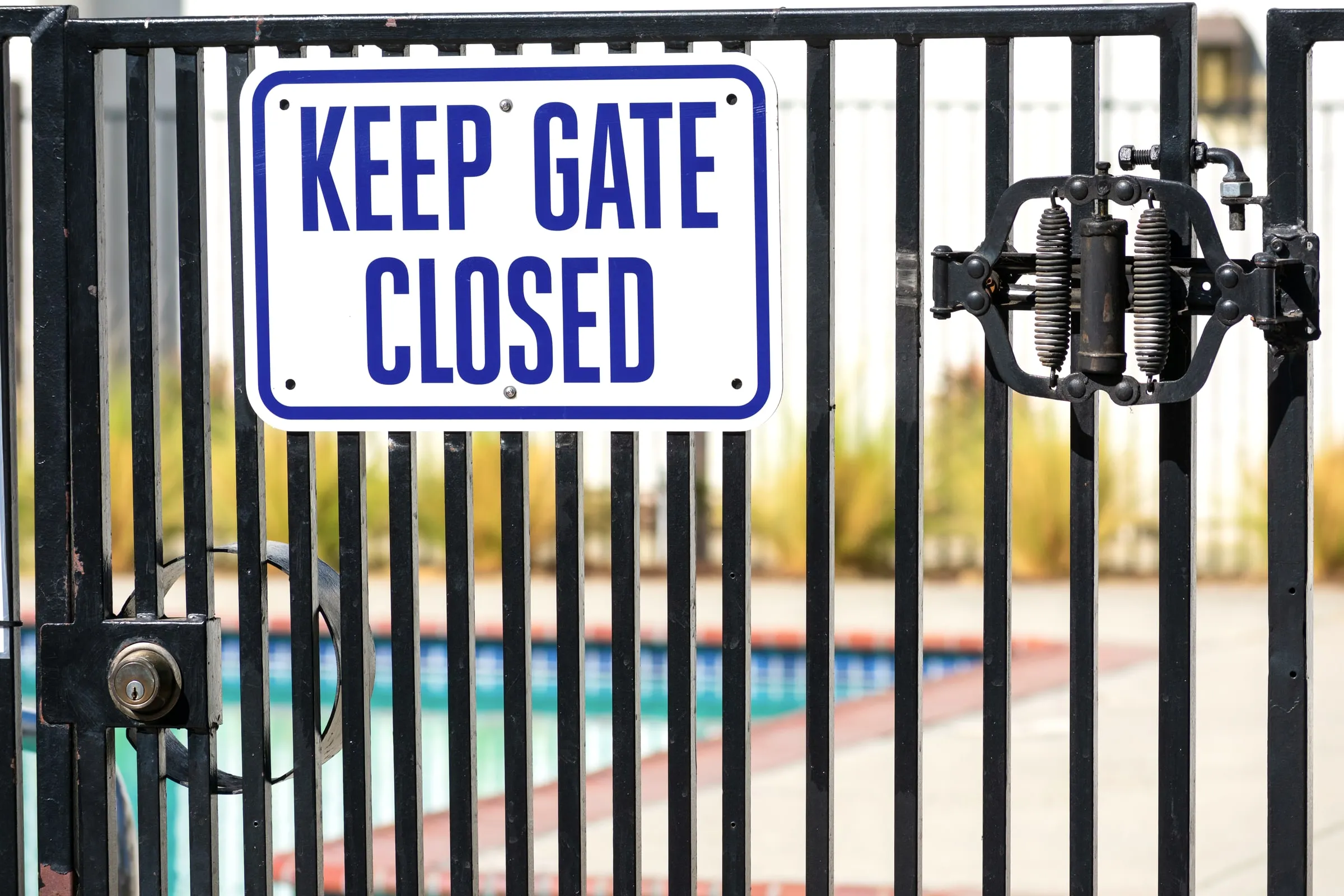
A rule only works if someone is there to apply it
Most apartment amenity rules are reasonable on paper: a guest limit, posted hours, no glass, no alcohol past a certain point. What breaks them is not the wording, it is the absence of anyone with standing to hold the line when a group decides to test it. A sign at the pool gate is a statement of intent; it becomes an actual rule the first time someone who is willing to enforce it is standing there when a resident brings six guests instead of two. Communities that write good rules and then leave the deck unsupervised are surprised every summer that the rules did not hold, when the real gap was presence, not policy.
Specificity is what makes a rule enforceable
A rule that says “be considerate of your neighbors” cannot be enforced consistently because every officer, every manager and every resident will read it differently. A rule that says “music audible from an adjacent unit after ten p.m. will be asked to stop” can be applied the same way every time, by anyone reading it. The rules that hold up on a pool deck are the specific ones: a stated guest limit per unit, a stated closing time, a stated policy on glass and alcohol, a stated process for what happens when a resident’s guests will not leave. Vague rules invite an argument about interpretation; specific rules invite only an argument about compliance, which is a much shorter conversation.
Apply the rule the same way to every unit
Enforcement that bends for some residents and holds for others is worse than no enforcement at all, because it turns every interaction into a negotiation about fairness rather than a simple application of a known standard. An officer working an amenity post applies the community’s rules exactly as written, to whichever unit is at the gate, and logs the exchange the same way each time. This is also what protects the property: a manager who can point to a consistent record, rather than a memory of who got which exception, is in a far stronger position when a resident complains about how they were treated.
| What makes a rule hold | What causes it to fail |
|---|---|
| Specific wording anyone can apply the same way | Vague language that invites interpretation |
| Posted where residents see it before they arrive | Buried in a lease addendum nobody reads |
| Applied the same way to every unit | Enforced inconsistently, creating a fairness complaint |
| Someone present with standing to apply it | A sign with nobody there to hold the line |
| A known escalation when someone refuses | No process, so the officer improvises |
Post the rule where it is actually seen
A rule buried on page eleven of the lease has less practical effect than one posted at the gate itself, in plain language, at the moment a resident and their guests are deciding how to behave. This does not replace the lease, which is what gives the rule its real standing when a dispute goes further than a conversation at the gate, but it does mean fewer disputes reach that point in the first place, because the expectation was visible before anyone tested it.
Give the officer a clear escalation, not just a rule to recite
An amenity post needs to know what happens after a resident is asked to comply and does not. The post orders should set out, in order, what the officer does next: a second, firmer request naming the consequence under the lease; a call to the manager on duty; and, for a genuine disturbance or a person who will not leave, a call to police. An officer without this escalation either backs down, which teaches everyone the rule is optional, or improvises a consequence that was never agreed, which creates a different problem for the manager to clean up later.
Choose the hours that match when the rule actually gets tested
Amenity rules get tested at predictable times: the first hot weekend of the year, Friday and Saturday afternoons through dusk, and the hour after closing when the gate is locked but the deck is still visible from the parking lot. Coverage that matches those hours, rather than a flat schedule that spreads the same officer thin across quiet mornings and busy evenings, is what makes enforcement possible without asking one person to do more than a shift allows.
What this looks like on a Houston deck
Houston’s pool season runs long, from the first warm weekend in spring through Labor Day, and the heat itself is part of the enforcement problem: coolers, alcohol and eight hours in the sun raise the odds of an argument over a chair or a speaker before the afternoon is over. A community that has decided its rules, posted them and staffed the hours they actually get tested spends far less of the office’s Monday morning on resident complaints than one relying on a sign and hoping the deck manages itself.
Getting it in writing
Once the rules exist, they belong in the post orders exactly as the lease and the signage state them, so the officer is applying a known standard rather than a personal judgment. The apartment community security checklist covers amenities alongside access, lighting and packages as part of a full property walk, and managing trespassing and loitering covers what happens when someone will not leave at all, which is the far end of the same escalation an amenity post is built to handle.
Questions
Related questions
Why do posted pool rules so often fail to hold on a busy weekend?
Because a sign has no standing of its own. The first group that ignores a rule and faces nothing sets the pattern for the rest of the afternoon, and by evening the posted hours or guest limit exist only on paper. A rule needs someone present who can name it and act on it at the moment it is tested, not after the fact.
Should the officer be enforcing rules, or just watching for crime?
Both, and the rule enforcement is usually the larger part of the job. Most of what an amenity post handles is noise, guest counts, glass and closing times rather than crime, and applying the community's own posted rules consistently is exactly what keeps the deck usable for the residents who follow them.
What should happen when a resident disputes a rule at the gate?
The officer states the rule as it is posted, gives the resident a reasonable chance to comply, and calls the manager on duty if the resident refuses rather than arguing further. Disputes about the rule itself go to the office; disputes at the gate are about whether it applies right now.
Do amenity rules need to be written into a lease, not just posted?
Rules with real consequences, guest limits, tow authority, grounds for asking someone to leave, hold up better when they trace back to the lease or a signed addendum rather than a sign alone. A posted sign states the rule for visitors and guests; the lease is what gives the office and the officer standing with a resident who disputes it.
Related pages
Industries we serve
Insights
- Managing Trespassing and Loitering on Multifamily Property
- How Many Security Guards Does an Apartment Community Need?
- Static Post vs Patrol: Which Coverage Fits Your Property
- Church Security Planning: A Practical Guide for Ministry Leaders
- Construction Site Theft in Houston: What Gets Stolen and When
- Holiday Security Planning for Property Managers
Request a proposal
Request a proposal for your property.
Two short steps. Dispatch reviews every request and calls you back about coverage. For urgent unarmed coverage we can typically staff most sites within hours.
24-hour dispatch
(281) 326-9189