
Free template
Incident Report Template
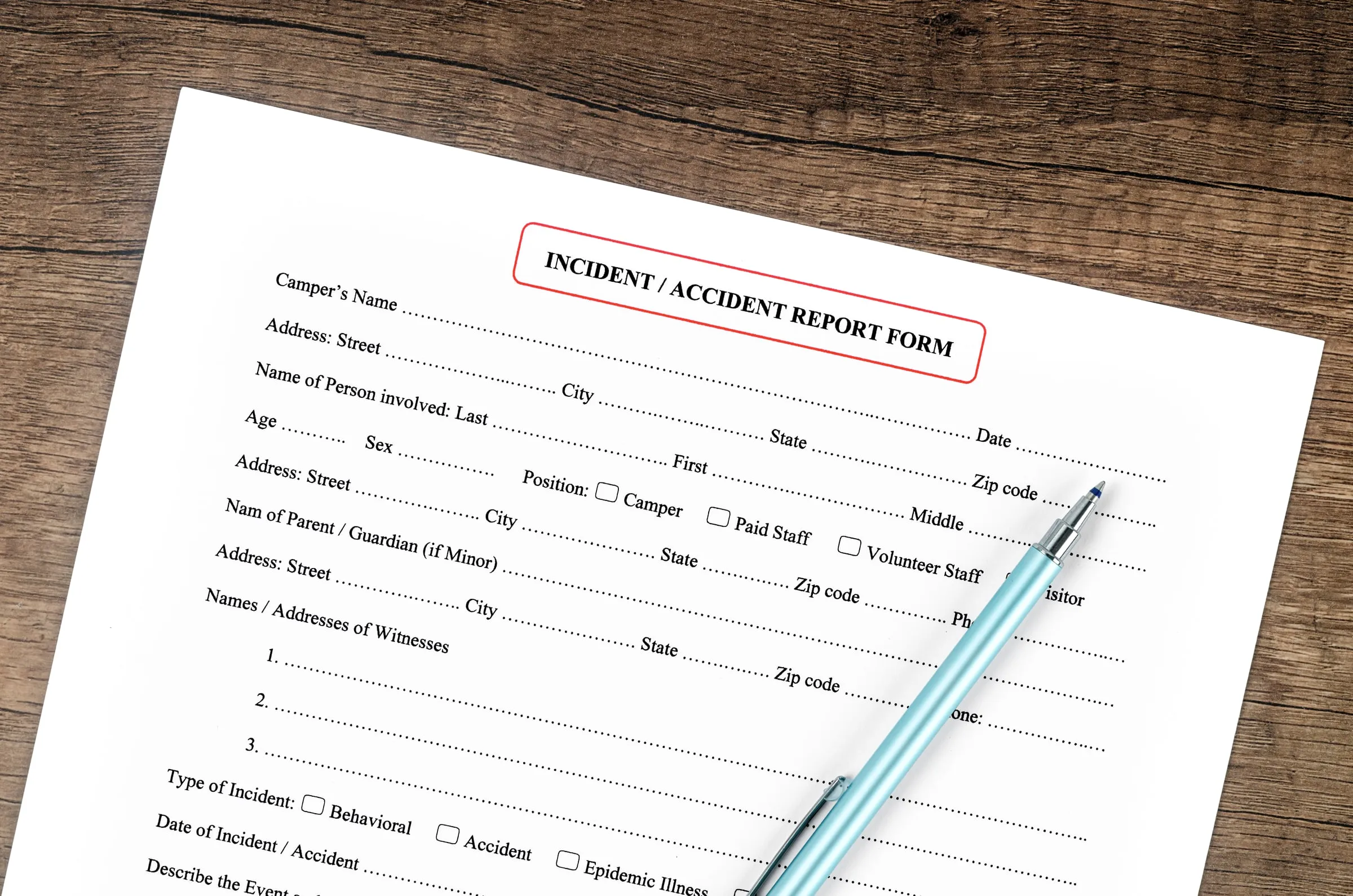
A security incident report template: classification, time and location, people involved and witnesses, a factual narrative, actions taken.
By Price Protection SecurityReviewed TX DPS Lic #B09430601
How to use this template
An incident report is a separate document for one event: what happened, who was involved, what the officer did and who was told. It is written for readers who were not there and may read it months later: a property manager, an insurance adjuster, a police officer, a lawyer. Price Protection’s officers write one for every incident before the end of the shift, referenced from the daily activity report by time. Copy these sections into your own form or print the page.
1. Classification
| Field | Entry |
|---|---|
| Report number | |
| Property and post | |
| Type of incident | [crime, injury, medical, disturbance, trespass, damage, fire or alarm, vehicle, other] |
| Date and time incident began | |
| Date and time officer became aware | |
| How the officer became aware | [observed, resident report, alarm, dispatch call, camera] |
| Exact location | [building, floor, unit, lot, gate] |
2. People
| Role | Name | Contact | Description if unknown |
|---|---|---|---|
| Reporting officer | |||
| Person(s) involved | [sex, approximate age, height, build, clothing, distinguishing features] | ||
| Witness(es) | |||
| Vehicle(s) | [make, model, color, plate, direction of travel] |
3. Narrative
Write in time order, in the first person, in plain past tense. Record what you saw and heard, and what others said to you, attributed by name. Do not record what you think happened or who was at fault.
[At 03:40 I was on a round at Building 3 when I heard glass break on the north side. I walked to the north side and saw…]
4. Actions taken
- First aid given (describe)
- 911 called at [time]; [police / fire / EMS] arrived at [time]; officer or unit name [ ]; report or case number [ ]
- Dispatch notified at [time]
- Client contact notified at [time], [name]
- Maintenance notified at [time]
- Trespass notice given (oral or written), to whom, at [time]
- Area secured (describe)
- Other
5. Evidence
| Item | Description | Where kept |
|---|---|---|
| Photographs | [number, what they show, time taken] | |
| Video | [camera, time range, who was asked to preserve it] | |
| Physical items | ||
| Documents | [visitor log entry, gate record, statement] |
6. Property damage or loss
| Item | Description | Owner | Estimated by |
|---|---|---|---|
7. Notifications and signatures
| Field | Entry |
|---|---|
| Report completed, date and time | |
| Officer signature | |
| Supervisor review, name and date | |
| Copy sent to client, name and time | |
| Copy provided to police, date |
Notes on filling it in
The narrative is where reports fail. Three rules keep it useful: time order, first person, no conclusions. “The suspect broke the window” is a conclusion; “I heard glass break, walked to the north side and saw a man in a grey hoodie running toward Lot B; the window of unit 312 was broken” is a record. Descriptions of unknown people follow the same order every time so nothing is left out. Photographs are taken before anything is moved and listed with the time. If the police attended, the case number goes in section 4, because the manager and the adjuster will ask for it. The incident reports article explains what a good report looks like from the manager’s side, and the daily activity report template is the shift record the incident is referenced from.
Questions
Using this template.
What counts as an incident?
Anything outside routine activity that a manager, an insurer or the police might later ask about: a crime, an injury, a disturbance, property damage, a trespass, a fire or alarm, a medical call, a vehicle accident. When in doubt, write one.
When should the report be written?
Before the end of the shift, while the details are fresh, and after the immediate response is complete. The daily activity report carries a short entry with the time; the incident report carries the detail.
Should the officer give opinions?
No. The report records what the officer saw, heard and did, and what others said, attributed. Conclusions about fault, intent or cause belong to the police, the adjuster or the manager.
Who receives the report?
The client contact, the same day, and Price Protection's supervisor for review. The police receive a copy when they ask for one. Keep it with the property's records.
Related pages
Services
Insights
Answers
Glossary
Request a proposal
Request a proposal for your property.
Two short steps. Dispatch reviews every request and calls you back about coverage. For urgent unarmed coverage we can typically staff most sites within hours.
24-hour dispatch
(281) 326-9189