
Choosing your coverage
Security Guards vs Camera Monitoring: What Actually Deters Crime
By Price Protection SecurityReviewed TX DPS Lic #B09430601
Short answer
A camera records; a visible person who can walk over, ask a question and call police is what changes behavior while it is happening. Cameras alone document a loss after the fact and rarely stop it in the moment, because nobody who is not already being watched knows whether anyone is looking. A property gets the most from both together: an officer who watches the live feed and responds, backed by footage for the report.
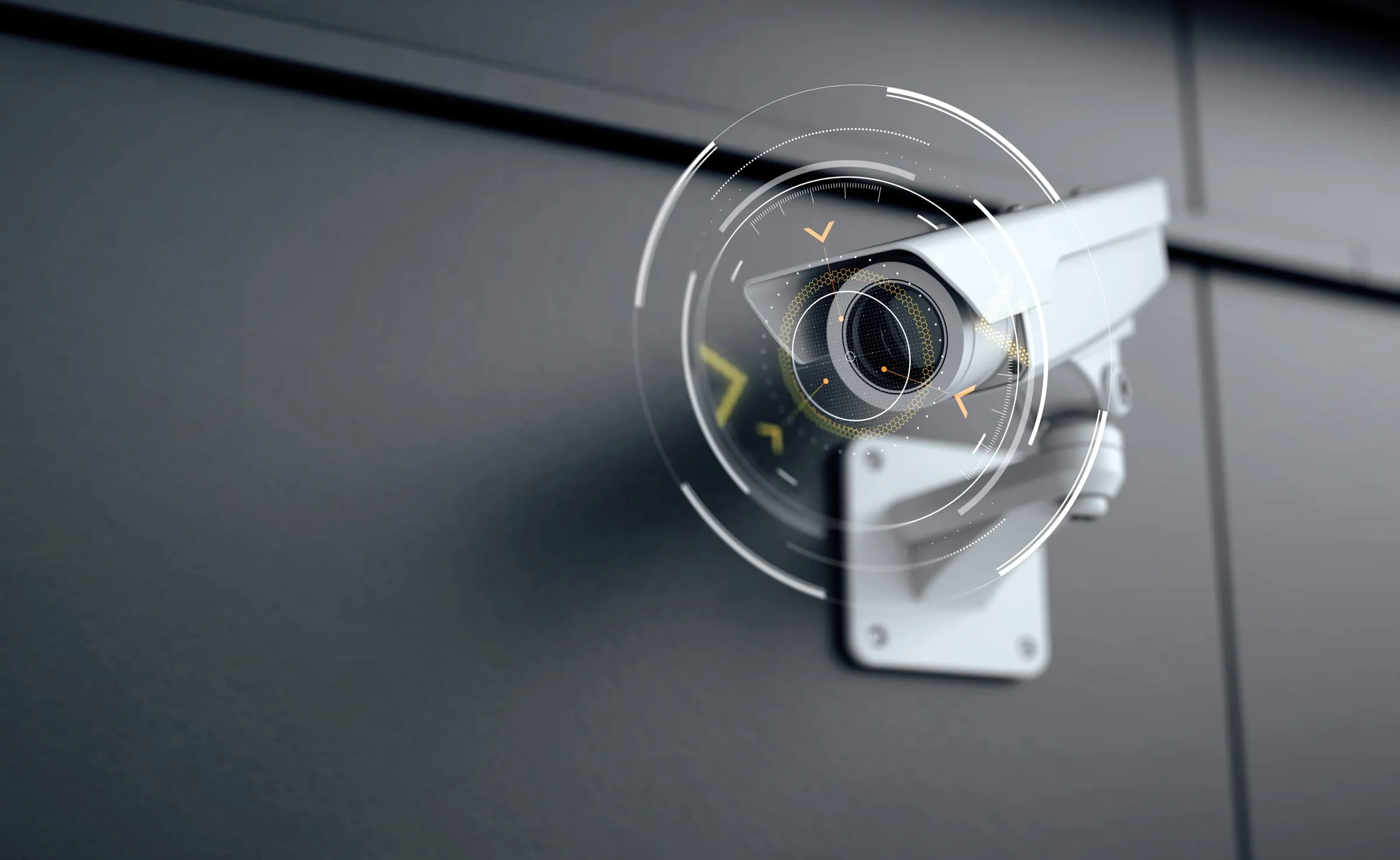
What actually changes someone’s behavior
Deterrence works on the belief that getting caught costs something, right now. A person cutting a fence, trying a car door or lingering by a stairwell weighs the odds of being seen against the odds of walking away with whatever they came for. A camera only affects that calculation if the person believes, at that moment, that a human being is watching and will act on it. A visible officer, on foot or in a marked vehicle, removes the guesswork: someone is there, can see what is happening, can walk over, and can call police with a location and a description before the person leaves. That immediate, visible presence is what most consistently changes the decision to act.
What a camera system does well on its own
Recorded, unmonitored cameras are not worthless; they change what happens after an incident, not during one. A clear image identifies a vehicle, a person or a method, and it turns a vague complaint into a documented event with a timestamp. Cameras cover ground an officer cannot watch every minute, and they never blink, take a break or miss a shift. Where a property’s real need is evidence for an insurance claim, a lease enforcement decision or a police report, cameras alone often meet it. Where the need is stopping the event as it happens, footage reviewed the next morning has already lost that chance.
What a camera system does not do on its own
An unmonitored camera cannot walk over, ask a question, or answer when someone presses a call box. It cannot notice that a door has been propped for twenty minutes if nobody is watching the feed in that window. It cannot tell the difference between a resident’s guest and a stranger without a person interpreting what it shows. And its deterrent value depends entirely on whether the person being filmed believes anyone is watching live, which is a belief that erodes fast once a property gets a reputation, deserved or not, for cameras that only get checked after something happens.
What changes when an officer watches the same feed
The comparison sharpens once a person is behind the cameras rather than in front of a monitor nobody staffs. An officer watching live feeds from a desk or a gatehouse turns the camera system into an active tool: a car circling the lot at two in the morning gets a response instead of a note in a log three days later, and the officer’s rounds are timed to cover whatever the cameras cannot see. This is the model most Price Protection posts run on where the client already has a camera system: the officer watches between rounds, responds to what the cameras show, and cites the camera and the time in the incident report.
Guards and cameras, compared directly
| Unmonitored cameras alone | An officer, with or without cameras | |
|---|---|---|
| Deters in the moment | Weakly, and only if believed to be watched live | Directly, through visible presence and the ability to respond |
| Documents after the fact | Strongly, with timestamped footage | Through the daily and incident report, plus footage if cameras are present |
| Responds to what it sees | Not on its own | Immediately, on foot, by vehicle or by phone |
| Covers blind spots | Only where a camera is aimed | Through rounds planned around the camera coverage |
| Answers a call for help | No | Yes, by radio, phone or in person |
Why the belief matters more than the hardware
The gap between a camera’s theoretical coverage and its actual deterrent value comes down to what the person on the property believes about who is watching. A dome housing on a pole says nothing about whether the feed is live-monitored, recorded for later review, or connected to anything at all. People who spend time on a property, residents, delivery drivers, someone casing a lot over several visits, learn the difference quickly, often faster than management does. A car that circles a parking area three nights running and is never approached teaches a clearer lesson than any sign at the entrance. An officer who responds the first night the same car appears teaches the opposite lesson just as fast. This is why a camera system with no one watching it tends to lose its deterrent value over the weeks after installation, while an officer’s presence, especially when residents or tenants see the same face on a schedule, tends to hold or grow.
Choosing between them, or combining them
A property with a tight budget and a low-traffic risk, a vacant building awaiting sale, a storage yard with infrequent visits, sometimes gets adequate value from cameras alone, reviewed on a schedule and backed by a plan for who responds if something is found. A property with people on it, residents, tenants, shoppers, employees, at almost any hour needs a person who can act while something is happening, because the cost of a delayed response is higher than the cost of a missed clip. Most Price Protection posts land in between: the client’s own camera system gives the officer eyes on more of the property than rounds alone would cover, and the officer gives the camera system a response it cannot generate by itself. Neither replaces the other; the walk-through decides how much of each a specific property needs.
Questions
Related questions
Do visible cameras alone reduce incidents at a property?
Somewhat, for a while. A camera with a visible housing changes behavior for people who notice it and believe someone might be watching. Once a property earns a reputation, correctly or not, for cameras that nobody watches, that effect fades and the camera becomes a recording device rather than a deterrent.
Is it cheaper to add cameras instead of an officer?
Camera hardware is a one-time and maintenance cost, while an officer is an ongoing one, so the two are not directly comparable. The more useful question is what the property needs stopped in the moment versus documented afterward, since a camera system cannot walk over to a car in the lot or answer a call for help.
Can Price Protection add cameras to an existing guard post?
Price Protection does not sell or install camera hardware. Where a property already has a camera system, our officers are trained to monitor it from the post as part of the coverage; the property supplies the system and we supply the attention it needs.
What does a camera catch that an officer might miss?
A blind spot the officer's rounds do not reach at that exact minute, and a clear image for the incident report and for police. A camera's coverage is constant across its field of view; an officer's coverage is constant across the property but sequential, which is why the two are complementary rather than substitutes.
Related pages
Industries we serve
Services
Insights
Glossary
Request a proposal
Request a proposal for your property.
Two short steps. Dispatch reviews every request and calls you back about coverage. For urgent unarmed coverage we can typically staff most sites within hours.
24-hour dispatch
(281) 326-9189