
Licensing, training and the law in Texas
Security Guards and Weapons Other Than Firearms in Texas
By Price Protection SecurityReviewed TX DPS Lic #B09430601
Short answer
Equipment beyond a firearm, such as a baton or chemical spray, is not covered by the Level III firearms commission; it is governed by separate company policy, the training that equipment requires, and the client's own wishes written into the post orders. Most Price Protection posts carry only the standard belt: radio, flashlight, keys, gloves, a first-aid pouch and the reporting log. Whatever equipment an officer carries, its use is limited by the same Penal Code chapter 9 rules that govern any use of force.
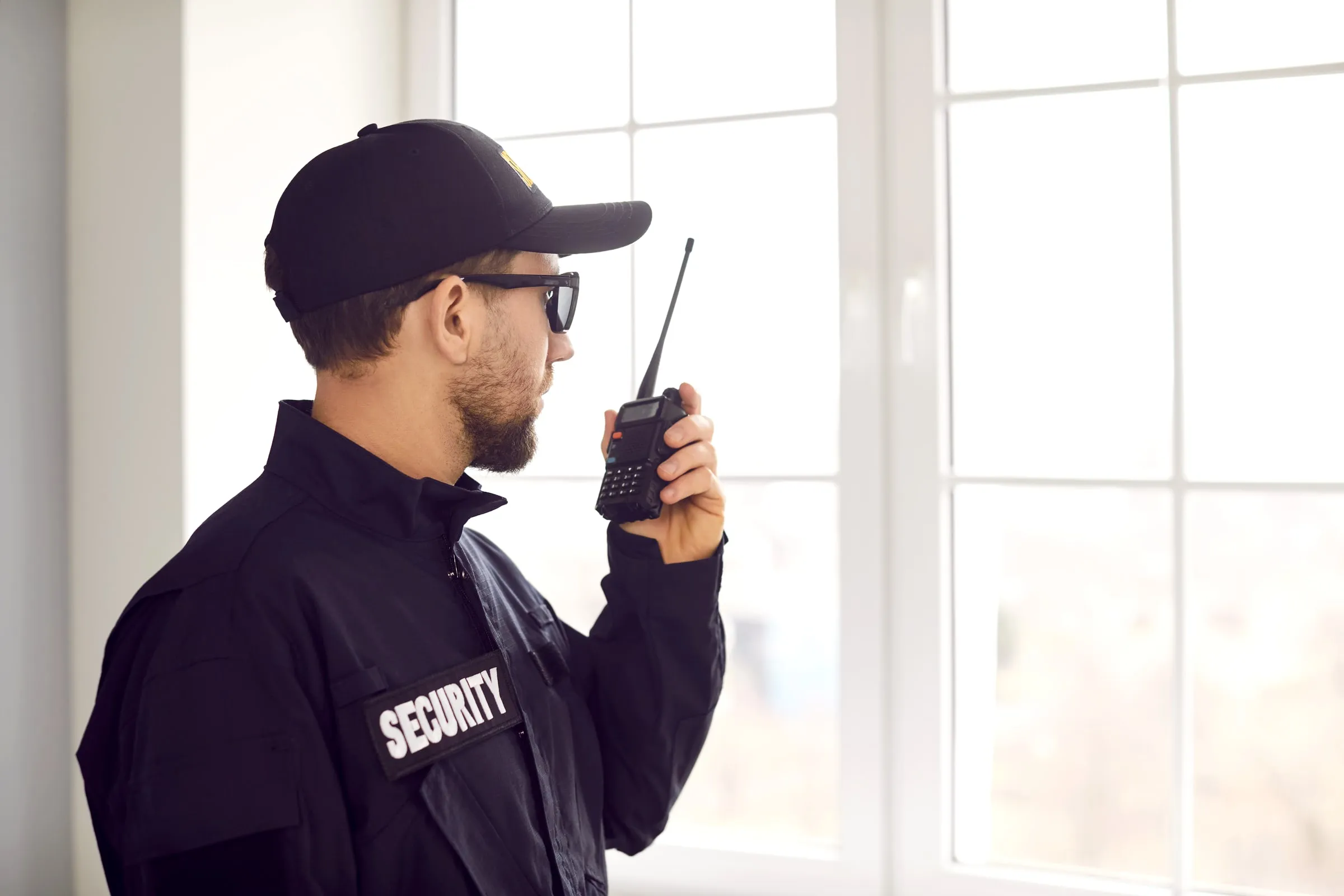
The firearms commission covers one thing
A Level III commission is specific: it authorizes carrying a firearm of the type qualified with, on posts designated armed. It says nothing about batons, chemical spray, handcuffs or any other piece of equipment beyond the firearm itself. Those items sit outside the commission entirely and are governed instead by the company’s own policy, the training that specific equipment requires, and what the client has authorized in the post orders. A common assumption is that an armed officer is equipped with a fuller range of tools than an unarmed one; in practice, whether an officer carries anything beyond the standard belt is a separate decision from whether the officer is commissioned.
What is on the belt by default
Most posts, armed and unarmed alike, run on the same standard equipment: a radio for communication with dispatch and other officers, a flashlight for rounds after dark, keys where the post requires access to specific areas, gloves, a first-aid pouch, and the reporting log or tablet used to document the shift. This is deliberately minimal. A post built around observation, access control and reporting does not need equipment beyond what supports those functions, and adding items without a specific reason adds cost and training burden without adding anything the post actually requires.
Why additional equipment is a policy decision, not a default
When a client or a property’s risk profile suggests an officer should carry something more, a baton, chemical spray, restraints, that decision goes through the same process as any other change to a post: it becomes part of the written post orders, the company confirms the assigned officer holds or will complete the training that equipment requires, and the client is clear on what the equipment is for and, more importantly, what it is not for. This process exists because carrying equipment without matching training creates liability rather than reducing it, and because a piece of equipment issued without a clear reason tends to get used outside the situations it was actually meant for.
The same use-of-force rules apply regardless of the tool
Whatever equipment an officer carries, using it against a person is governed by the same Penal Code chapter 9 standard that governs any use of force by any private person: justified only where immediately necessary to protect a person or property, with deadly force justified only in the narrower circumstances the statute sets out. A baton or chemical spray does not come with its own separate legal standard that is looser or stricter than what applies to a bare hand or a firearm; the equipment changes what is available, not when it may be used. Officers trained to carry additional equipment receive the same de-escalation training as any other officer, and post orders keep observation, deterrence and calling police as the default response regardless of what is on the belt.
Standard belt versus additional equipment
| Standard belt | Additional equipment | |
|---|---|---|
| Typical posts | Nearly all posts, armed and unarmed | Only where post orders specifically call for it |
| Authorization needed | None beyond standard training | Company policy plus equipment-specific training |
| Governed by | General post orders | Same post orders, plus the training that equipment requires |
| Use-of-force standard | Penal Code chapter 9 | Same Penal Code chapter 9, no separate standard |
How a client raises the question
A client who believes a post’s risk profile calls for equipment beyond the standard belt should raise it during the proposal or walk-through stage rather than assume it is automatically included or automatically declined. The supervisor evaluating the property will weigh whether the equipment fits what actually happens on site, confirm the assigned officer holds the necessary training, and write the decision into the post orders either way, so there is no ambiguity between what a client expects an officer to be carrying and what is actually on the belt during a given shift.
What this means day to day
For the large majority of posts, the practical answer to “what weapons besides firearms does an officer carry” is none: the standard belt of a radio, a flashlight, keys, gloves, a first-aid pouch and the log covers what a typical patrol, gate or lobby post needs. This is a summary, not legal advice; the use of force article covers the statute governing any use of force in more detail, and the firearms carry article covers the separate commission that governs a firearm specifically.
Why fewer tools often means a safer post
It can seem counterintuitive that a lightly equipped officer represents good security practice, but the reasoning follows directly from how posts are actually run. An officer whose job is presence, observation and reporting does not need additional equipment to do that job well, and equipment carried without a clear operational reason tends to shift an officer’s instinct toward using it rather than toward the de-escalation and call-for-police sequence that post orders are built around. Keeping the standard belt as the default, and treating additional equipment as an exception that requires its own justification and training, keeps the post’s actual risk profile in view rather than equipping every officer as if every post carried the same level of risk.
How this decision gets made for a specific property
A property considering additional equipment for its officers should start from what actually happens on site rather than from a general preference for a more heavily equipped presence. A retail post with a documented history of confrontational theft attempts, a healthcare setting with behavioral health patients, or a property with a specific, recent incident are the kinds of situations where a client and a supervisor might discuss equipment beyond the standard belt during a walk-through. Most properties, including the majority of apartment, office, construction and warehouse posts, do not present that kind of situation, and the standard belt remains the right fit. The decision is documented in the post orders either way, so both the client and the assigned officer know exactly what is expected and what is carried before the first shift begins.
Questions
Related questions
Does a Level III commission also authorize carrying a baton or chemical spray?
No. The commission is specific to a firearm. Additional equipment is a separate matter, decided by company policy, the training that equipment requires and the client's post orders, not by the firearms commission itself.
Do most Price Protection officers carry a baton or chemical spray?
No. The default equipment on most posts is a radio, flashlight, keys, gloves, a first-aid pouch and the reporting log. Additional equipment is issued only where the post orders call for it and the officer holds the training that equipment requires.
Can a client ask for officers to carry additional equipment?
A client can raise the question, and it becomes part of the post orders if the company agrees the equipment fits the post and the assigned officer holds or completes the required training; it is not a default a client can simply request without that process.
Does carrying a baton change when force may be used?
No. Whatever is carried, its use is governed by the same Penal Code chapter 9 standard: force only where immediately necessary, deadly force only within the narrower conditions the statute sets.
Related pages
Insights
- Can Security Guards Legally Carry Guns in Texas?
- Use of Force Rules for Security Guards in Texas
- What the 45-Hour Level III Course Covers, Including Firearms Proficiency
- Can a Security Guard Detain Someone in Texas?
- Continuing Education for Texas Security Officers
- How to Verify a Security Company's Texas DPS License
Answers
Request a proposal
Request a proposal for your property.
Two short steps. Dispatch reviews every request and calls you back about coverage. For urgent unarmed coverage we can typically staff most sites within hours.
24-hour dispatch
(281) 326-9189