
Operations and reporting
Radio Protocol and Dispatch: How Guards Stay Connected
By Price Protection SecurityReviewed TX DPS Lic #B09430601
Short answer
An officer carries a handheld radio to a 24-hour dispatch line and checks in on a set schedule, plus immediately for anything urgent. Calls use plain language rather than invented codes, so a resident or manager overhearing one understands it without training. If the radio loses signal, the officer's phone is the backup, and post orders name who to call in that order, so a property is never one dead radio away from being unreachable.
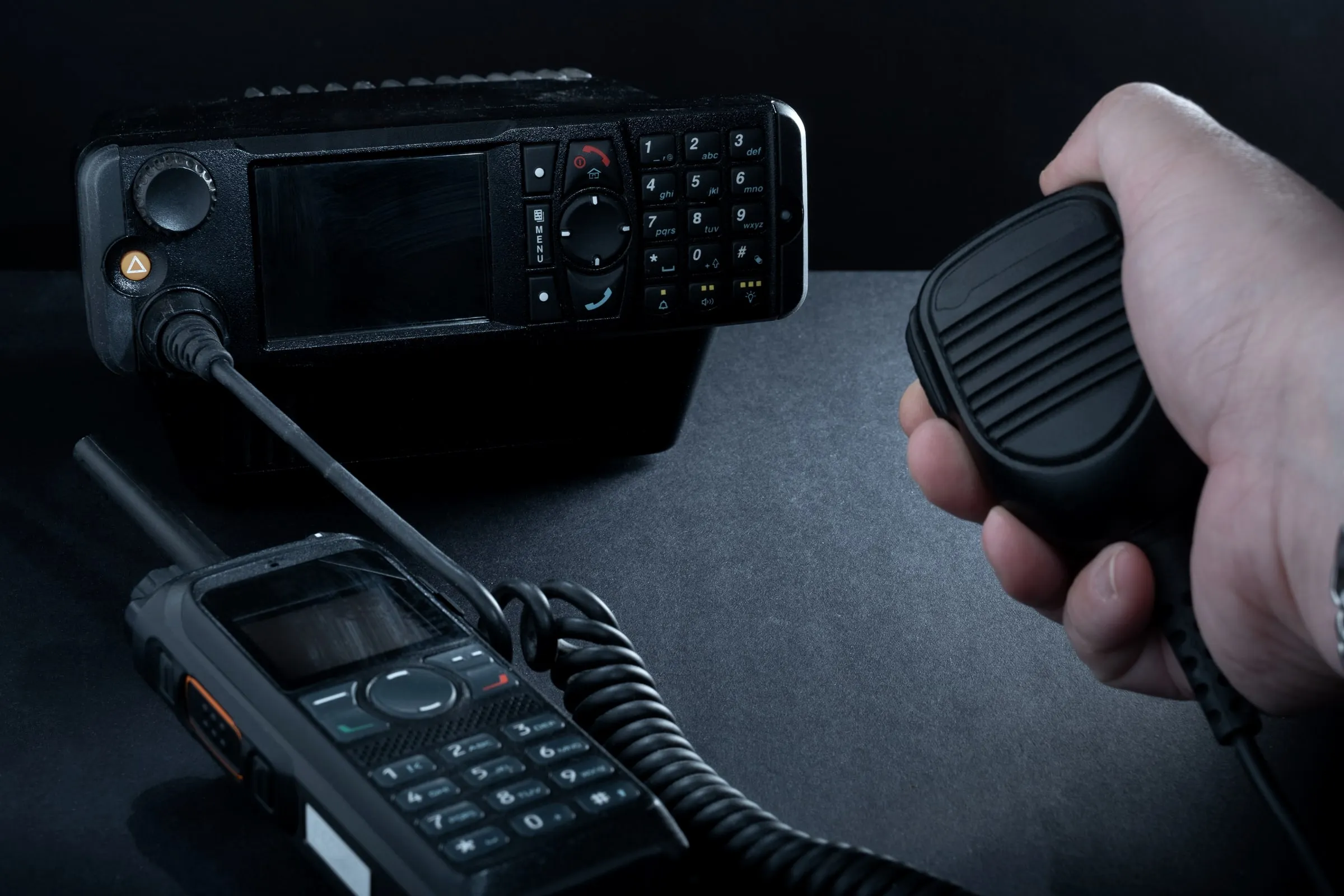
A post stays connected two ways, not one
Every Price Protection post has a way to reach dispatch and a fallback for when that way fails. The primary line is usually a handheld radio, chosen because it works without cell signal in places a phone often does not, a parking garage’s lower level, a stairwell, the far corner of a warehouse yard. The fallback is the officer’s phone, and the post orders name both, along with the order to try them in, so an officer never has to improvise a way to reach dispatch in the middle of a call that cannot wait.
Dispatch itself runs continuously, independent of any single property, which means a post is never dependent on one person’s shift or phone being on. An officer calling in at two in the morning reaches the same dispatch line a property manager would reach calling during business hours, and dispatch is the point that can relay a call onward to police or EMS, contact a property’s after-hours number, or reach a supervisor if a situation needs one.
What a routine check-in actually sounds like
Most radio traffic on a post is not dramatic. It is a scheduled confirmation: the officer’s post identifier, the time, and a short status, “post four, eleven o’clock, rounds complete, property clear.” Post orders set how often this happens, and the interval is usually built around the same round schedule that shapes the daily report, so the check-in and the logged round happen together rather than as two separate tasks. Dispatch tracks these check-ins, and a post that misses one gets a callback before it becomes a real gap in coverage.
Plain language is deliberate here. Some fields lean on codes to save airtime, but a code only works if everyone listening has memorized the same list, and a security post is not a closed radio network; a relief officer, a property manager standing nearby, or a resident who overhears the call all need to follow it without training. “Officer needs assistance at the north gate” says exactly what is happening; a number code says nothing to anyone who was not issued the key.
Escalating a call
A routine check-in and an emergency call use the same radio but a different urgency. When something needs an immediate response, a disturbance, an injury, an alarm, the officer’s first radio transmission states what is happening and where, in the fewest words that still say it clearly. Dispatch’s job from that point is to keep the line open, get emergency services moving if the officer has not already called them directly, and notify whoever the post orders name as the property’s own contact. For anything that is itself an emergency, 911 is called first and separately; the radio call to dispatch runs alongside that, not instead of it.
| Situation | What goes out on the radio | What dispatch does |
|---|---|---|
| Scheduled check-in | Post, time, one-line status | Logs it; calls back if one is missed |
| Maintenance finding | Location and what was found | Notes it for the daily report; no immediate action needed |
| A person needs help now | What is happening, where, and what has been done | Confirms 911 has been reached; notifies the property contact |
| Officer needs backup | A short, direct request stating the location | Reaches a second officer or supervisor if one is available nearby |
When the radio goes quiet
A radio can fail for ordinary reasons, a dead battery, a dropped unit, a dead zone deep inside a structure with heavy concrete or metal. Post orders account for this by naming a phone number as the fallback and setting how long an officer can go without checking in before dispatch follows up rather than assuming everything is fine. On properties with known dead zones, the walk-through is where those areas get identified, so post orders can set a rule, such as checking in again immediately on stepping back into range, rather than leaving a supervisor to discover the gap only after the fact.
Handover and shared airtime
At shift change, the outgoing and incoming officer typically confirm the handover over the radio as well as in writing, a short exchange that closes out one officer’s shift and opens the next on the same channel dispatch is already monitoring. On a property large enough to run more than one post at once, all officers share the same channel unless the post orders specify otherwise, which means radio discipline matters beyond any one call: keeping routine traffic brief keeps the channel open for the moment an officer actually needs it.
Why this matters to a property that has never had to test it
Most properties never need to see how their post handles a real emergency call over the radio, and that is exactly the point of setting the protocol up in advance rather than working it out during an incident. A dispatch line an officer already knows how to reach, a check-in rhythm that makes a missed call noticeable quickly rather than going unnoticed for hours, and a fallback that does not depend on one piece of equipment working, together are what let a single officer on an overnight post reach help without anyone on either end guessing at what to say.
Questions
Related questions
Why plain language instead of radio codes?
Codes save a few words but only work if every listener has memorized the same list. A property manager, a relief officer or a resident overhearing a call needs to understand it immediately, so Price Protection's officers describe what is happening in ordinary words instead.
What does a routine check-in sound like?
Short and factual: the officer's post, the time, and a one-line status, for example confirming a round is complete and the property is clear. It is not a conversation; it is a timestamped confirmation that the post is staffed and nothing needs escalation.
Does every post use a radio, or do some rely on a phone?
Most posts use a handheld radio to dispatch as the primary line, with a phone as backup. A single-officer post at a smaller property sometimes runs on a phone alone, but the same check-in schedule and escalation order still apply either way.
Who is dispatch, and are they on-site?
Dispatch is Price Protection's 24-hour line, staffed independently of any one property, so a post is never dependent on one person's availability. Dispatch relays a call to police or EMS when an officer requests it and tracks which posts have checked in.
Related pages
Insights
- Shift Handover: Keeping a Post Covered Around the Clock
- Emergency Contact Trees for Security Posts
- How Officer Performance Is Reviewed Daily
- Access Control Logs: What Gets Recorded and Why
- Camera Monitoring by Guards: Live Response vs Recorded Footage
- De-escalation: How Trained Guards Handle Confrontations
Request a proposal
Request a proposal for your property.
Two short steps. Dispatch reviews every request and calls you back about coverage. For urgent unarmed coverage we can typically staff most sites within hours.
24-hour dispatch
(281) 326-9189