
Price Protection Security
How Price Protection Officers Are Trained and Supervised
How Price Protection officers are licensed, trained and supervised: Texas DPS registration, the Level II and III courses, company training, daily review.
By Price Protection SecurityReviewed TX DPS Lic #B09430601
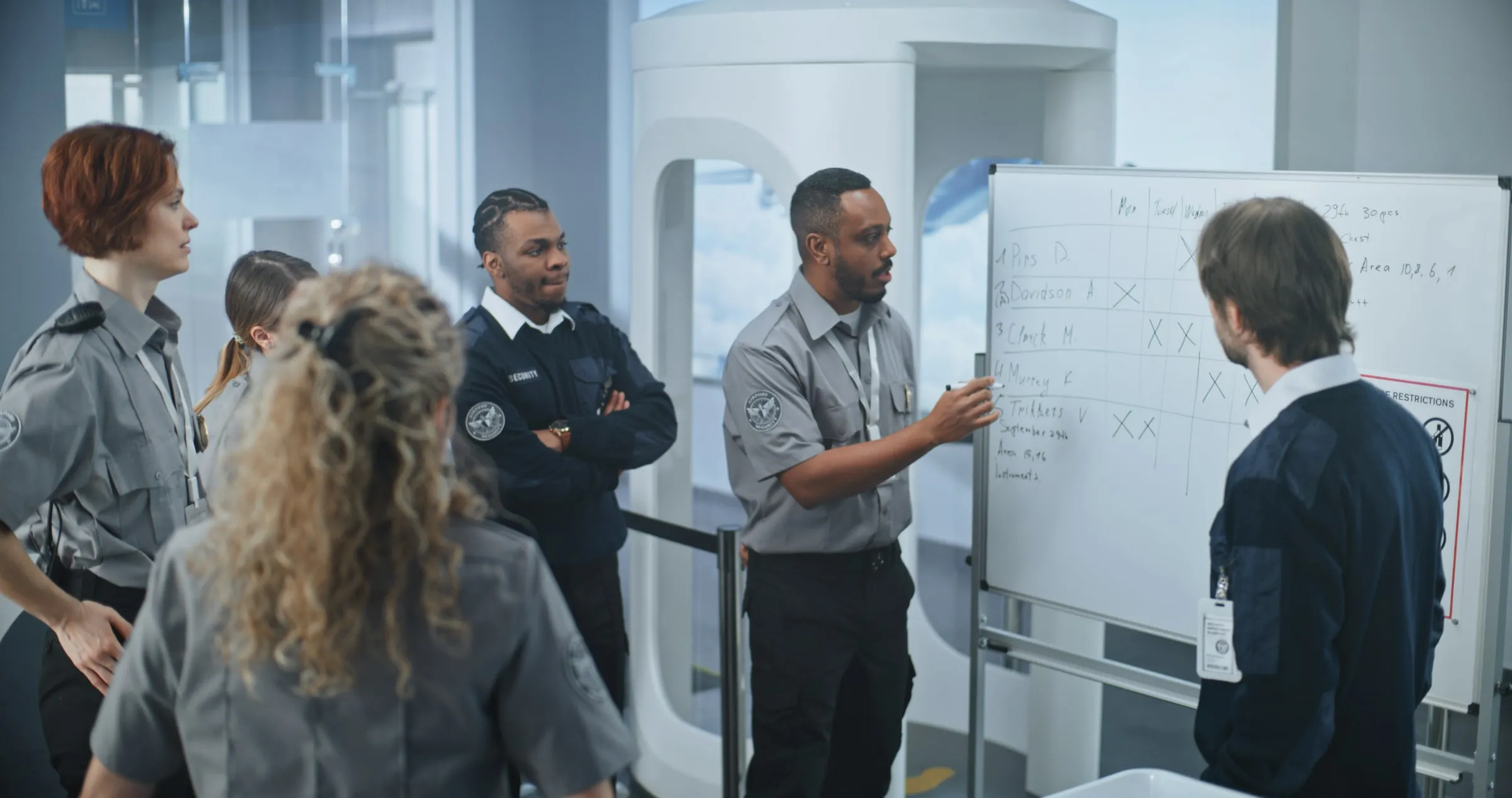
The standard is the same on every post
A client sees one officer at a time: the person at the gate on Tuesday night, the officer walking the hot-work floor on Thursday. What that client is really buying is the system behind the person, and Price Protection’s system has five parts that every officer goes through in the same order. The state licenses the individual. The company trains the individual for the work it actually does. The post orders tell the individual what this property needs. The daily report records what was done. The daily review checks it.
Licensing first
Texas regulates private security under Occupations Code chapter 1702, administered by the Department of Public Safety. A security officer cannot work for a licensed company until the department has run a fingerprint background check and issued a registration, and the registration is tied to the employer. Price Protection’s officers are registered to license B09430601. Unarmed officers complete the 30-hour Level II course; armed officers complete the 45-hour Level III course with a firearms proficiency test and hold a commission that must be renewed with continuing education.
Training for the work we do
The state course teaches the law and the basics. It does not teach how to talk to a resident at midnight, how to write an incident report an insurance adjuster can use, or what to do in the first minute of a medical call. Company training covers security protocols, customer service, incident reporting, first aid and fire safety, and it is repeated when an officer moves to a different kind of post. Fire watch officers learn rounds, log-keeping and the difference between a fire they may put out and a fire they must report and leave.
Supervision that happens every day
Most of what goes wrong on a security post goes wrong quietly: a round skipped at three in the morning, a report that says “all quiet” for a night that was not. The only defence is reading the report every day, and that is what our supervisors do. Officer performance is reviewed and documented daily, against the post orders and the guard tour record where the client has one. The client sees the same report each morning. That daily loop is what lets us promise consistency, which is one of the three values the company was built on. The how we work page describes where training and review sit in the life of a contract.
Texas DPS background check and registration
Every officer is fingerprinted and checked by the Texas Department of Public Safety before working a post, and is registered to Price Protection's company license, B09430601, so a client can confirm the person at the gate belongs to the company on the contract.
The state course for the level of the post
Unarmed officers complete the 30-hour Level II course. Officers who will carry a firearm complete the 45-hour Level III course, including firearms proficiency, and hold a commission. Personal protection assignments require the Level IV endorsement on top of Level III.
Company training before the first shift
On top of the state courses, officers are trained in security protocols, customer service, incident reporting, first aid and fire safety, and in how to read and follow post orders. Fire watch officers are trained in rounds, logs and what to do when they find a fire.
Post orders for the property
Before an officer works a new site, the post orders written with that client are read and signed: the route, the checkpoints, the access rules, the escalation contacts and the site-specific instructions from the walk-through.
A performance review every day
A supervisor reads each shift's daily activity report, the guard tour record where there is one, and any incident reports, and reviews the officer's performance against the post orders. Problems are addressed the next day, not at renewal.
Questions
How Price Protection Officers Are Trained and Supervised
Are all Price Protection officers licensed?
Yes. Every officer holds a Texas Department of Public Safety registration or commission tied to the company license, and the company itself holds Class B security contractor license B09430601. Both can be checked on the department's public license search.
What is the difference between your armed and unarmed officers?
The state credential. Unarmed officers hold a Level II non-commissioned registration after the 30-hour course; armed officers hold a Level III commission after the 45-hour course with firearms proficiency. Both receive the same company training in service, reporting, first aid and fire safety.
How do you know an officer is doing the job?
The daily report and the daily review. Every shift produces a written report, a supervisor reads it against the post orders every day, and the client receives it every morning. An officer who skips rounds or writes thin reports is caught by the review before the client has to raise it.
Related pages
Insights
Answers
Request a proposal
Request a proposal for your property.
Two short steps. Dispatch reviews every request and calls you back about coverage. For urgent unarmed coverage we can typically staff most sites within hours.
24-hour dispatch
(281) 326-9189